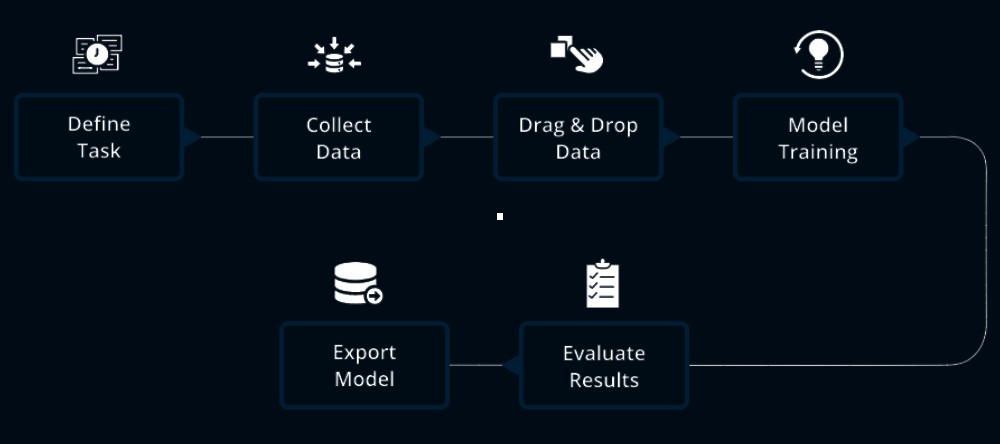


Genoma Space is a digital ecosystem builder that “sequences the digital DNA” of online communities through organic, adaptable software platforms. Inspired by the principle that web tools should function like interconnected biological systems, Genoma empowers communities to own, manage, and scale their digital presence. Its mission is to democratize web architecture by providing the infrastructure for creating fully customized digital environments. The platform enables AI developers, whether individuals or enterprises, to design functional LLMs from scratch. They can leverage intuitive drag-and-drop mechanisms to rapidly prototype and deploy AI models. This approach transforms complex AI development into a more accessible and efficient process.
Current initiatives include LPU Genoma, a vibrant community hub for students, and the upcoming Genoma Builder, a ready-to-launch engine for constructing independent digital ecosystems. By 2030, Genoma Space aims to launch 1,000 such ecosystems.
In an exclusive conversation with The Interview World at the India AI Impact Expo 2026, Himanshu Jha, COO of Genoma Space, discussed how the platform supports AI developers in building models with verified accuracy, enhances their productivity, and drives innovation. He also outlined ambitious plans for the next five to ten years. Here are the key takeaways from his insightful conversation.
Q: Can you explain how your platform, Genoma Space, supports AI developers in building models tailored to specific domains?
A: We give users complete freedom to create their own LLMs, whether chatbots, audio models, or image generators, by leveraging the full capabilities of Genoma Space. To ensure data privacy, we integrate blockchain technology, so any datasets uploaded remain entirely under the user’s control. Genoma Space does not store user data; the system operates on a private blockchain.
Users can also choose to train models locally. Our desktop application, Genoma Codename, simplifies this process: with a single click, it gathers system information, including GPU, TPU, CPU, and processor details, and determines the optimal configuration. The platform presents multiple levels, from Level 1 to Level 3, and automatically selects the best combination to deliver a fully functional, end-to-end LLMs.
Previously, one major challenge was that if a user encountered an error while building an LLM, the entire process would reset, forcing them to start over. To solve this, we implemented checkpoints. Now, users can resume from the last checkpoint, ensuring progress is saved and significantly improving their workflow.
Q: Once a model is designed, how does your platform help ensure it achieves a target accuracy through the use of training data?
A: We offer over 1,000 algorithms, all sourced from peer-reviewed research papers. Each algorithm undergoes rigorous testing and fine-tuning to optimize dependencies, so users can simply drag and drop to create models. For example, if a user is unfamiliar with a particular model, they can click the Learn button, and the platform will guide them to build a fully functional chatbot application. We also provide detailed accuracy metrics for every algorithm.
All our algorithms come fully tuned and validated. Their performance is backed by authoritative sources, including ChatGPT benchmarks and research conducted by PhD scholars. Users simply fetch the data, upload it, and the system handles the rest, making the entire process seamless and efficient.
Q: What is the typical accuracy of your models?
A: Currently, we are at the MVP stage, offering a fully functional chatbot. We are expanding the platform to support image and audio models as well. At present, the system achieves an accuracy of approximately 96%, which we maintain as the minimum standard.
Q: Do you believe Genoma Space can enable AI builders to work more efficiently and enhance productivity across AI model development?
A: As I mentioned, our platform is designed to maximize productivity. It significantly reduces both development time and the learning curve. For instance, if a user is unfamiliar with tasks like removing duplicate entries or selecting algorithms, they can simply drag and drop components to complete the process effortlessly. In many cases, users can train models in just two to three days, a major advancement. Building a base LLM model automatically is a substantial achievement.
The system also streamlines data handling. Users only need to define key concepts or keywords, and the platform automatically identifies related areas and fetches the relevant data. For example, this approach can be applied effectively in specialized fields, such as the healthcare sector.
Q: Looking ahead, what key innovations and features are you planning to develop in the next five to ten years?
A: Our new features are projected to be fully automated. Users no longer need to manually drag and drop components, and the system handles everything automatically. Achieving this requires significant time, computational power, and advanced AI logic. We are planning to implement 10 to 15 core automations that will form the backbone of the platform’s intelligence and efficiency.