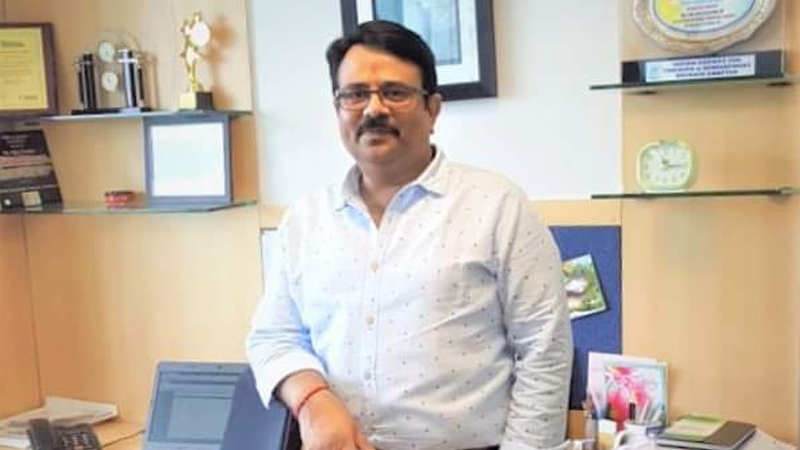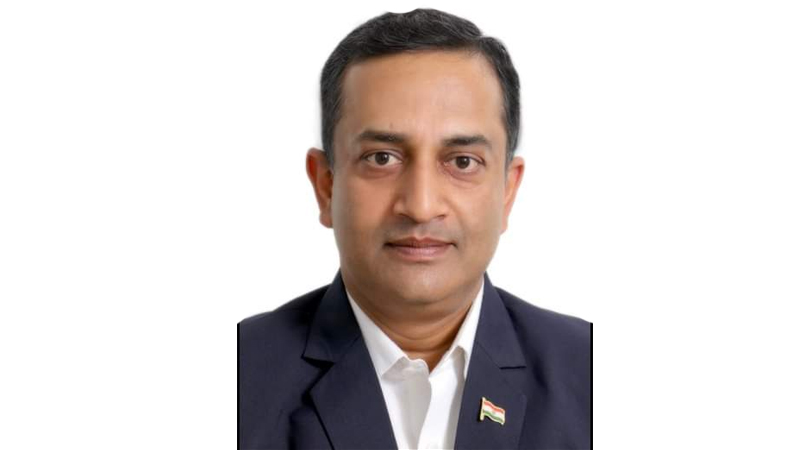


Vikaas M. Sachdeva is a veteran financial services leader with over three decades of experience across asset management, capital markets, and investment platforms. As CEO of BitDelta India, he leads strategy, market expansion, regulatory alignment, and execution for the investor-focused crypto trading platform. Previously, he served as Managing Director at Sundaram Alternates and as CEO of Edelweiss Asset Management, where he spearheaded a successful turnaround and led the acquisition of JP Morgan Mutual Fund’s India business. Vikaas has also played an influential role in shaping India’s investment ecosystem through leadership positions with SEBI, AMFI, AMRI, and IVCA, bringing deep expertise across investments, distribution, and platform growth. In recent years, he has spearheaded MF Chronicles, a landmark initiative dedicated to preserving and institutionalising the collective legacy, wisdom, and historical evolution of India’s mutual fund industry.
In an exclusive interaction with The Interview World, Sachdeva reflects on the vision behind MF Chronicles and its role in preserving the institutional memory of India’s mutual fund industry. He also explains his decision to adopt a long-form storytelling approach instead of conventional finance interviews, while offering insights into the strategic rationale behind the classroom-as-studio format developed for the series. Furthermore, he discusses the critical role of personal credibility in encouraging industry veterans to participate with unusual candour and openness. He also evaluates the impact MF Chronicles has generated across both physical and digital platforms, and articulates why the series deserves recognition as an award-worthy benchmark in branded financial content.
Presented below are the key insights from this thought-provoking conversation.
Q: What inspired you to create MF Chronicles at this stage of India’s mutual fund industry evolution?
A: The inspiration stemmed from identifying a critical institutional void within India’s mutual fund industry. Although the sector expanded dramatically, from nearly ₹80,000 crore in assets under management in 1995 to more than ₹65 lakh crore today, it lacked a structured and credible historical archive documenting its evolution. Consequently, many of the industry’s most defining narratives remained fragmented and undocumented. The stories that truly shaped the sector, including market crises, regulatory inflection points, distribution conflicts, strategic category creation, and transformational business decisions, survived largely through the personal recollections of industry veterans. Recognizing the urgency of preserving this invaluable legacy, the creators conceived MF Chronicles as a definitive effort to capture and safeguard the institutional memory of the mutual fund industry before it faded irretrievably.
Q: Why did you choose a long-form storytelling format instead of conventional finance interviews?
A: Industries are ultimately remembered through the people who shaped them and the turning points that transformed them, not through charts and statistics alone. Yet, most financial content today remains transactional, fragmented, and driven by short attention cycles. We wanted to challenge that format. Instead, we set out to create an archival, narrative-led series that captures the depth, context, and continuity of the industry’s evolution.
Accordingly, we structured each episode as part of a larger chronological journey spanning three defining eras: the formative years, the phase of consolidation, and the age of scale and digitisation. This approach allowed us to move beyond isolated conversations and construct a connected historical narrative. The objective was never to produce a collection of standalone interviews. Rather, it was to build a coherent and enduring institutional history of India’s mutual fund industry.
Q: The classroom-as-studio concept is unusual for a finance series. What was the strategic thinking behind it?
A: The classroom environment fundamentally reshapes the nature of the conversation. When industry leaders speak within academic campuses rather than corporate boardrooms, they instinctively move beyond scripted corporate communication and engage in genuine teaching, reflection, and mentorship. As a result, the dialogue becomes far more open, thoughtful, and authentic.
At the same time, the setting creates a rare opportunity for finance students to interact directly with the architects who built and transformed the industry. That direct engagement adds intellectual depth and human context to the discussion. Therefore, we designed MF Chronicles not merely as a content series, but as a meaningful platform for intergenerational knowledge transfer, one that preserves experience, transmits wisdom, and inspires future financial leaders.
Q: How important was your personal credibility in getting industry veterans to participate so openly?
A: It was absolutely critical. Many of these industry leaders had seldom participated in long-form conversations that demanded deep reflection, intellectual honesty, and historical perspective. However, my three decades within the ecosystem created a strong foundation of trust, credibility, and shared institutional context. That familiarity significantly changed the quality of the dialogue.
As a result, guests felt comfortable moving beyond carefully curated performance narratives and corporate messaging. Instead, they spoke candidly about their convictions, strategic disagreements, failures, moments of uncertainty, and the defining decisions that ultimately shaped the mutual fund industry. That level of openness brought authenticity, nuance, and historical depth to MF Chronicles, qualities rarely seen in conventional financial content.
Q: The series focuses heavily on institutional memory. Why is that important for the mutual fund industry specifically?
A: The mutual fund industry rests fundamentally on long-term trust. Investors entrust institutions with their lifetime savings, often across multiple decades and market cycles. Consequently, an industry built on such enduring relationships cannot sustain itself without continuity, institutional memory, and historical perspective.
Documenting how the industry navigated crises, responded to regulatory transitions, expanded investor education, and managed volatile market cycles is therefore not optional, it is essential. Without that recorded history, future professionals lose access to the lessons, judgment, and strategic wisdom that shaped the industry’s evolution. Institutional memory, in turn, reinforces credibility, deepens maturity, and strengthens the long-term resilience of the entire financial ecosystem.
Q: What kind of impact has MF Chronicles generated so far?
A: The impact has extended far beyond conventional viewership metrics. To date, we have produced more than 12 campus-based episodes featuring 15 prominent industry leaders, while engaging over 1,500 students through live interactions and discussions. Simultaneously, the series has generated substantial long-form watch time and cultivated strong audience engagement across platforms such as LinkedIn, YouTube, Instagram, and X.
More significantly, MF Chronicles has begun to influence industry perception and strategic interest. The series is now attracting meaningful inbound engagement from asset management companies and finance professionals who recognize the long-term value of knowledge-driven, archival storytelling formats. That response validates the core premise behind the initiative: the financial industry increasingly seeks content that preserves institutional wisdom, delivers intellectual depth, and creates enduring relevance beyond short-term digital consumption.
Q: What do you believe makes MF Chronicles award-worthy compared to traditional branded finance content?
A: Most branded content pursues short-term visibility, immediate engagement, and fleeting digital relevance. MF Chronicles, however, was conceived with a fundamentally different objective. From the outset, we designed the series to serve as a long-term institutional reference point for India’s mutual fund industry.
In many ways, it stands apart as perhaps the only platform where multiple architects of the Indian mutual fund ecosystem have collectively documented, in sequence and on record, the industry’s three-decade evolution. Rather than presenting finance as a purely technical or transactional domain, the series humanised the category by bringing forward the people, decisions, conflicts, and turning points that shaped its growth.
At the same time, MF Chronicles created a meaningful bridge between industry veterans and emerging finance professionals. By actively involving students and young practitioners in these conversations, the series transformed historical documentation into a living process of education, mentorship, and institutional continuity.