
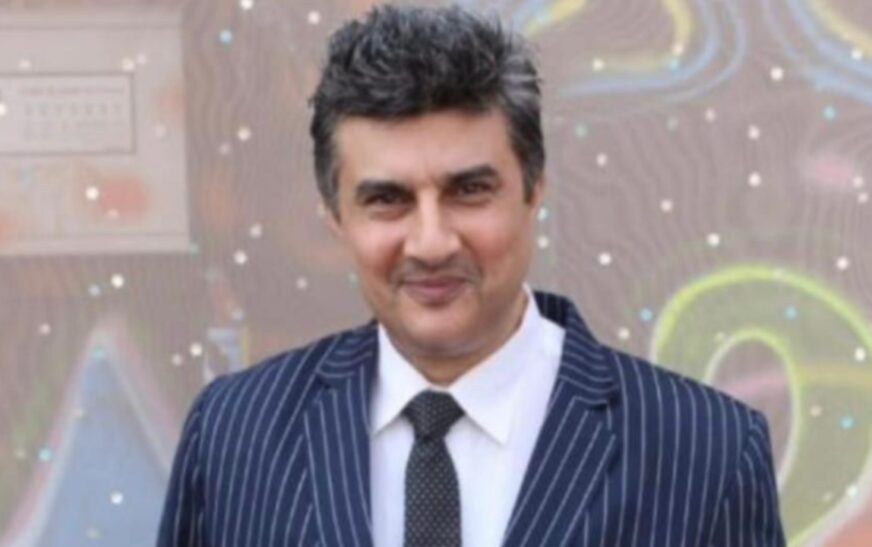
Ashish Kaul is an accomplished Indian actor who has built a sustained career in Hindi television, complemented by select film acting. Since the mid-1990s, he has earned recognition through landmark serials such as CID, Kasautii Zindagii Kay, and Kahaani Ghar Ghar Kii. Over the years, he has navigated a broad character spectrum, seamlessly shifting from affable protagonists to nuanced antagonists, thereby demonstrating considerable range and control. In addition to television, he has appeared in films like Sanam Re and featured in numerous high-profile advertising campaigns. Educated at The Lawrence School, Sanawar, Kaul continues to command a steady presence in Indian entertainment, backed by decades of professional experience.
In an exclusive interaction with The Interview World, Kaul traces his transition from modelling to acting, outlining the motivations that shaped this shift. He then contrasts the formats, production rhythms, and performance methodologies of television and film, offering a practitioner’s perspective on each medium. Further, he reflects on the degree of creative agency available to actors, articulates the foundations of his versatility, and revisits his experience in Naagin.
The following are the principal insights from this incisive and engaging conversation.
Q: What motivated you to transition from modelling and a business background into acting in the mid-1990s, and how did you approach that shift in terms of career strategy and financial expectations?
A: In 1994, J. Om Prakash invited me to join his film, which brought me to RK Studio for Param Veer Chakra. From the outset, I was unequivocal: the engagement had to include a defined monetary incentive. I came from a business family; therefore, I approached the opportunity as a structured career move rather than a purely emotional pursuit.
At that point, I had already established myself as a model in Delhi between 1991 and 1993, where I performed strongly and earned well. Consequently, I did not enter acting out of a desire for visibility or stardom. Instead, I treated the transition as a deliberate shift from business to a professional acting career. The change, however, unfolded gradually.
Moreover, I never subscribed to the notion of working without compensation simply for exposure. I viewed the engagement as a professional transaction: I would deliver my services at a defined fee—perhaps modest, but never negligible. In essence, I evaluated acting through a commercial lens and pursued it as a viable business opportunity.
Q: What industry shifts and format differences did you experience when transitioning from films to television, and how did those changes impact your working hours and approach to acting?
A: When I entered the industry, the standard shooting schedule ran from 9 a.m. to 6 p.m., an eight-hour shift. However, around 2001–2002, the norm expanded to a 12-hour workday, largely driven by the production model popularised by Balaji Telefilms. The industry adapted quickly, primarily because content demand surged. New broadcasters entered the market, moving beyond Zee TV and Doordarshan, and introduced the daily soap format. Consequently, actors had to recalibrate their working style to meet the pace and volume that daily programming required.
At the same time, I recognised a fundamental distinction between film and television. Film acting relies on brief, fragmented shots and prioritises subtle, natural expression. In contrast, television demands technical precision, blocking, camera movement, cue timing, and edit points shape the performance as much as the actor does. Therefore, I learned to navigate these demands through experience, supported by capable directors and collaborative co-actors. Over time, the process itself became the training ground.
I do not consider myself a formally trained actor. Instead, I focused on mastering the practical essentials—most notably, dialogue retention and delivery. Through consistent effort, I developed the capacity to handle extensive scripts; at my peak, I delivered up to 122 pages, sustaining monologues of nearly 15–16 minutes. I regard this endurance as a tangible professional achievement. Beyond that, I maintain a straightforward, unembellished acting style. Because I lack a theatre background or formal training, I rely on instinct and clarity, which naturally lends my performances a direct and conversational quality.
Q: How much creative control do you have as an actor over your dialogues and the overall storytelling, especially when it comes to maintaining social relevance in your work?
A: I approach every role with a simple principle: I execute it in the way I judge most effective within the given framework. Over the years, television has produced several socially relevant narratives. For instance, Dollar Bahu, written by Sudha Murty, offered a distinctly grounded social perspective.
However, the final interpretation of any script ultimately rests with the director. The director defines tone, pacing, and narrative emphasis; therefore, the actor must align with that vision. At the same time, I have observed a concerning trend: many contemporary writers lack depth in language, which occasionally leads to imprecise word choices and diluted meaning. This remains a significant limitation in current writing.
That said, with seniority comes a degree of professional latitude. I now exercise the discretion to refine dialogue—adjusting words where necessary to restore clarity, coherence, and contextual relevance. Beyond that, however, the larger narrative treatment remains outside the actor’s control; the producer and director retain decisive authority over how the story ultimately unfolds.
Q: Given your experience across diverse character types, do you feel the industry tends to associate you with a certain ‘father figure’ archetype despite your versatility?
A: I would not characterise my career as typecast. On the contrary, I have portrayed a wide spectrum of roles, ranging from light, deliberately foolish characters to intensely negative ones. That said, my screen presence has occasionally led casting directors to position me within a narrow band, typically as an affluent father, an NRI patriarch, or a Punjabi family head. Beyond this superficial categorisation, however, I have maintained considerable variety in my work.
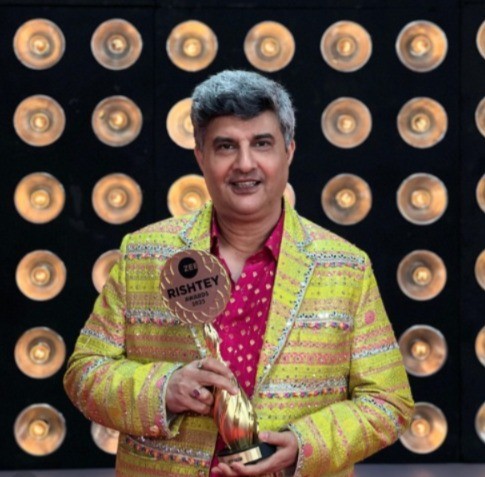
More recently, I featured in Kaise Mujhe Tum Mil Gaye on Zee TV, a performance that earned me recognition for the Best Sasur Award at the Zee Rishtey Awards. The role stood out because of its layered writing and emotional complexity. I played a father who appears submissive within his marriage yet asserts himself when confronting injustice within the household. He ultimately upholds fairness, particularly in his support for his daughter-in-law, and takes principled decisions when it matters most.
Consequently, the role demanded tonal agility. It required me to balance restraint with authority, while also navigating moments of humour alongside conflict. This combination made the character both challenging and rewarding to portray.
Q: Can you tell us about your experience in Naagin, the challenges you faced, and how the show has performed so far?
A: At present, I am working on Naagin, a role that has proven exceptionally demanding. Notably, I handled an extensive script, running to 122 pages, which required sustained focus and precision. Among the most challenging segments was the “Khuni Shaadi” sequence, an intense and emotionally charged track that tested both endurance and control.
The effort, however, translated into measurable success. The show achieved a TRP of 2.04 during that phase, the highest in recent times not only for Naagin but across competing shows on the channel. Consequently, the series climbed to the number one position, a result that I found deeply satisfying from a professional standpoint.
Subsequently, as the narrative progressed toward the 12th to 15th episodes, the character evolved in tone. The role gradually incorporated comic elements, thereby introducing a contrasting performance dynamic. I have particularly enjoyed this transition, as it allows me to explore timing and humour alongside intensity, adding another dimension to the portrayal.