


BLS E-Services Ltd., incorporated in 2016 and headquartered in Gurugram, India, operates as a technology-enabled digital service provider. As a subsidiary of BLS International Services Ltd., it delivers assisted e-services, e-governance solutions, and business correspondent services to banks. Moreover, the company has built an extensive network of access points spanning urban, semi-urban, rural, and remote regions. Through this network, it enables efficient delivery of public utilities, financial services, healthcare, education, and welfare programs. At its core, its integrated platform serves G2C, B2C, and B2B segments. Consequently, it strengthens last-mile connectivity while advancing digital empowerment, particularly in underserved areas with limited internet access.
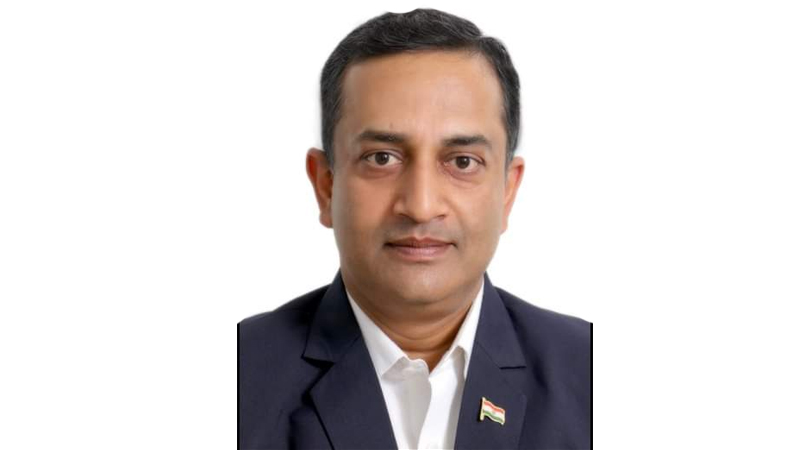
In an exclusive interaction with The Interview World, Lokanath Panda, COO of BLS E-Services Ltd., outlines a disciplined approach to prioritizing investments across G2C, B2B, and B2C segments to drive sustainable growth. He further details the operational frameworks that ensure consistency and quality across a widely distributed network. In addition, he explains how the company leverages emerging technologies, including AI, data analytics, and account aggregators, to enhance service delivery and deepen financial inclusion. He also distils critical lessons from rural adoption patterns, offering insights that can shape India’s broader digital inclusion strategy. Finally, he addresses how BLS balances rapid expansion with robust governance, regulatory compliance, and risk management in a highly regulated environment.
The following are the key takeaways from this insightful conversation.
Q: BLS E-Services operates across G2C, B2B, and B2C segments. How do you prioritize investments across these verticals to drive sustainable growth?
A: At BLS E-Services, we prioritize investments through an integrated “phygital” model and align every decision with scale, measurable impact, and long-term sustainability. We keep the Business Correspondent (BC) segment at the center of our strategy because it directly advances the Digital India agenda while expanding financial inclusion across underserved and rural geographies. In parallel, we continue to strengthen our G2C portfolio, as it enables efficient, large-scale delivery of welfare services.
Accordingly, we direct capital toward deepening strategic partnerships and expanding our distribution footprint. At the same time, we pursue targeted investments in high-value opportunities, modernizing our technology stack, embedding AI to streamline the agent experience, and enhancing platform resilience. To reinforce security, we have deployed more than 10,000 GPS-enabled devices, thereby strengthening fraud detection and mitigation capabilities.
Overall, we leverage our extensive network, deepen our rural penetration, and drive cross-service synergies; consequently, we position the business to deliver disciplined, sustainable growth.
Q: With lakhs of touchpoints and millions of transactions, what operational frameworks ensure consistency and quality across such a distributed network?
A: With more than 1.51 lakh touchpoints nationwide and over 45,800 CSPs across India, we operate at scale while enforcing uniformity. To achieve this, we implement standardized operating procedures, apply rigorous partner-onboarding frameworks, and deliver continuous, structured training.
Moreover, we leverage AI-enabled technologies to strengthen execution; specifically, we use centralized monitoring, end-to-end transaction tracking, and real-time dashboards to drive visibility and control. In addition, we conduct regular audits and compliance checks, and we institutionalize feedback loops to correct deviations promptly. Consequently, we sustain high service quality and ensure operational consistency across diverse geographies.
Q: How is BLS leveraging emerging technologies, such as AI, data analytics, or account aggregators, to enhance service delivery and financial inclusion?
A: We are accelerating the integration of AI and advanced data analytics to improve transaction efficiency, detect anomalies with greater precision, and deliver more personalized services. As a result, we convert data into actionable insights that optimize service delivery and pinpoint underserved regions. In parallel, we leverage account aggregators and digital financial tools to expand credit access; consequently, we advance financial inclusion outcomes, particularly in rural markets.
At present, we deploy most AI and GenAI capabilities within our middleware and back-end layers to drive optimization, resilience, and scalability. Meanwhile, our front-end stack is evolving in a measured, high-assurance manner. We have transitioned from fingerprint-based authentication to ID-based systems and are now implementing facial recognition to strengthen identity verification. In addition, we are redesigning user interfaces to be more intuitive and interactive, thereby reducing friction at the point of service.
Although sophisticated front-end AI interactions are still maturing across the industry, these developments establish a clear trajectory. Specifically, we are using AI to enable real-time user verification, enhance engagement, and deliver a more seamless, secure service experience.
Q: What lessons have emerged from rural adoption patterns, especially in Tier-4 and Tier-5 markets, that can inform India’s broader digital inclusion strategy?
A: Rural adoption underscores the centrality of trust, assisted service models, and localized delivery. In Tier-4 and Tier-5 markets, customers consistently prefer a calibrated blend of human interaction and digital convenience; consequently, the “phygital” model proves highly effective.
Moreover, the sustained success of Business Correspondent (BC) outlets demonstrates that inclusion depends on seamlessly bridging physical and digital infrastructure. Accordingly, these insights reinforce a clear imperative: India’s digital inclusion strategy must remain hybrid, accessible, and deliberately oriented toward improving digital literacy while guaranteeing reliable last-mile support.
Q: As COO, how do you balance rapid expansion with governance, compliance, and risk management in a highly regulated environment?
A: At BLS, we scale rapidly without diluting governance. To achieve this, we adopt an asset-light yet tightly controlled growth model and deploy advanced technologies, including AI; consequently, every new touchpoint meets applicable regulatory standards from day one. In parallel, we embed robust risk-management frameworks, enforce stringent KYC protocols, and maintain real-time transaction monitoring across operations; as a result, we ensure end-to-end transparency and security.
At the same time, we leverage technology and our assisted digital model to expand efficiently while preserving strict compliance. Moreover, our partnerships with banks and government institutions reinforce oversight and accountability; therefore, our growth remains sustainable, compliant, and fully aligned with the broader financial ecosystem.





2 Comments
I learned something new from this post.
Great article, very helpful!
Comments are closed.