
The convergence of Ayurveda and artificial intelligence marks a decisive inflection point in healthcare innovation. Building on the Government of India’s BharatGen initiative, the team has developed AyurParam, a 2.9-billion-parameter LLM engineered for computational efficiency and domain specificity. However, the real distinction lies not merely in its scale but in its deployment strategy. Instead of defaulting to cloud-based GPU infrastructure, the system operates within a secure, isolated CPU-based edge environment. Consequently, it safeguards data sovereignty, strengthens privacy controls, and ensures operational independence. More importantly, this architecture advances a larger objective: the rigorous scientific validation of Ayurvedic diagnostics through structured, AI-driven inference.
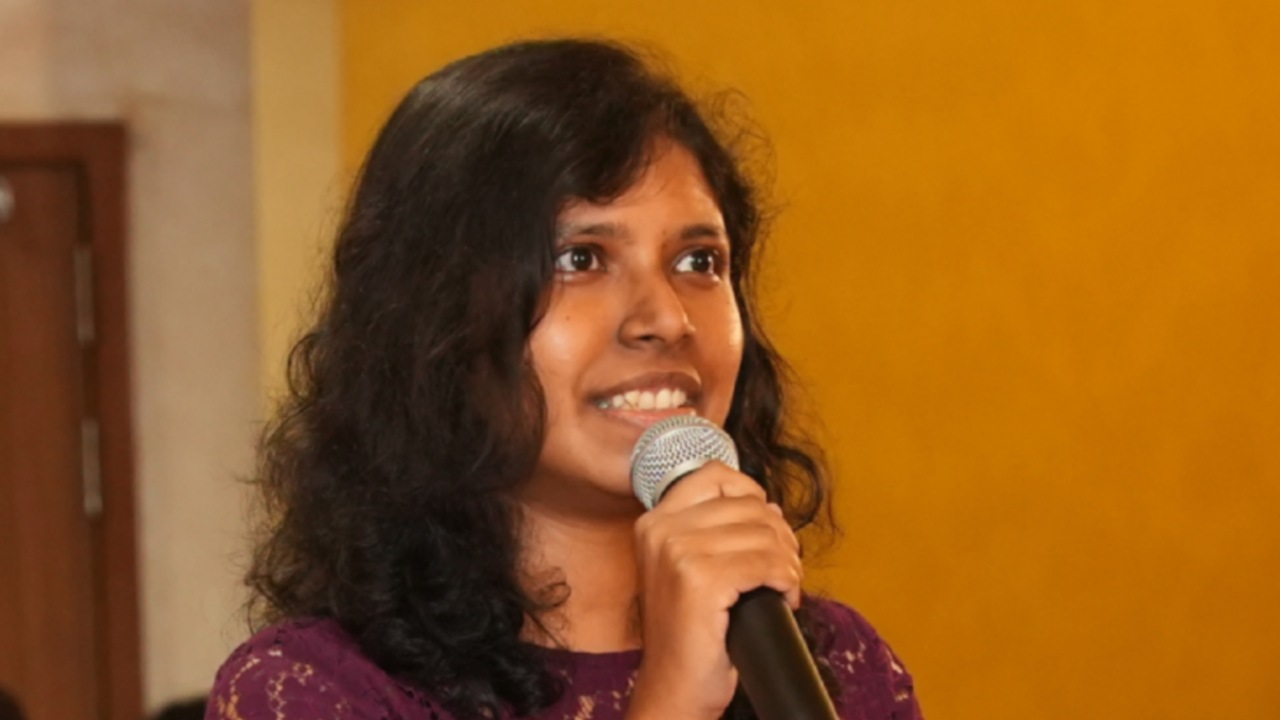
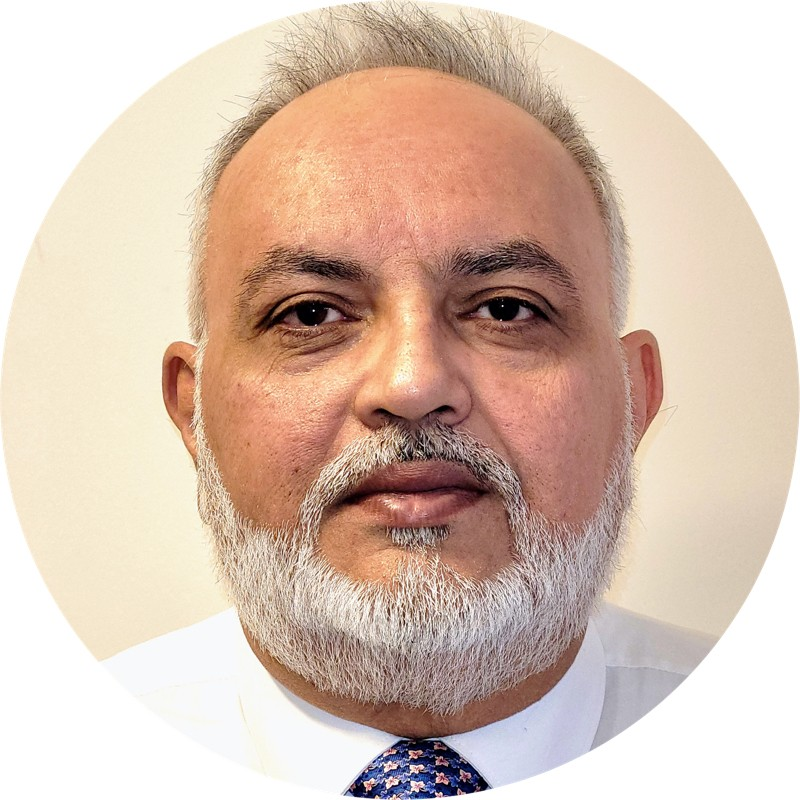
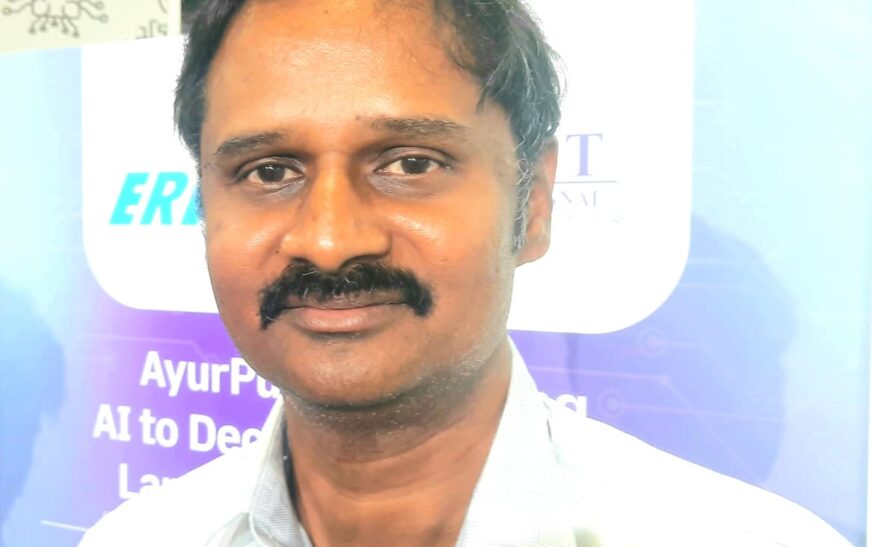
In an exclusive conversation with The Interview World at the India AI Impact Expo 2026, Dr. Bala Murugan MS, Associate Professor (Senior), School of Electronics Engineering, VIT, details the architecture of LLM, explains how AI can systematically transform Ayurvedic practice, presents current accuracy benchmarks, outlines the commercialization roadmap, and quantifies the diagnostic parameters enabled by his breakthrough device. What follows are the defining insights from this substantive dialogue.
Q: Could you provide a detailed overview of the LLM you have developed for Ayurveda?
A: Our LLM builds on the BharatGen initiative of the Government of India. Under this program, the team developed the AyurParam LLM, a 2.9-billion-parameter model with an approximate footprint of 7 GB.
The model performs efficiently on GPU infrastructure and in cloud-native environments. However, I deliberately chose a different deployment architecture. Instead of relying on centralized compute, I run the model locally, directly on my CPU.
This decision is strategic. Many users are understandably reluctant to transmit sensitive data to the cloud. Therefore, I adopt an Edge AI paradigm. In this architecture, inference occurs at the edge, that is, at the point of data acquisition, rather than in a remote data center.
In my implementation, the CPU operates in an isolated environment with no internet connectivity. I execute inference entirely on-device. As a result, the system returns responses to user queries in approximately eight seconds, maintaining a controlled buffer while preserving data sovereignty and operational independence.
Q: To what extent can the convergence of Ayurveda and AI reshape the future healthcare paradigm?
A: Ayurveda rests on a long-standing and coherent body of knowledge. However, its central challenge remains the limited availability of rigorous scientific validation. That gap, not the foundational philosophy, constrains its broader acceptance within contemporary biomedical frameworks. Encouragingly, many practitioners now recognize this limitation and are beginning to address it with greater seriousness.
For example, I am currently under the care of an Ayurvedic physician who evaluates my physiological state through nadi pariksha (pulse diagnosis). Based on pulse analysis, he concluded that my mitochondrial ATP activity is functionally dormant. In other words, he infers cellular bioenergetic status from subtle variations in pulse characteristics.
While this diagnostic interpretation is compelling, it requires empirical substantiation. Therefore, I have initiated a structured validation effort. I am collaborating with academic researchers at universities in Japan to obtain and analyse my cellular data. The process involves tissue culturing, followed by high-resolution mitochondrial imaging and functional assays. The researchers examine mitochondrial composition, morphology, and ATP production levels to quantify bioenergetic performance at the cellular level.
By correlating pulse-based diagnostic assessments with measurable mitochondrial biomarkers, we aim to establish a reproducible scientific framework. If this alignment proves consistent and statistically robust, Ayurveda could evolve from a traditionally validated system to one supported by modern cellular and molecular evidence.
With such validation, Ayurveda would not merely coexist with contemporary medicine, it could redefine preventive and integrative healthcare paradigms for the future by leveraging AI.
Q: What is the measured accuracy of your device?
A: My device has not yet attained medical-grade classification. At present, its accuracy stands at approximately 60 to 70 percent. I derive this estimate from structured comparisons against my own longitudinal healthcare data, collected during an active course of treatment.
Each day, I perform Nadi Pariksha and record the corresponding measurements generated by the device. In parallel, my physician conducts an independent pulse assessment. I then compare the device-generated outputs with the physician’s clinical interpretation.
Through this side-by-side evaluation, I measure concordance rates and identify deviations. This process allows me to quantify performance objectively rather than rely on anecdotal impressions. Although the device demonstrates promising alignment, it still requires systematic validation, calibration, and broader cohort testing before it can approach medical-grade reliability.
Q: When is your device expected to be commercially available to the public?
A: I expect to bring the full product to market within the next two years. That timeline reflects the engineering, validation, and regulatory work required to finalize the hardware device.
However, the software roadmap advances more rapidly. Specifically, I plan to release the LLM component much sooner through an Android application. While the physical device will require additional development cycles, the language model can begin operating independently.
Accordingly, users will be able to download the application, interact directly with the LLM, and begin querying the system for relevant insights. In short, the hardware will follow a longer commercialization path, whereas the LLM-driven intelligence layer will become accessible in the near term.
Q: How many health parameters can be measured using your product?
A: Ayurveda approaches disease identification through a structured physiological framework. Specifically, it evaluates 42 distinct organs or functional systems. Each of these operates according to the dynamic balance of three primary regulatory principles: Vata, Pitta, and Kapha.
Consequently, the analytical structure expands multiplicatively. Forty-two organs assessed across three primary dimensions yield 126 primary data points. However, the model does not stop there. Each dosha can vary across a continuous spectrum from 0 to 100 percent expression. Therefore, when we quantify these gradations, the dataset scales to 12,600 potential data variables.
This multidimensional matrix enables granular physiological mapping. Rather than relying on isolated biomarkers, the system evaluates combinatorial patterns across organs and the primary regulatory states of the body. As a result, it can detect subtle imbalances before they manifest as overt pathology.
The scale of this dataset is substantial. Accordingly, the device can perform an extensive range of health parametric assessments. By integrating organ-level analysis with Ayurvedic principles, it generates a high-resolution profile of systemic function and emerging risk conditions.