
OREX SAI, INC., a global telecommunications joint venture, was established on April 1, 2024 by NTT DOCOMO and NEC to accelerate the worldwide deployment of Open RAN mobile networks. Headquartered in Kawasaki, Japan, the company delivers comprehensive “OREX Packages,” fully integrated Open RAN solutions that encompass equipment supply, system design, network construction, maintenance, and managed operations. It tailors each deployment to the specific technical, regulatory, and commercial requirements of international telecom operators.
By combining DOCOMO’s pioneering network innovations with NEC’s proven global systems integration expertise, OREX SAI advances interoperability, strengthens vendor diversity, and enables disaggregated network architectures at scale. At the same time, it cultivates strategic partnerships with domestic and international stakeholders to expand secure, high-performance mobile connectivity across markets.
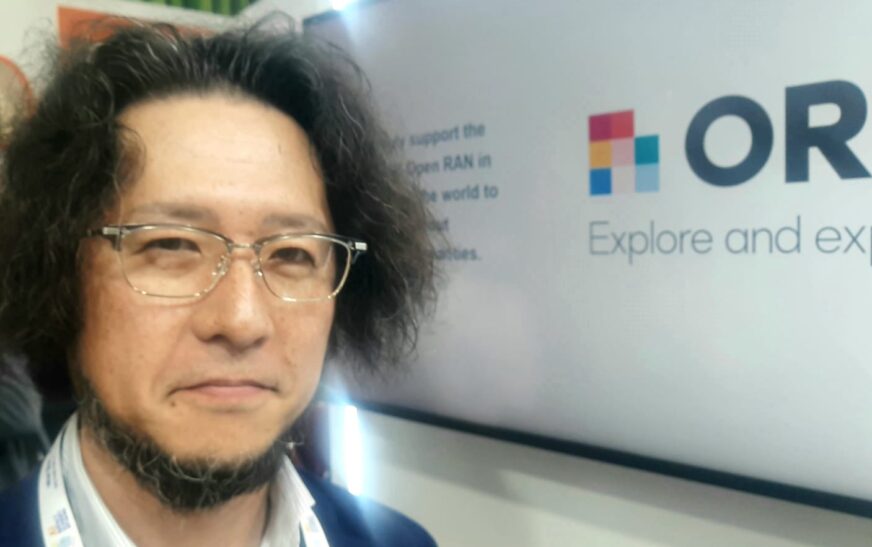
In an exclusive discussion with The Interview World at the India AI Impact Expo 2026, Santoshi Soejima, Senior Manager, Sales Department at OREX SAI, articulates how Open RAN reshapes telecom operating models. He examines the structural and operational challenges operators confront, outlines the company’s partner ecosystem, and explains how OREX SAI systematically meets diverse customer requirements across global markets. The following are the principal insights from that conversation.
Q: How does Open RAN transform the operational model of telecom operators in terms of flexibility, vendor interoperability, and network scalability?
A: In the traditional network architecture model, a telecom operator procures hardware, software, and associated services from a single vendor such as Nokia, Ericsson, or Huawei. Consequently, the operator becomes tightly coupled to that vendor’s proprietary ecosystem. This vertical integration limits strategic control and constrains technological choice. Over time, it creates vendor lock-in and reduces commercial leverage.
By contrast, Open RAN disaggregates hardware and software layers. It introduces standardized, open interfaces that enable multi-vendor interoperability. As a result, operators can source radio hardware from one supplier and baseband or RAN software from another. Because these components communicate through open standards, they integrate seamlessly within a unified architecture.
This structural shift delivers two critical advantages. First, it reduces capital and operating expenditure by fostering competitive procurement. Second, it restores architectural flexibility. When upgrading the network, operators can selectively replace or enhance specific software components without overhauling the entire system. In effect, Open RAN transfers strategic control back to the telecom operator and enables a more agile, cost-efficient, and future-ready network evolution path.
Q: What specific operational challenges does your solution address?
A: We launched the company only two years ago; therefore, our independent track record remains limited. However, our parent organization, NTT DOCOMO, deploys our technology in its live commercial network. In addition, Surge, a telecom operator in Asia, has adopted our solutions in operational environments. These implementations validate our capabilities, even though our broader global portfolio is still developing.
Because the company is relatively new, many prospective customers approach us cautiously. They monitor how competitors respond before committing to a large-scale transition. Nonetheless, they clearly recognize the structural benefits. Our solution reduces total cost of ownership and introduces meaningful architectural flexibility. As a result, operators express strong interest; yet, at the same time, they hesitate to deploy an emerging technology without further proof points.
We understand this dynamic. Accordingly, we focus on demonstrating performance, reliability, and scalability through tangible outcomes. We draw on extensive operational experience in Japan, where we have refined development methodologies, integration frameworks, and deployment best practices. Therefore, we do more than supply products. We transfer proven expertise, export implementation know-how, and enable operators to execute Open RAN with confidence, precision, and measurable impact.
Q: How do your solutions meet the telecom sector’s expectations?
A: We are currently conducting extensive field trials across multiple countries, including India. Through these deployments, we enable operators to rigorously evaluate our technical performance under real-world network conditions. At the same time, we demonstrate commercial viability by validating cost structures, integration efficiency, and operational scalability. Consequently, customers gain empirical evidence of both our engineering competence and our ability to execute sustainable, market-ready solutions.
Q: Who are your key strategic and technology partners?
A: OREX SAI maintains a broad and strategically structured partner ecosystem. For example, in the Centralized Unit (CU) and Distributed Unit (DU) domains, we integrate advanced software solutions from NEC and Fujitsu. These collaborations strengthen our core RAN architecture and ensure carrier-grade performance across deployment environments.
Beyond these engagements, we work with multiple technology providers across the Open RAN value chain. Because our architecture adheres strictly to Open RAN standards and open interfaces, we are not constrained by proprietary dependencies. Instead, we retain the flexibility to interoperate with any vendor that complies with established specifications.
As a result, we deliver a truly multi-vendor, standards-based ecosystem. This approach enhances interoperability, mitigates integration risk, and empowers operators to select best-of-breed components without compromising system coherence or operational integrity.
Q: How do you address and fulfil diverse customer requirements across global markets?
A: For the Radio Unit (RU), we lead product design and technology ownership while leveraging qualified manufacturing partners for localized production. For example, in India, we collaborate with in-country partners to manufacture our RU hardware in alignment with domestic requirements and supply-chain strategies. In parallel, we develop and control our own core software stack to ensure performance, security, and lifecycle manageability.
At the same time, we integrate software solutions from strategic partners such as NEC and Fujitsu when it strengthens the overall architecture. This dual approach, combining proprietary development with partner technologies, expands our solution flexibility and mitigates dependency risk.
Consequently, we maintain multiple configuration pathways to meet customer-specific requirements. These configurations vary by country, regulatory framework, spectrum environment, and operator strategy. Therefore, we architect each deployment with precision, ensuring technical alignment, commercial viability, and long-term scalability.