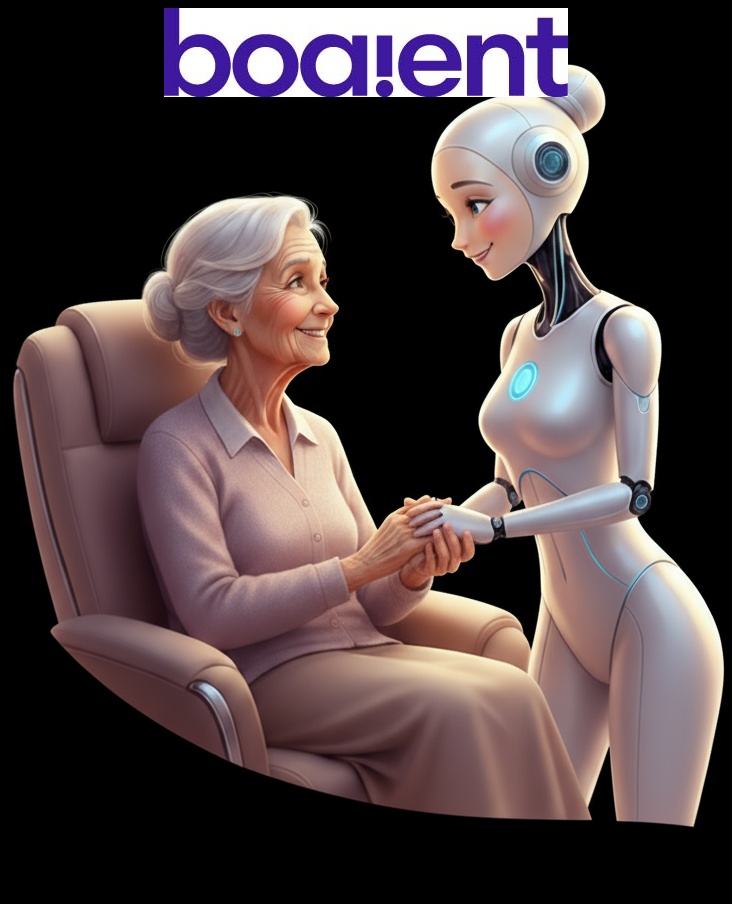


Boaient is an India-based AI technology company that is redefining enterprise and healthcare transformation through intelligent, human-centered systems. It was established with a clear mandate: deliver Business-Oriented AI that drives measurable enterprise outcomes. To that end, the company builds domain-specific AI agents and foundation models that automate complex workflows, reduce operational friction, and address real-world clinical and business challenges with precision.
Among its flagship platforms, LifeEase stands out as a purpose-built AI solution for elderly care. It personalizes engagement, supports independent living, and enhances quality of life. Simultaneously, it equips clinicians with multilingual clinical documentation capabilities, streamlining reporting while improving accuracy and continuity of care. Beyond healthcare, Boaient engineers custom AI solutions, deploys autonomous workflow agents, and enables secure on-premise implementations for enterprises operating in highly regulated environments. Its inclusion in NVIDIA Inception and Forbes India’s Select 200 underscores its commitment to ethical, accountable, and human-centric AI innovation.
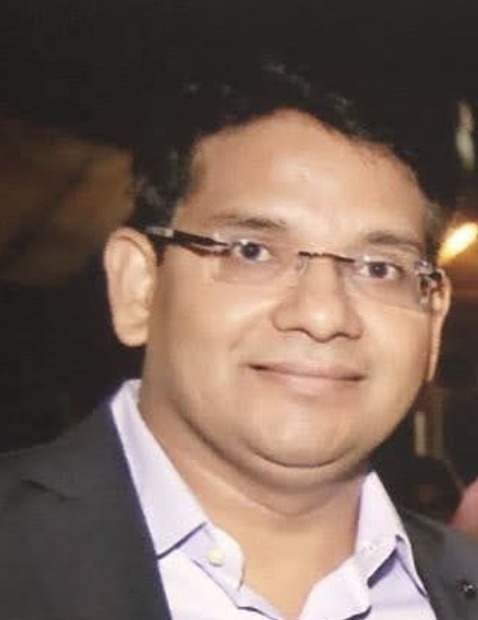
In an exclusive conversation with The Interview World at the India AI Impact Expo 2026, Vishnu Prasad, Partner and CEO of Boaient, articulates the company’s healthcare innovation strategy with clarity and conviction. He outlines its core sector-specific offerings, explains how the AI system meaningfully engages elderly users, details the deployment roadmap, and highlights the next wave of innovations designed to strengthen the existing platform. What follows are the key insights from that in-depth exchange.
Q: What are Boaient’s core products and services for the healthcare sector, and how do they address the specific healthcare challenge?
A: Boaient is a healthtech startup addressing a sharply defined and rapidly escalating challenge: geriatric care. It focuses exclusively on the complex medical, emotional, and social needs of the elderly.
Across India and globally, demographic shifts are reshaping family structures. Nuclear households are becoming the norm. Consequently, many seniors, including parents and close relatives, now live in relative isolation. This social fragmentation has serious consequences. Loneliness often triggers depression. Depression, in turn, accelerates physical decline and increases hospitalization rates. Alarmingly, individuals who remain healthy through their early fifties frequently experience preventable deterioration in later years, driven not only by medical conditions but also by emotional neglect and lack of structured support.
Boaient confronts this challenge directly. It delivers end-to-end elderly healthcare enabled by AI. The company integrates monitoring, engagement, and clinical intelligence into a unified system designed to preserve independence, enhance well-being, and reduce avoidable medical interventions. Through technology, it aims to restore continuity of care and dignity in aging.
Q: How does the system support elderly users in interacting with it effectively?
A: On the technology front, we have engineered a domain-specific Small Language Model (SLM) purpose-built for geriatric care. Unlike generic models, this SLM operates within a tightly defined clinical and caregiving context. As a result, it manages the end-to-end lifecycle of elderly support with precision and reliability.
First, it processes and interprets real-world conversations between elders and caregivers. It does not merely transcribe dialogue; it extracts intent, identifies health-related signals, and contextualizes responses. In parallel, it delivers multimodal intelligence. The system analyzes medical images and documents at a high level of clinical relevance. It assists caregivers in interpreting prescriptions, blood test reports, MRI scans, and other diagnostic outputs, thereby reducing ambiguity and improving decision support.
In addition, we have integrated radar-based fall detection. Falls remain one of the leading causes of injury and mortality among seniors, particularly in domestic spaces such as hallways and bathrooms. Too often, these incidents go unnoticed until it is too late. Our hardware layer interfaces directly with the elderly care platform. It detects abnormal motion patterns in real time and immediately triggers alerts, enabling rapid intervention.
Behind the interface, an autonomous agent framework orchestrates these functions. These agents analyse prescriptions, flag potential risks, and coordinate care workflows seamlessly. Furthermore, the platform supports robust multilingual interaction. Through integration with the Sarvam AI model, it enables fluid communication across languages such as Hindi and Bengali. Consequently, caregivers, elders, and physicians can converse in their preferred language without friction, ensuring clarity, continuity, and inclusivity in care delivery.
Q: Has this solution been deployed in hospital settings, or is it still pending launch?
A: We have initiated deployments in select elderly care communities in the United States. However, healthcare technology demands rigorous validation. Accordingly, we are conducting structured pilot studies and complying with regulatory frameworks such as HIPAA and GDPR. These safeguards are non-negotiable. At present, the platform is undergoing controlled testing in partnership with care communities in both the United States and Australia to ensure clinical reliability, data security, and operational scalability.
In parallel, we are preparing for entry into the Indian market. That expansion, however, requires localization at a foundational level. India’s linguistic diversity necessitates a highly specialized language model tailored to regional and clinical contexts. We are currently developing that model. Once completed, we will collaborate with select hospitals and caregiver homes to conduct a three-month validation cycle under real-world conditions. Following successful evaluation, we intend to launch the platform in India as a direct-to-consumer (B2C) offering, ensuring accessibility at scale while maintaining clinical integrity.
Q: What next-generation features or technological advancements are you planning to integrate into the current system?
A: Remote patient monitoring has become a structural pillar of modern healthcare. While monitoring systems already exist, AI is rapidly redefining their analytical depth and predictive accuracy. We are therefore integrating advanced monitoring capabilities directly into our elderly care platform. As a result, we can capture continuous, end-to-end health data across environments rather than rely on episodic clinical snapshots.
This integration fundamentally expands clinical visibility. Today, our primary users are elders and caregivers. However, we are now extending the platform to physicians. Consider a recurring consultation: when an elder visits a doctor for the fourth time, recall gaps often limit diagnostic clarity. Instead, the physician can query the AI directly. The system can surface precise longitudinal insights, for example, a documented drop in blood pressure on a specific date and time over the past two months. Such granularity is rarely available through memory alone.
Consequently, doctors gain structured, evidence-based context. They can evaluate how prescribed medications have performed over time. They can identify positive therapeutic responses or adverse effects. Most importantly, they can adjust treatment plans with data-backed confidence rather than anecdotal input.
Beyond clinical settings, we are preparing for broader institutional integration. Within the next year, we aim to engage with government health departments. With aggregated and anonymized datasets, state health ministries can develop targeted eldercare policies grounded in empirical trends rather than assumptions. This capability remains largely absent today.
In parallel, we are exploring collaboration with health insurance providers. By integrating validated health data streams, insurers can design more accurate risk models, preventive programs, and outcome-based coverage frameworks. Through these layered extensions, clinical, governmental, and insurance, we are building a comprehensive AI-driven ecosystem for geriatric care.