

Assisto Technologies Pvt. Ltd. is not just another AI startup. It is redefining how humans and machines communicate. Established in 2021 and headquartered in Greater Noida, the company is shaping the future of customer engagement with its pioneering conversational AI. By mastering Natural Language Understanding (NLU) and Natural Language Generation (NLG), Assisto powers chatbots, voicebots, WhatsApp bots, and intelligent analytics that enable businesses to automate interactions with precision, empathy, and intelligence.
At the core of this transformation lies iAssist, a full-stack NLP framework engineered in India. Far more than a platform, iAssist operates as a comprehension engine. It delivers seamless speech-to-text and text-to-speech, supports multilingual fluency, detects sentiment, and generates emotion-aware responses in real time. It does more than answer questions. It grasps intent, tone, and context, making every interaction natural and meaningful.
Driven by ambition and anchored in scalability, Assisto Technologies is positioning itself as a trailblazer. Its mission is clear: to make conversations with machines as intuitive and impactful as those with people.
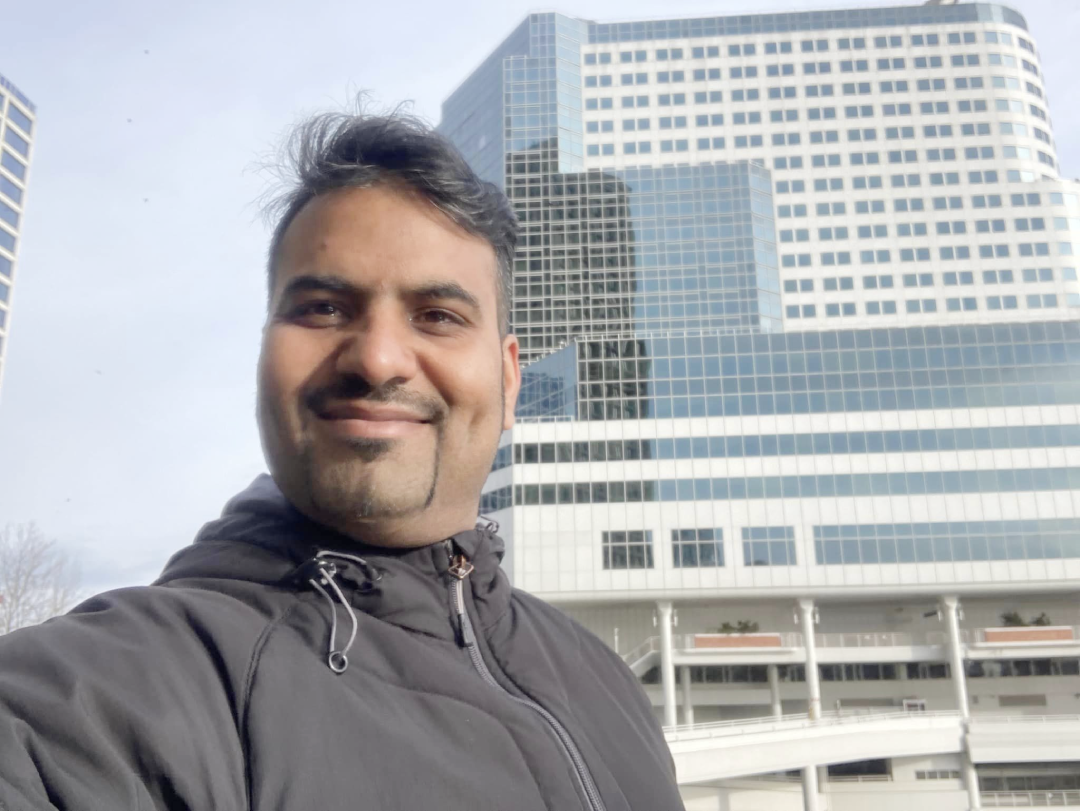
During FIIT Forward 2025, hosted by FITT and IIT Delhi, The Interview World engaged exclusively with Ramakrishnan V, Founder and CEO of Assisto Technologies Pvt. Ltd. In this dialogue, he shed light on the company’s breakthroughs in speech-to-text and text-to-speech, revealed insights into its key clientele, outlined plans to integrate Assisto AI with Bhashini, and emphasized a bold roadmap for global expansion. He also shared his vision for fostering innovation and accelerating business growth.
What follows are the key takeaways from his compelling conversation.
Q: What distinguishes Assisto Technologies’ solutions in the speech-to-text and text-to-speech space, and how do these offerings address gaps or create advantages in the current market landscape?
A: We operate at the cutting edge of AI. Recently, we trained an exceptionally lightweight speech-to-text model and are now advancing it into speech translation. This innovation is already protected by a patent. Today, it delivers nearly 90% accuracy across five Indian languages. Within three months, we will scale that capability to 12 Indian languages and expand to 50 global languages, including Arabic and major European languages such as Spanish and Portuguese. This breakthrough marks one of our true masterstrokes.
Equally significant is our progress in Optical Character Recognition (OCR). We have recently achieved accuracy levels ranging from 90% to 94%, depending on the language. At present, the system supports 30 languages, and we continue to add more. Our next milestone is training a Neural TTS engine, which will further elevate our portfolio.
Another defining achievement lies in conversational AI and Retrieval-Augmented Generation (RAG). We have refined these technologies to such precision that we can replicate the performance of large language models using small language models (SLMs), and do so in multilingual and cross-lingual environments. In practice, this means data may exist in English, yet users can query and interact seamlessly in other languages. That flexibility is transformative.
We are also venturing into Agentic AI. Within the next quarter, we expect to roll out a complete solution designed not just for India, but for global markets. Importantly, our approach remains highly cost-competitive. We envision an Indian company standing toe-to-toe with global tech giants, and competing successfully.
Q: Could you share some of your key clients or sectors that actively use your products?
A: We work in close collaboration with industry leaders such as IBM, Celebal Technologies, Eastman Auto & Power, and IFFCO Tokio, along with several other esteemed brands. These partnerships reflect the trust and credibility we command in the market. Moreover, we consistently convert opportunities into results, closing new orders nearly every month without exception.
Q: Do you see potential in integrating Assisto AI with Bhashini, the government’s AI and NLP initiative for multilingual translation, to expand accessibility and reach a wider consumer base across India’s diverse linguistic landscape?
A: We take immense pride in driving such innovation from an Indian company. Naturally, we are eager to be part of Bhashini and will soon engage with various government agencies to explore collaboration.
What sets us apart is our readiness with robust, industry-grade solutions. We do not offer half-baked concepts and expect customers to experiment at their cost. Instead, we ensure every solution is fully developed, rigorously tested, and market-ready before taking it to clients. That discipline defines our approach and strengthens the trust we build.
Q: Are there plans for Assisto Technologies to expand into the global arena and tap market opportunities beyond India?
A: Our plan is clear: we aim to export our products and solutions, high-quality, homegrown innovations from India, to the global market. I often say, if you can solve a problem for the Indian market, you are automatically relevant worldwide.
India offers unparalleled diversity, complexity, and cost competitiveness. We have successfully navigated these challenges, which gives us a unique edge. This achievement forms the core of our strategy and underpins our confidence in competing with major global players.
Q: How do you envision Assisto Technologies evolving over the next five to ten years in terms of innovation and growth?
A: As I mentioned, most of our models are entirely developed in-house, except for the LLM component. Looking ahead, we plan to train our own large language model. I firmly believe that to maximize a model’s potential, it must be proprietary.
Fortunately, we have already cracked the underlying technology. It is only a matter of time before we develop our own fully homegrown Indian LLM. Within the next one to two years, we envision a model supporting 50 languages, enabling end-to-end solutions across OCR, ESR, TTS, and more.
This positions us to capture the entire voicebots and voice analytics market. Based on this trajectory, we are confident of achieving revenues exceeding ₹100 crore within the next two to three years.