
MatAlytics is a University of Nottingham spin-out pioneering physics-informed AI for critical industrial assets. Its flagship software, CITRUS, combines advanced neural networks with finite element simulations to generate fast, accurate, real-time insights into structural integrity and material behaviour. By translating complex engineering simulations into actionable intelligence, MatAlytics enables industries to improve operational efficiency, optimise maintenance, minimise unplanned downtime, and strengthen sustainability. The company’s technology has applications across power generation, aerospace, steel manufacturing, and other asset-intensive industries. Built on a decade of academic research and industrial expertise, MatAlytics collaborates with organisations such as EDF, EPRI, the University of Nottingham, and Innovate UK to accelerate the adoption of AI-driven engineering solutions.
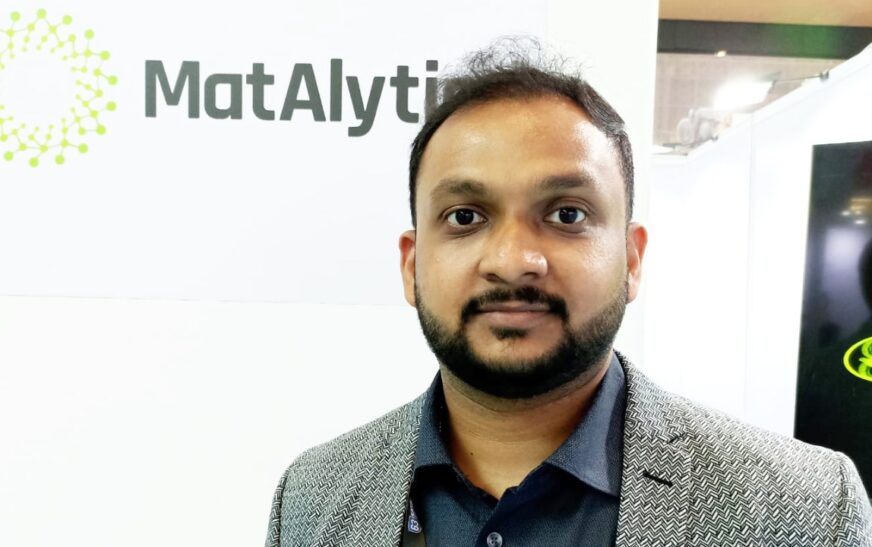
In an exclusive conversation with The Interview World at Powergen India 2026, Tanmay Mhatre, Commercial Lead, MatAlytics, explains how the company’s core solutions address critical challenges in thermal power plants and what differentiates them from conventional approaches. He outlines the measurable outcomes delivered by the technology and explains how MatAlytics’ solutions can identify and predict potential component damage in real time, enabling operators to take corrective action before failures escalate.
Mhatre also shares insights into MatAlytics’ commercialisation journey across India, Europe, and Asia, while offering a glimpse into the company’s next wave of innovations. He discusses how MatAlytics plans to expand the scope of its technology beyond thermal power and strengthen its role in transforming industrial asset management through physics-informed AI.
Here are the key takeaways from the conversation.
Q: What are the core technology solutions MatAlytics brings to thermal power plants, what measurable business and operational outcomes do they deliver, and how does MatAlytics differentiate itself from conventional and emerging solutions available in the market?
A: MatAlytics is a UK-based company founded two years ago as a spin-out from the University of Nottingham. The company builds on more than a decade of research conducted by university professors to understand how materials behave and deteriorate under changing operating conditions.
We combined that deep scientific expertise with extensive industry experience. One of our co-founders, a former executive at EDF Energy, brings more than 40 years of hands-on experience in power generation. He understands the practical challenges of operating and maintaining power plants. By combining this operational expertise with our fundamental research, we created MatAlytics to address a critical industry challenge: delivering real-time structural-integrity intelligence for thermal power plants.
This challenge is becoming increasingly important in India. As renewable energy penetration rises, thermal power plants are being pushed towards more flexible modes of operation. They are no longer simply running at steady baseload conditions. Instead, operators are frequently ramping generation up and down to balance fluctuations in renewable power. As a result, the damage and degradation experienced by critical components can change dynamically.
Today, operators have limited visibility into how much damage is occurring inside a plant in real time. MatAlytics addresses this gap by providing continuous intelligence on where damage is occurring, how much damage has accumulated, and how that damage is evolving. Operators can then use these insights to optimize operating parameters, reduce unnecessary degradation, and ultimately extend the service life of critical components.
This is where our technology differs fundamentally from conventional approaches. Today, structural-integrity assessments are largely based on offline, one-off engineering studies and periodic inspections. These assessments provide valuable snapshots, but they cannot tell operators what happened between two inspections. That creates a significant visibility gap.
The challenge becomes even greater under flexible operation. When power plants operated predominantly at baseload, engineers could often approximate component damage as a relatively linear process. However, that assumption no longer holds. Frequent ramping, cycling, start-ups, and shutdowns introduce complex and highly dynamic material responses. Consequently, damage accumulation can accelerate or change in ways that conventional linear assumptions cannot adequately capture.
MatAlytics closes this gap by integrating physics-based models directly into plant operations. Our technology can continuously interpret operating conditions and provide live insight into the structural integrity of critical components.
Importantly, this is not AI for the sake of AI. The foundation of our technology is engineering physics and fundamental material science. AI enhances the speed and scalability of these physics-based models; it does not replace the underlying physical principles.
Ultimately, the grid is demanding greater flexibility from thermal power plants, but the laws of material physics do not change. The components still respond to temperature, pressure, stress, strain, fatigue, and other physical forces in predictable ways. Our role is to translate those underlying physics into real-time intelligence so that operators can make better decisions, minimize damage, and operate their assets more safely, efficiently, and sustainably.
Q: You emphasize predictive models and damage prevention to improve operational efficiency and reduce costs. Could you explain the measurable outcomes and savings your solutions deliver?
A: For all critical boiler components, such as steam headers and steam drums, which represent high-value assets, we provide a real-time assessment of their integrity and degradation. Specifically, we quantify the impact of fatigue and thermo-mechanical fatigue and determine the asset’s remaining useful life.
For example, if an asset has 40% of its useful life remaining under the current operating conditions, we can model different operating scenarios to identify opportunities to safely extend that life. This enables operators to move beyond simply knowing how much life remains; they can also understand how and when that life has been consumed.
The platform shows the damage accumulated under different operating regimes and provides a heat map that tracks this degradation week by week. As a result, operators can identify which operating conditions, load changes, or individual start-ups have imposed the greatest integrity cost on the asset.
Ultimately, this gives operators a much clearer basis for decision-making. For every major operating decision, they can see not only its impact on performance but also its integrity cost: how much additional damage it has caused and how much remaining asset life it has consumed.
Q: How far in advance can MatAlytics predict potential equipment damage or failure, and how much lead time do operators typically have to take preventive action?
A: The lead time is essentially real-time. Within seconds or minutes, we can assess the current condition and predict how the asset is likely to perform. We build the model only once, which takes approximately a day to develop the complete 3D representation of the asset and train the underlying neural network.
Once the model is trained, we feed it the plant’s entire operating history, from the time it was installed or commissioned through to the present day. Whether that history spans 10, 15, 30, or 40 years, the model processes the data to determine how much damage the asset has accumulated over its operating life.
After this initial assessment, the system operates almost instantaneously. It continuously evaluates live operating data and shows the immediate impact of operating decisions on the asset’s condition, degradation, and remaining life. In effect, it gives plant operators a real-time view of how each operating decision affects asset integrity and long-term performance.
Q: Has MatAlytics already commercialized and deployed its solutions in India?
A: We have recently expanded into India and began commercializing the technology earlier this year. At the same time, we are running multiple pilots across Europe and Asia. In India, we began engaging with a few early operators about two years ago. We have now successfully completed those pilots and are moving toward larger-scale commercial contracts.
Moreover, several power companies have expressed strong interest in partnering with us. They see an opportunity to deploy this technology at scale, establish themselves as early adopters, and set a benchmark for the broader market.
Q: What new innovations are you planning, and do you envision expanding MatAlytics’ solutions beyond thermal power plants to other types of power-generation facilities?
A: Thermal power plants present several critical material and structural challenges. Corrosion is a major concern, and in certain applications, materials must also withstand significant plastic deformation. We are therefore developing models that can account for these mechanisms as well. One particularly important application is boiler-tube leak failure, which remains a major concern for power plants worldwide.
Our immediate focus is to integrate corrosion with fatigue, which we already model, so that we can predict component failure well in advance. This capability has significant economic value because unexpected failures can result in substantial downtime, maintenance costs, and loss of generation.
Beyond thermal power, we are also planning to expand the technology to wind turbines, particularly for detecting and predicting fatigue cracking in wind-turbine blades. Looking further ahead, we see a similar opportunity in solar-material degradation. As discussed in one of the sessions, over the next 30 to 40 years, thousands of solar panels will reach the end of their operational life. The industry will then need reliable methods to determine which panels require replacement and which can continue operating safely and efficiently.
Solar-material degradation is already part of our development roadmap, although it is likely to be approximately two years away rather than an immediate priority. The underlying materials and failure mechanisms differ significantly across applications. Wind-turbine blades, for example, are primarily composite structures rather than conventional steel components, so we need additional time to validate and adapt our models for these materials.
In contrast, thermal power is an immediate and strategically important opportunity for us. India is a particularly important market because of its large installed base of coal-fired power generation. Compared with markets such as the UK, where coal-fired generation has effectively been phased out, India continues to operate a substantial fleet of coal-based power plants. That scale makes India one of our key markets and a major opportunity for applying predictive failure technologies at scale.