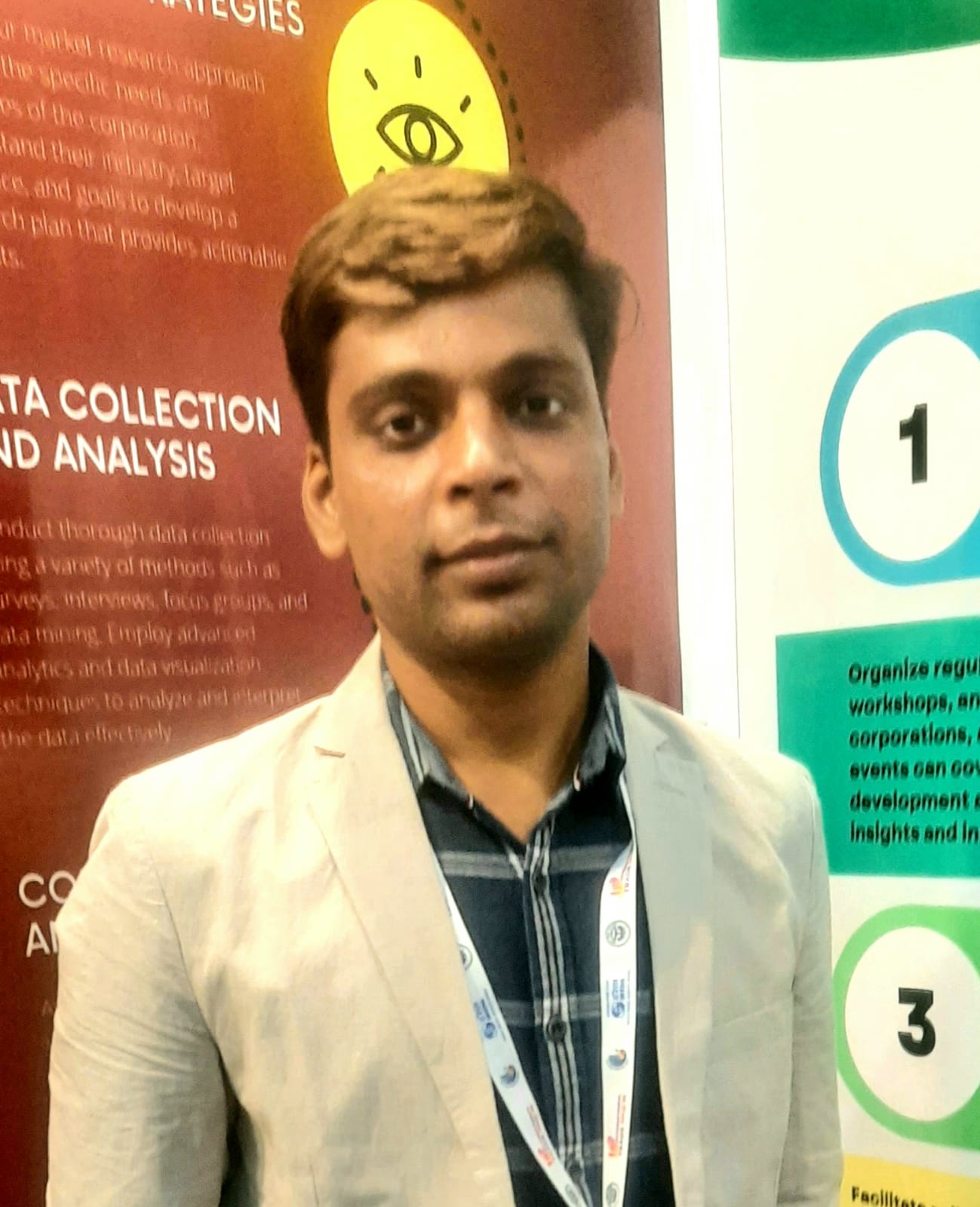


As a distinguished Russell Group institution ranked among the UK’s top 100 universities, the University of Leeds approaches artificial intelligence as a transformative societal force rather than solely a technological pursuit. At the India AI Impact Expo 2026, The Interview World had the opportunity to engage an in-depth conversation with Dr. Dibyadyuti Roy, Associate Professor of Cultural Studies, Media Studies, and Digital Humanities, and Director of International Activities at FAHACS, University of Leeds.
During the conversation, Dr. Roy discussed the university’s broad AI initiatives, including the Digital Cultures and Creativity Hub, which applies machine learning to preserve cultural heritage, and the Leeds Institute for Data Analytics, which explores the intersection of society, technology, and data. He also highlighted emerging multidisciplinary ventures, such as the Leeds Institute for Societal Futures and the MSc in AI Ethics and Society, which aim to prepare leaders with both technical expertise and ethical insight. He further addressed AI’s societal impact, the necessity of inclusivity in its development, and the global conversations shaping the future of intelligent technologies.
Here are the key takeaways gleaned from this engaging discussion.
Q: Could you share the key areas of AI research and development currently being pursued at the University of Leeds?
A: As you may know, the University of Leeds is a prestigious Russell Group institution and ranks among the top 100 universities in the UK. Our approach to artificial intelligence extends beyond technology; we view AI as a transformative force for humanity. At Leeds, AI intersects with research and innovation across multiple centers and institutes.
I can discuss both the university-wide work and the contributions of specific institutes. Within the Faculty of Arts, Humanities and Cultures, the Digital Cultures and Creativity Hub applies deep learning and machine learning to preserve cultural heritage. Meanwhile, the Leeds Institute for Data Analytics, a standalone institute, explores questions at the intersection of humanities, society, and technology.
In addition, the Institute for Transport Studies, the School of Computing, and the Leeds University Business School actively advance research that integrates AI, human-centered insights, and solution-oriented approaches. Collectively, these initiatives demonstrate how Leeds leverages AI to address complex societal challenges while fostering innovation across disciplines.
Q: Can you describe the multidisciplinary institutes that have been emerging at your university recently, and the focus areas they are addressing?
A: I want to highlight a particularly exciting development over the past year: the creation of the Leeds Institute for Societal Futures. This institute transcends any single faculty, reflecting the reality that real-world problems do not arrive neatly divided by discipline. Addressing such challenges requires a multidisciplinary and transdisciplinary approach.
In line with this vision, we have launched the MSc in AI Ethics and Society. This program is specifically designed to cultivate individuals who not only master the technology but also deeply understand its societal implications. It represents our commitment to preparing leaders who can navigate both the technical and ethical dimensions of AI.
Q: How do you view the current development of AI, and are you satisfied with its impact on human life so far?
A: One of the most critical responsibilities for both academics and industry practitioners is to demystify and demythologize AI. The term “artificial intelligence” has existed for over 70 years, first coined in 1956. Over time, AI paradigms have evolved, from symbolic systems to today’s connectionist approaches.
In my work within critical AI studies and critical computing, I often draw an analogy to Vernier calipers in school, which required adjusting for zero error. Similarly, AI is a socio-technical assemblage composed of training models, learning algorithms, and data. These elements are deeply interconnected, and their impact extends far beyond technical boundaries.
Therefore, it is essential that everyone, not just experts, actively participates in shaping AI. By engaging, questioning, and understanding these systems, society can ensure that AI remains transparent, accountable, and democratic, reflecting collective human values rather than opaque technical processes.
Q: How democratic and inclusive is AI development currently, and what are the key global discussions surrounding these issues?
A: To answer this question, I turn to the insights of the scholar Melvin Kranzberg, who famously stated that technology is neither good nor bad, nor is it neutral. Like any technology, AI has experienced tremendous hype. However, this is not its first hype cycle, previous cycles have come and gone. What makes the current moment different is the unprecedented growth in data and computational power, which demands careful and informed attention.
I am particularly pleased that the India AI Summit is taking place, with India assuming a leading role in developing foundation models and advancing multilingual AI, exemplified by the work of Bhashini. These initiatives highlight that we are at the forefront of innovation.
As you rightly noted, inclusivity must lie at the core of AI development. True inclusivity emerges through dialogue, and this summit exemplifies such critical conversations. For these reasons, I am both excited and optimistic about the path ahead.