

Wolters Kluwer India operates as the Indian arm of its global parent and delivers AI-enabled, cloud-based platforms across healthcare, tax and accounting, legal and regulatory, financial compliance, and corporate performance and ESG domains. It builds and deploys trusted solutions such as clinical decision support systems, medical research platforms, and tax and audit software. These offerings improve precision, accelerate workflows, and strengthen decision-making outcomes for professionals.
The company combines deep domain expertise with advanced technology to integrate evidence-based content into automated workflows. As a result, it enables clinicians, accountants, and finance professionals to respond effectively to rapidly shifting regulatory and operational environments. Moreover, it prioritizes innovation, AI-driven insights, and responsible technology to reshape professional workflows and advance India’s knowledge economy.
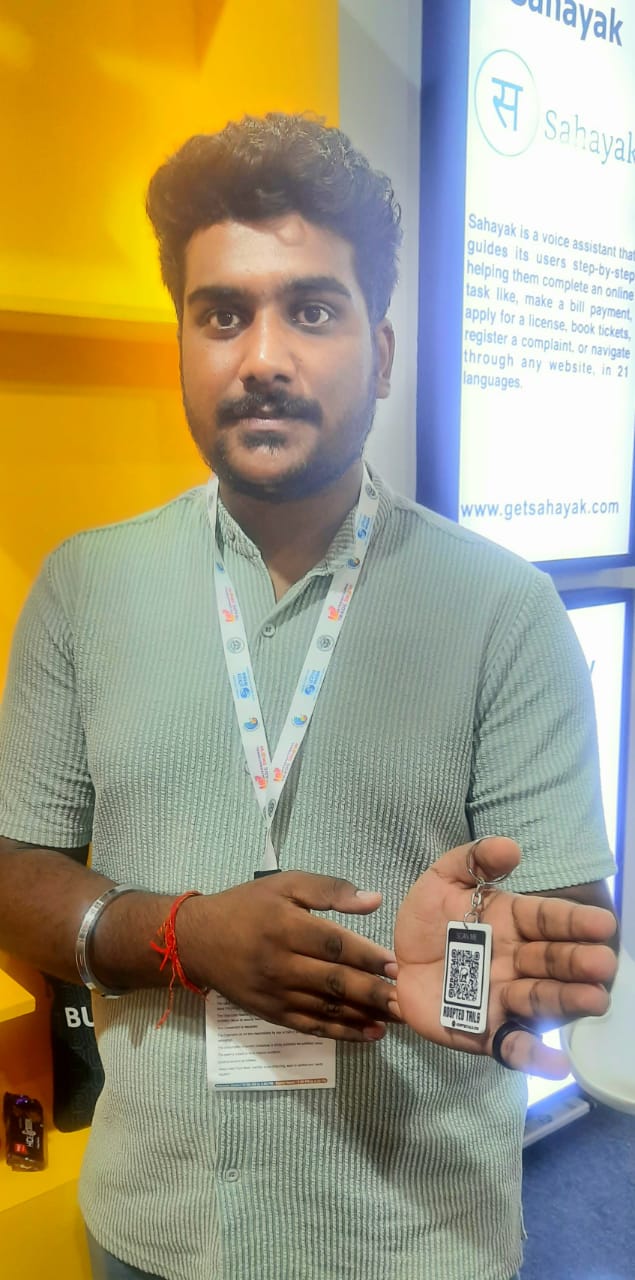
At the ASSOCHAM Pharma Summit & Awards 2026, Pulkit Bhardwaj, Senior Marketing Manager at Wolters Kluwer India, spoke with The Interview World. He outlined the organization’s core offerings and discussed the scale of its research repositories, including journals and publications. He also examined how artificial intelligence is reshaping knowledge sharing and highlighted emerging directions in medical research. His insights collectively underscored the company’s strategic focus areas and future-ready initiatives in healthcare innovation.
Q: What are the core offerings of Wolters Kluwer?
A: Wolters Kluwer operates as a global organization that originated in publishing and has steadily evolved into a diversified provider of professional information, software, and services. It began with traditional books and publishing, but over time it has transformed its portfolio to extend far beyond print.
Today, the company delivers integrated solutions across healthcare, taxation, accounting, legal services, and corporate compliance. In addition, it combines software platforms with domain-specific services to support end-to-end professional workflows across these sectors.
In healthcare, the company anchors its offerings around two major platforms. First, it offers UpToDate, a clinical, evidence-based decision support tool widely used by healthcare professionals to improve patient care. Second, it provides Ovid, which serves medical colleges and research institutions in India by offering access to a vast repository of white papers, journals, and research publications. Librarians across these institutions actively use this platform to support academic and clinical research.
Beyond these, the company delivers Lippincott Medical Education, which includes physical textbooks, e-books, and academic journals designed to support structured learning in medicine. Furthermore, it offers Lippincott Open Access, which enables medical researchers to publish their work end-to-end through open-access channels, thereby strengthening research dissemination and visibility.
Q: What is the size of the repository of research papers and journals?
A: On the journal front, Wolters Kluwer maintains a robust portfolio of collaborations spanning more than 350 journals globally. Within this ecosystem, it also holds exclusive publishing partnerships for approximately 40 journals, reinforcing its strong institutional presence in the academic publishing landscape.
In addition, the company works with leading medical authorities and globally recognized publications. For instance, it maintains an exclusive association with the American Heart Association and supports access to highly reputed journals such as the New England Journal of Medicine. These partnerships reflect deep, long-standing collaborations with premier medical societies and research institutions worldwide.
Alongside its journal ecosystem, the company strengthens medical education through its Lippincott Medical Education offerings. This portfolio includes widely used physical textbooks that serve MBBS students in their first and second years, as well as learners in nursing, dental, and allied health disciplines. Consequently, it plays a critical role in foundational medical training across institutions.
Beyond healthcare, the company also operates a comprehensive suite of solutions in taxation, accounting, and legal domains. For example, it offers iFirm, which supports chartered accountancy firms in managing workflows and compliance. It further provides audit automation tools that enhance accuracy and efficiency in financial processes. In parallel, its legal portfolio spans arbitration, corporate law, and intellectual property solutions, thereby supporting professionals across the full spectrum of legal practice.
Q: How has knowledge sharing changed with the introduction of disruptive technologies such as AI?
A: A clear example comes from UpToDate within Wolters Kluwer. The platform now integrates generative AI capabilities to enhance clinical decision support and improve workflow efficiency.
Earlier, the system followed a structured input model. Doctors entered patient symptoms, and the platform returned relevant treatment guidelines based on established clinical evidence. While effective, this process remained largely linear and input-driven.
However, with the integration of generative AI, the interaction model has evolved significantly. Now, physicians can engage in a conversational interface rather than relying solely on structured data entry. They can describe symptoms in natural language, ask follow-up questions, and refine clinical queries in real time.
As a result, the platform accelerates clinical reasoning and shortens the decision-making cycle. Moreover, it enhances usability by aligning more closely with how doctors think and communicate in practice. Overall, this shift reflects a broader strategy to strengthen healthcare offerings through AI-driven capabilities that improve speed, accuracy, and clinical outcomes.
Q: How do you see the future of medical research evolving within your organization, and what initiatives or focus areas do you have to support and promote it?
A: Wolters Kluwer holds a strong niche in the healthcare and medical information domain. In India, the research ecosystem continues to evolve rapidly, driven by expanding academic institutions and an increasing focus on clinical and scientific research.
As this ecosystem matures, medical colleges and research institutes face a growing need for reliable and comprehensive access to high-quality journals, research papers, and white papers. Historically, libraries relied on physical collections. However, this approach created inherent constraints, including limited storage space and high acquisition costs.
Consequently, the sector has shifted decisively toward digital-first access models. This transition has fundamentally reshaped how knowledge is consumed and distributed across institutions. In this context, platforms such as Ovid and the Lippincott Medical Education play a critical role.
They provide structured, scalable access to curated medical content and ensure that researchers, clinicians, and students can efficiently engage with credible global literature. As a result, they help accelerate research workflows and strengthen the overall quality of the academic and clinical research ecosystem. Ultimately, this value proposition centers on enabling faster, broader, and more reliable access to trusted medical knowledge.