
As the Indian steel industry confronts the twin imperatives of sustainability and decarbonization, it is fundamentally redefining the role of one of its most underutilized resources: steel scrap. Once viewed merely as industrial waste, steel scrap has evolved into a strategic raw material capable of driving a circular, resource-efficient, and low-carbon steel economy. Consequently, building a robust steel-to-scrap value chain has become central to reducing carbon emissions, lowering import dependence, strengthening domestic recycling, and securing long-term raw material sustainability.
Against this backdrop, the 13th Indian Steel Markets Conference in Delhi convenes policymakers, industry leaders, recyclers, processors, technology providers, and other key stakeholders to examine the opportunities and challenges shaping India’s steel scrap ecosystem. Held under the theme Steelathon – Shaping the Steel-to-Scrap Value Chain, the conference serves as a strategic platform to accelerate collaboration, innovation, and policy dialogue that will shape the future of sustainable steelmaking in India.
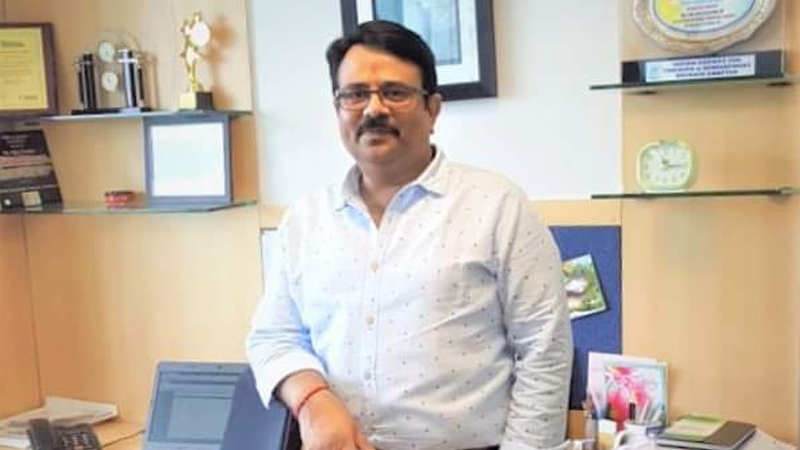
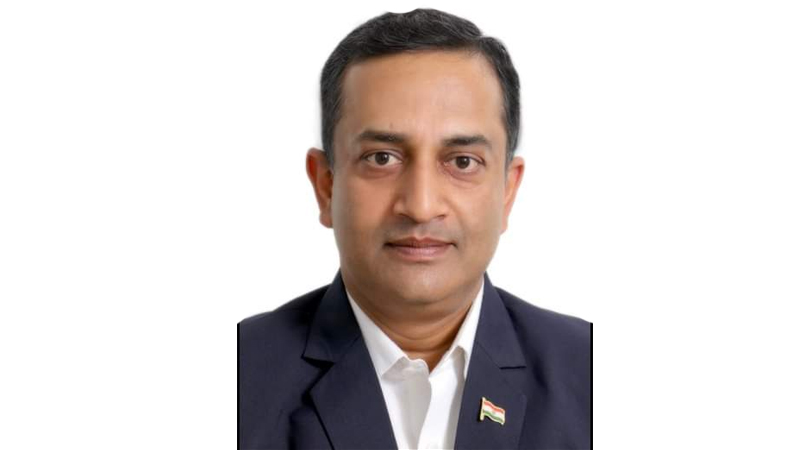
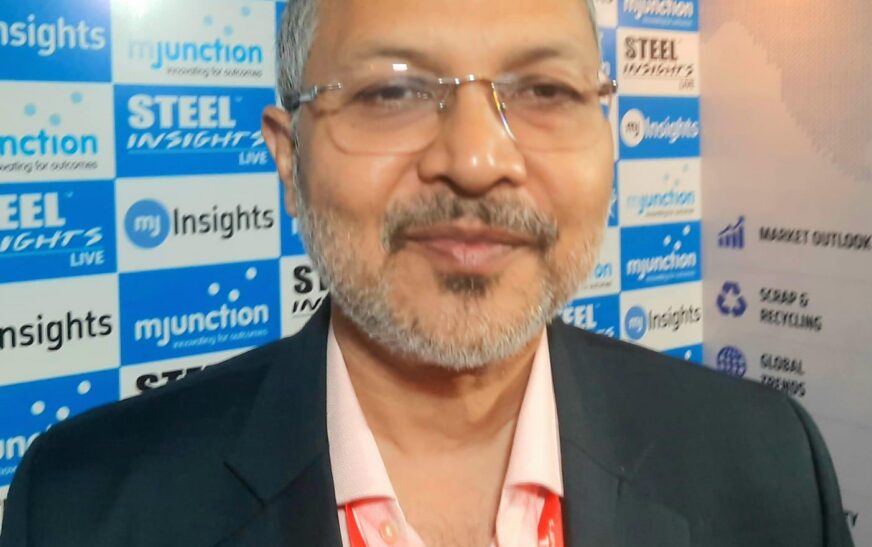
In an exclusive conversation with The Interview World during the conference, Vinaya Varma, Managing Director and CEO of Mjunction, explains how the company’s digital marketplace is transforming steel scrap procurement by empowering buyers with greater transparency, efficiency, and market access. He also discusses the Indian steel industry’s efforts to advance sustainability and circularity through increased scrap utilization, assesses the economic significance of India’s steel scrap imports, evaluates the impact of the country’s vehicle scrappage policy on steel production over the past few years, and shares valuable advice for young entrepreneurs seeking opportunities in the steel sector, particularly the steel scrap business. The following are the key insights from this wide-ranging conversation.
Q: How does Mjunction’s digital marketplace empower steel scrap buyers?
A: We connect organizations that generate steel scrap with buyers who require it through our digital marketplace. The platform brings together manufacturers, particularly auto component producers, that generate substantial volumes of scrap as an integral part of their manufacturing process. These companies seek three things: seamless scrap evacuation, transparent transactions, and the best possible value for their material.
At the other end of the marketplace, we connect them with steelmakers operating electric arc furnaces, along with remelters, processors, and other industrial consumers that depend on steel scrap as a critical raw material. As a result, our platform bridges supply and demand while creating a more efficient, transparent, and resilient steel scrap ecosystem.
However, an efficient marketplace requires more than just buyers and sellers. Therefore, we have integrated every critical stakeholder across the steel-to-scrap value chain onto the platform. This includes recyclers, processors, financial institutions that support trade financing, quality inspection agencies, and other essential service providers. By digitally connecting the entire ecosystem, we streamline transactions, improve trust and transparency, reduce operational friction, and strengthen the overall efficiency of India’s steel scrap value chain.
Q: What steps is the Indian steel industry taking to strengthen sustainability and circularity through greater use of steel scrap?
A: Sustainability in the Indian steel industry is a vast and evolving agenda, and the sector is pursuing multiple initiatives to accelerate its transition towards greener steelmaking. However, if I were to highlight the most critical priorities, recycling would rank at the very top.
As one of the panellists emphasized during the inaugural session, building a truly sustainable steel industry requires a robust circular economy. That means tracking every tonne of steel produced throughout its lifecycle and ensuring that, once it reaches the end of its useful life, it returns to the production cycle as steel scrap. By recovering and recycling end-of-life steel, the industry can significantly reduce its dependence on freshly mined iron ore while conserving natural resources. More importantly, it can make steel production far more sustainable.
At the same time, the industry is intensifying its efforts to reduce carbon emissions across the steelmaking process. Companies are actively exploring cleaner technologies, including the use of hydrogen as an alternative reducing agent, while increasingly replacing conventional power sources with renewable energy to meet the industry’s substantial energy requirements. Together, these initiatives, expanding steel recycling, strengthening circularity, and adopting low-carbon production technologies powered by clean energy, form the cornerstone of the Indian steel industry’s sustainability and decarbonization strategy.
Q: How significant are India’s steel scrap imports in terms of volume and economic value creation?
A: As I mentioned earlier, India is the world’s second-largest importer of steel scrap. During the last financial year, the country imported approximately 7 to 8 million tonnes of steel scrap, with an estimated economic value of around ₹3500–4000 crore.
At the conference, several panellists observed that India’s dependence on imported scrap could increase in the coming years as the steel industry continues to expand and demand for scrap rises. However, another equally important trend is beginning to emerge.
Driven by proactive government policies and sustained investments by the private sector, domestic steel scrap generation is steadily improving. As a result, although India’s overall scrap consumption increased last year, imports declined marginally compared with FY25. This indicates that the country is gradually strengthening its domestic scrap collection and recycling ecosystem.
Going forward, the trajectory of steel scrap imports will depend on how rapidly domestic scrap availability grows relative to rising demand. While imports will continue to play a vital role in meeting the industry’s raw material requirements, increasing domestic scrap generation has the potential to moderate import dependence over time. Ultimately, the balance between the two will evolve as India’s steel recycling ecosystem matures.
Q: What impact has India’s vehicle scrappage policy had on the steel industry over the past few years?
A: India’s vehicle scrappage policy is undoubtedly a step in the right direction. Once a vehicle reaches the end of its operational life, it should undergo scientific and environmentally responsible dismantling. Such an organized approach not only ensures safe disposal but also enables the efficient recovery of high-quality steel scrap that can be recycled as a valuable raw material for steel production.
The policy has already begun delivering positive results, although considerable work remains to unlock its full potential. In the initial phase, many authorized vehicle scrapping facilities struggled to secure an adequate supply of end-of-life vehicles, which limited their operational efficiency. However, the situation is gradually improving as awareness increases, implementation gains momentum, and the ecosystem continues to mature.
At present, the volume of steel scrap recovered through the vehicle scrappage ecosystem remains modest. Nevertheless, the recovered material is already finding its way into the steel industry. As more end-of-life vehicles enter the formal recycling network, scrap availability is expected to increase significantly, further strengthening India’s circular economy and supporting the steel industry’s long-term sustainability goals.
Q: What message would you like to share with young entrepreneurs aspiring to enter the steel sector, particularly the steel scrap business?
A: One of the most promising opportunities for young entrepreneurs lies in steel recycling. As India accelerates its transition towards a circular economy, the demand for advanced recycling infrastructure and innovative technologies will continue to grow.
In particular, entrepreneurs can establish facilities dedicated to the scientific collection, sorting, segregation, processing, packaging, and baling of steel scrap. These activities are essential for improving scrap quality, increasing recycling efficiency, and ensuring a reliable supply of high-grade raw material for the steel industry.
At present, this segment remains significantly underdeveloped despite its immense potential. Consequently, it offers substantial scope for innovation and investment. Young entrepreneurs can create value by developing technologies that automate and optimize scrap identification, sorting, segregation, packaging, and baling, thereby making the entire recycling process more efficient, transparent, and sustainable.
As India’s steel industry expands and its sustainability ambitions become more ambitious, businesses that strengthen the steel recycling ecosystem will play a pivotal role in shaping the future of the sector.