

Founded in 1979, Holland Colours (HCA) has grown into a global leader in high-performance colorants, masterbatches, and additives for the plastics, coatings, and coated fabrics industries. Headquartered in the Netherlands, the employee-owned company collaborates closely with customers to develop customized, sustainable solutions that enhance product performance, durability, and aesthetic appeal. Its extensive portfolio serves diverse sectors, including packaging, building and construction, coatings, sealants, and other specialty applications. By combining deep technical expertise with rigorous regulatory compliance and customer-centric service, Holland Colours consistently delivers solutions that address complex industry challenges. Furthermore, with manufacturing and commercial operations spanning Europe, the Americas, and Asia, the company continues to drive innovation, advance sustainability, and build enduring partnerships that help customers meet the evolving demands of global markets.
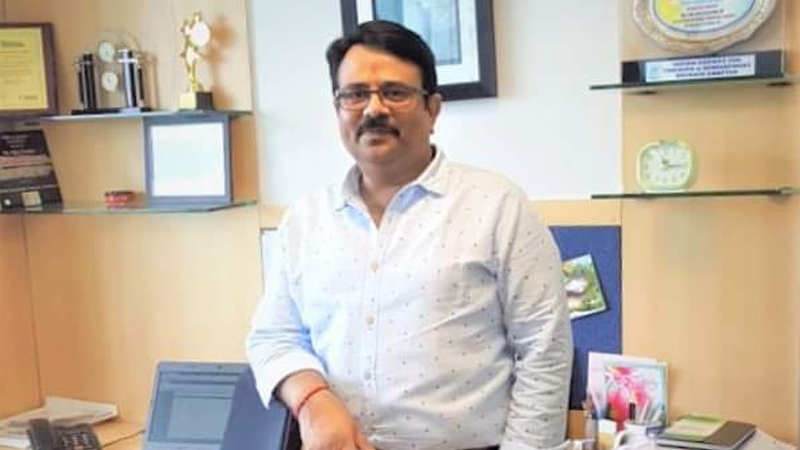
In an exclusive interaction with The Interview World during the 3rd GCPRS 2026, Steve Horrocks, Business Development Manager – Packaging at Holland Colours, discusses the company’s innovative solutions for the plastics industry and explains how its technologies are accelerating the transition toward a circular economy while reducing carbon emissions. He also shares his perspective on the global growth trajectory of the recycling industry and highlights the distinct competitive advantages that differentiate Holland Colours’ products in an increasingly demanding marketplace. Here are the key insights from this engaging conversation.
Q: What solutions do you provide to the plastics industry?
A: We serve four key market segments, and our focus here is packaging. Within this segment, we offer four specialized solutions designed to enhance the quality and performance of recycled PET (rPET).
Our portfolio includes colour toners, marketed under the Tintmers brand, which are available in both liquid and solid formulations. Recyclers add these toners during the conversion of PET flakes into pellets to correct colour inconsistencies and improve the material’s visual appearance. However, conventional toners have a limitation: over time, they can contribute to the degradation of rPET quality.
To overcome this challenge, we introduced an innovative solution last year—Cirque Stab. This advanced stabilizer not only corrects colour but also prevents the deterioration of rPET during processing, thereby preserving the material’s long-term performance. Like our toners, recyclers incorporate Cirque Stab directly into the recycling process, and it integrates seamlessly with leading recycling systems, including NGR, Starlinger, and EREMA machines.
In addition, we offer an intrinsic viscosity (IV) enhancer that significantly improves the quality of recycled PET. Depending on the starting IV of the material, the product can increase IV by as much as two points during the transformation of flakes into pellets. As a result, recyclers can produce higher-quality rPET that meets more demanding performance requirements while expanding its potential for high-value applications.
Q: How is your organization contributing to the circular economy and reducing carbon emissions?
A: Our solutions enhance the quality of recycled PET (rPET) while preserving its performance over the long term. We improve the material’s color consistency, producing clearer and more visually appealing rPET that meets consumer expectations for premium-quality packaging. At the same time, our technology achieves these improvements without increasing the product’s carbon footprint. As a result, manufacturers can enhance both the aesthetic quality and durability of recycled PET while advancing their sustainability goals.
Q: How do you see the global recycling industry evolving in the coming years?
A: The recycling industry, particularly for PET, is experiencing remarkable global growth. Europe has led this transition for years, with PET emerging as the world’s most widely recycled plastic. Today, however, the momentum extends far beyond Europe. The United States is rapidly catching up, while countries such as India have strengthened regulations by increasing the minimum recycled PET (rPET) content required in PET bottles. Likewise, Nigeria has introduced similar mandates, and Vietnam is moving in the same direction.
Consequently, an increasing number of countries are establishing minimum rPET content requirements to accelerate the adoption of recycled plastics. These regulatory measures are placing growing pressure on consumer brands to incorporate higher levels of recycled content into their packaging. At the same time, they are creating significant opportunities for innovation across the recycling value chain. As sustainability commitments continue to strengthen worldwide, this trend is expected to gain further momentum. The result will be a powerful, self-reinforcing cycle that drives sustained growth in the global recycling industry.
Q: What sets your products apart from those of your competitors?
A: Our competitive advantage lies in innovation. We are the only company in the market to offer a stabilizer that not only preserves the quality of recycled PET (rPET) but also prevents its long-term deterioration across multiple recycling loops. As a result, our technology enables manufacturers to maintain the performance, consistency, and value of rPET through repeated cycles, supporting true material circularity.