

AKG Foundation for Innovation and Product Development (AFIPD) ignites Uttar Pradesh’s engineering renaissance. Established on 11 June 2020 inside Ajay Kumar Garg Engineering College, Ghaziabad, the foundation spearheads the state’s first Common Facility Centre under the One District One Product programme.
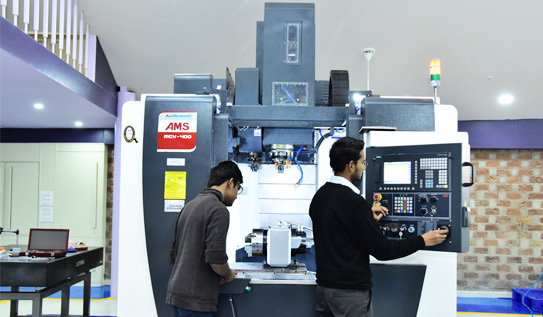
From this crucible, a 22‑member industry–academia consortium translates theory into throughput. In climate‑controlled tool rooms and purpose‑built R&D suites, concepts race from sketch to steel. Rapid prototyping trims weeks from development cycles, precision machining delivers micron accuracy, and advanced material‑testing labs certify every tolerance. Meanwhile, embedded Industry 4.0 protocols keep machines conversing in real time—data flows, defects fall, yields soar.
Yet AFIPD’s reach extends far beyond machinery. Short, outcome‑driven training sprints upskill engineers and students alike. Rigorous quality frameworks elevate MSME benchmarks, while seamless market‑link initiatives open fresh corridors across domestic and export supply chains. Consequently, Ghaziabad’s general‑engineering cluster no longer haggles on cost alone; it now competes with innovation, reliability, and speed.
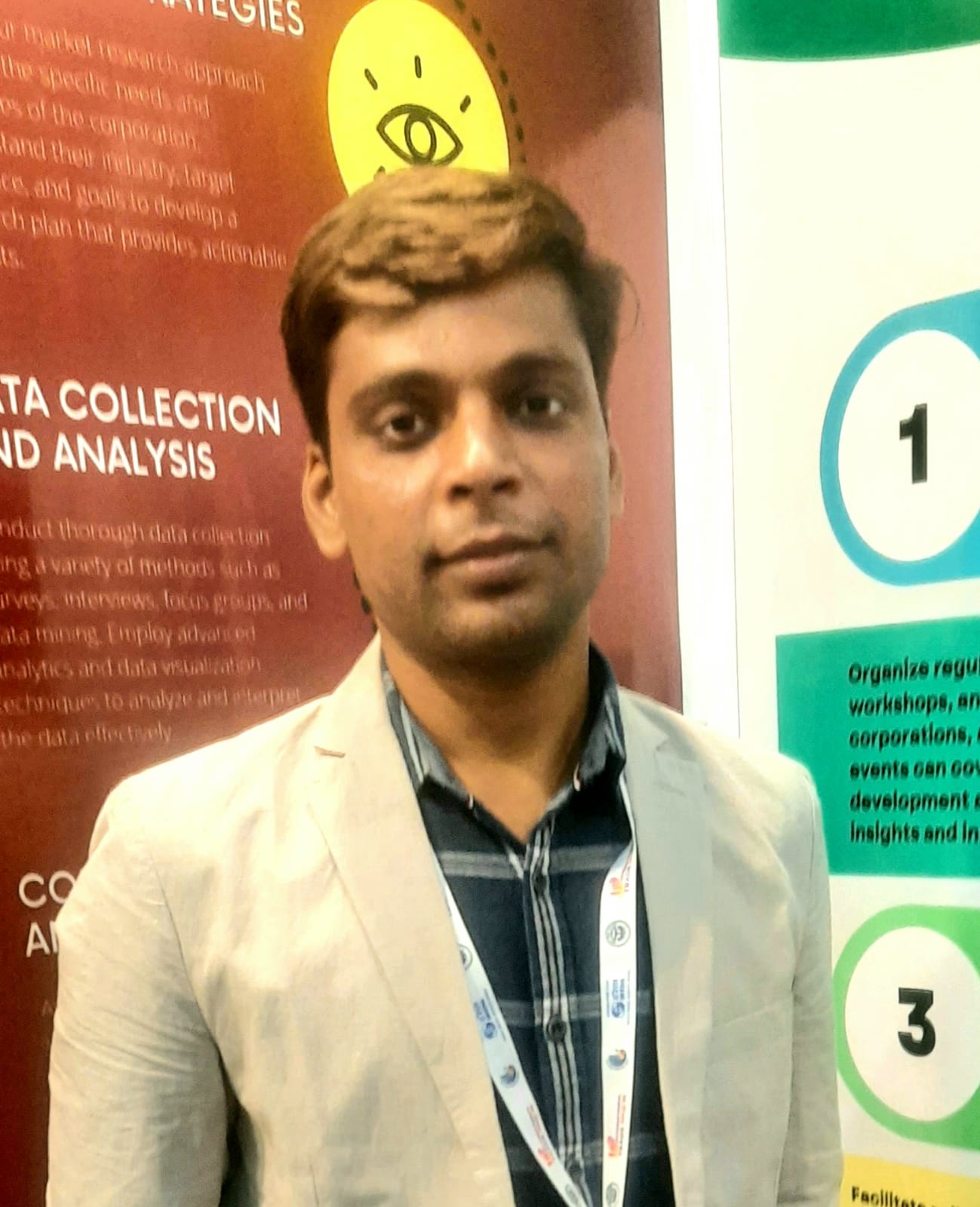
At MSME Mahotsav 2025, The Interview World sat down with Gajesh Kumar Chauhan, Manager of the Modern Tool Room, for an exclusive conversation. He mapped AFIPD’s signature services, revealed how the foundation demystifies emerging technologies, and explained how automation is transforming local workshops into smart factories. He also previewed the next horizon—capacity expansion, deeper collaborative R&D, and satellite centres across the state.
Four insights emerged. First, focused skilling delivered just‑in‑time bridges MSMEs’ technology‑adoption gap. Second, shared infrastructure slashes the cost of experimentation and accelerates iteration. Third, stringent quality governance positions local firms for global supply chains. Finally, an integrated ecosystem—training, tooling, testing, and trade facilitation—creates a flywheel that magnifies productivity and attracts investment.
In sum, AFIPD is not merely supporting Uttar Pradesh’s engineers; it is re‑engineering their future.
Below are the most salient insights from that conversation.
Q: Can you elaborate on the key initiatives and support mechanisms offered by AFIPD, particularly in fostering collaboration between academia and industry?
A: AKG Foundation for Innovation and Product Development (AFIPD) functions as the applied‑research arm of Ajay Kumar Garg Engineering College. Within the college walls, multiple Centres of Excellence hum with specialist talent and cutting‑edge equipment. AFIPD coordinates these hubs, converts academic insight into industrial output, and sells that capability to India’s micro‑, small‑, and medium‑enterprise (MSME) sector.
First, the Foundation attacks the skills gap head‑on. Faculty and industry mentors run compact, outcome‑driven courses on digital design, additive manufacturing, and advanced metrology. Students graduate with factory‑ready know‑how, not just textbook theory. Industry benefits immediately; businesses no longer waste months retraining new hires.
Next, AFIPD unlocks its hardware. The centres house five‑axis CNCs, metal 3‑D printers, and high‑resolution coordinate‑measuring machines—assets most MSMEs cannot afford. Under AFIPD’s guidance, entrepreneurs prototype components, verify tolerances, and iterate designs in days, not quarters. Consequently, cash‑strapped firms test daring ideas without sinking capital into plant and machinery.
The Foundation also moonlights as a boutique job‑shop. When a client needs a bespoke gear, a precision jig, or a short‑run mould, AFIPD’s technicians swing into action. They model, machine, heat‑treat, and certify the part under one roof. Quality stays high; turnaround stays tight. Revenue from this production cycle ploughs back into research equipment and student stipends, creating a self‑reinforcing loop.
Moreover, the organisation wears a consultant’s hat. Its engineers walk MSME floors, audit processes, and recommend lean workflows or automation upgrades. Then, inside AFIPD’s labs, they validate those fixes before clients roll them onto the shop‑floor. Risk plunges; productivity climbs.
Finally, AFIPD tackles big‑ticket R&D. Start‑ups arrive with sketches; they leave with working prototypes and a pathway to scale. Established manufacturers bring chronic defects; they depart with root‑cause analysis and corrective plans. Each engagement cements AFIPD’s reputation as Uttar Pradesh’s go‑to innovation foundry.
In short, AFIPD fuses academic rigor with industrial pragmatism. It trains tomorrow’s engineers, equips today’s factories, and incubates next‑generation products. MSMEs gain the tools and talent they lack; students gain real‑world mastery; the state gains a faster, smarter manufacturing engine. That is mission fulfilment, executed at high velocity.
Q: With pervasive skill gaps across engineering colleges and MSMEs, how will your Centers of Excellence cultivate future‑ready talent in emerging technologies and overcome implementation challenges?
A: Developing industry‑ready talent has never been more demanding. Consequently, we are establishing Centres of Excellence that immerse students in the very technologies they aspire to master. As an engineering institution, we root every centre in authentic B.Tech disciplines and design each facility as a direct bridge to its corresponding sector.
Consider manufacturing. Here, students train on state‑of‑the‑art milling, turning, turn‑mill, and laser‑cutting machines. They do not merely observe; they operate. First, they conquer the fundamentals—drafting designs in AutoCAD and Siemens NX. Next, they translate those designs into the machine’s native tongue: G‑code and M‑code. Throughout, they acquire a deep grasp of tooling—understanding which tool suits which task and why.
Our approach is deliberately sequential. Students design, simulate, program, and finally machine the part with their own hands. This progression internalises theory and transforms it into muscle memory. By the time they step onto an industrial shop floor, they are not bewildered novices. They recognise every console prompt, anticipate each tolerance requirement, and communicate confidently with production teams.
The impact is twofold. First, students bridge the notorious academia–industry gap. Instead of memorising abstract formulas, they witness those formulas chiselling metal in real time. Second, employers gain graduates who contribute from day one—reducing training overheads and accelerating innovation cycles.
In short, these Centres of Excellence transcend traditional labs. They fuse design thinking with advanced manufacturing, theory with tactile experience, and curiosity with competence. As a result, our graduates arrive in industry fully awake—alert to technological realities and equipped to drive them forward.
Q: With automation set to dominate the next decade, how can MSMEs leverage technologies like robotics, and what role are you playing in enabling this transformation?
A: We have built a world‑class Automation Centre in alliance with global leaders—Mitsubishi, Bosch, and Siemens. Together, we deliver immersive training that demystifies automation and turns theory into instinctive skill.
First, students grasp the core principles: sensors, PLC logic, and human‑machine interfaces. Next, they apply those principles on live Mitsubishi production lines, Bosch robotics cells, and Siemens‑driven control systems. Each session layers complexity, yet every step remains hands‑on. Consequently, learners progress from wiring a simple circuit to orchestrating an entire automated process.
Why this intensity? Because soaring consumer demand leaves no room for manual bottlenecks. Only automation can scale output, ensure precision, and protect margins in today’s hyper‑competitive marketplace. By mastering advanced systems before graduation, our students enter industry prepared to optimise throughput on day one.
In short, the Automation Centre does more than showcase cutting‑edge technology; it forges professionals who understand—and can immediately leverage—the power of automation to satisfy modern market expectations.
Q: How do you envision AKG Foundation’s growth in innovation and market access over the next decade in education and industry sectors?
A: Our journey began in 2010, and since then, we’ve experienced continuous growth. This progress hasn’t happened in isolation—both the community and the government have supported us at every step. Their trust reinforces our purpose.
More importantly, we’re not just growing; we’re making a meaningful impact. The work we’re doing addresses a critical societal need. That’s why we approach it with both urgency and commitment. We’re proud of what we’ve achieved—and even more determined to push the boundaries further.