

Kokuyo Camlin stands among India’s most distinguished art and stationery brands, widely revered for its iconic Camel range of fine arts products. By seamlessly blending Japanese precision with India’s rich artistic legacy, the company has built a comprehensive portfolio that serves professionals, students, and hobbyists with equal credibility. Its fine arts offerings include artist-grade acrylics, watercolours, oil colours, gouache, drawing inks, canvases, brushes, fine liner pens, soft pastels, and advanced sketching materials, all designed to deliver superior pigment quality, versatility, and creative control.
Beyond manufacturing art supplies, Kokuyo Camlin actively cultivates India’s creative ecosystem. Through the Camel Art Foundation, curated workshops, educational tutorials, and artist-led communities, the company continues to champion artistic expression while sustaining a legacy that has inspired generations of Indian artists.
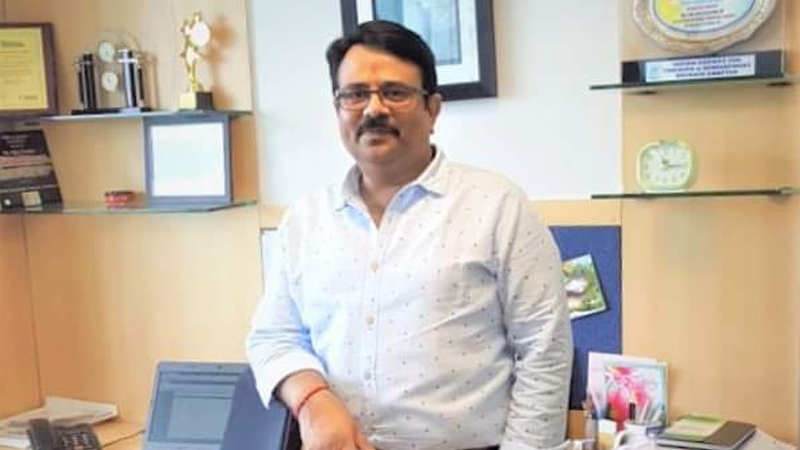
In an exclusive interaction with The Interview World during Maa – A Heartbeat of Every Home at Gandhi Darshan Art Gallery, Kamal Seth, Regional Promotions Manager – Fine Arts, Kokuyo Camlin discusses how his company’s products empower artistic expression across disciplines. He also offers valuable insights for both emerging and established artists, reflects on the deep emotional bond artists share with their creative tools, evaluates the global standing of Indian artists and their work, and identifies the critical gaps where Indian art and printing materials still trail international standards.
Presented below are the key insights from this engaging and thought-provoking conversation.
Q: How do you view the role of Kokuyo Camlin products in supporting artistic expression across painting, drawing, and other creative practices, and what advice would you offer to emerging and established art practitioners?
A: At Kokuyo Camlin, particularly within the fine arts category, we actively engage with artists, art galleries, and art colleges to create greater awareness about the importance of choosing the right art materials. We educate consumers on how to understand art materials, evaluate their quality, and select products that truly support artistic longevity and expression.
At the same time, I believe many artists still underestimate the importance of selecting the right materials. Creating a painting is not merely a technical process; rather, it is an intensely emotional journey. Every artwork carries a profound emotional connection between the artist and the canvas. That emotional investment gives art its true identity and value.
However, artists must also consider the emotions of the buyers who invest in their work. When someone purchases a painting, they expect it to endure. The artwork should retain its vibrancy over time. It should not fade, crack, or deteriorate because of inferior materials. Artistic skill undoubtedly matters, and many artists possess exceptional talent. Yet, if they fail to use high-quality pigments, surfaces, and tools, the artwork may not survive the test of time.
Therefore, artists must approach material selection with the same seriousness as creative execution. Preserving the emotional value of a painting is just as important as creating it. Ultimately, safeguarding the buyer’s emotional investment should remain an essential responsibility of every artist.
Q: How deeply emotionally connected are artists to the art materials they use?
A: Today, the artistic community has become incredibly vast and diverse. It includes hobby artists, self-taught creators, experimental practitioners, and professionally trained artists. Certainly, some artists possess deep technical knowledge of materials, applications, and artistic processes. They understand which products work best for specific mediums and surfaces. However, a large section of the artist community continues to experiment without fully understanding the long-term impact of using incompatible or inferior materials.
Many hobby artists, for instance, use products designed for practice or educational purposes in serious professional artworks. Canvas boards may work well for students, art teachers, and beginners, but they may not always suit archival-quality art. Similarly, fabric colours are often mistaken for acrylic colours simply because they appear visually similar. In reality, fabric colours are multi-surface products and should not be used for serious canvas paintings intended to last for years.
Therefore, my message to artists is simple yet extremely important: always use compatible, high-quality art materials. The longevity of an artwork depends as much on the materials as it does on artistic skill. When artists use superior colours, durable canvases, and appropriate tools, their work retains its quality and visual integrity over time.
More importantly, quality artwork strengthens an artist’s reputation. Art is fundamentally a reference-driven profession. If a collector purchases a painting that maintains its beauty and durability, that experience naturally generates trust, appreciation, and word-of-mouth recognition. One satisfied buyer often leads to many more opportunities. Conversely, if an artwork deteriorates because of poor-quality materials, it can seriously damage the artist’s credibility and professional image. That, ultimately, is the most critical concern.
Q: You are also conducting a session as part of this event. Could you share what you plan to showcase and what the audience can expect from it?
A: We have designed a dedicated PowerPoint session titled Science Behind the Colours specifically for students, hobby artists, and self-taught practitioners. Through this initiative, we aim to share practical knowledge about art materials and their correct usage. Importantly, the session is not intended as a formal teaching programme. Instead, it focuses on knowledge-sharing, helping participants understand the essential do’s and don’ts of art practice, the appropriate selection of materials, and the key differences between student-grade and artist-grade products.
During the session, we will also address the emotional dimension of artistic creation and explain why material quality plays a critical role in preserving both artistic value and longevity. At the same time, we plan to showcase several new products developed by Kokuyo Camlin. Participants will not only see live demonstrations of these products but will also have the opportunity to experience and test them firsthand.
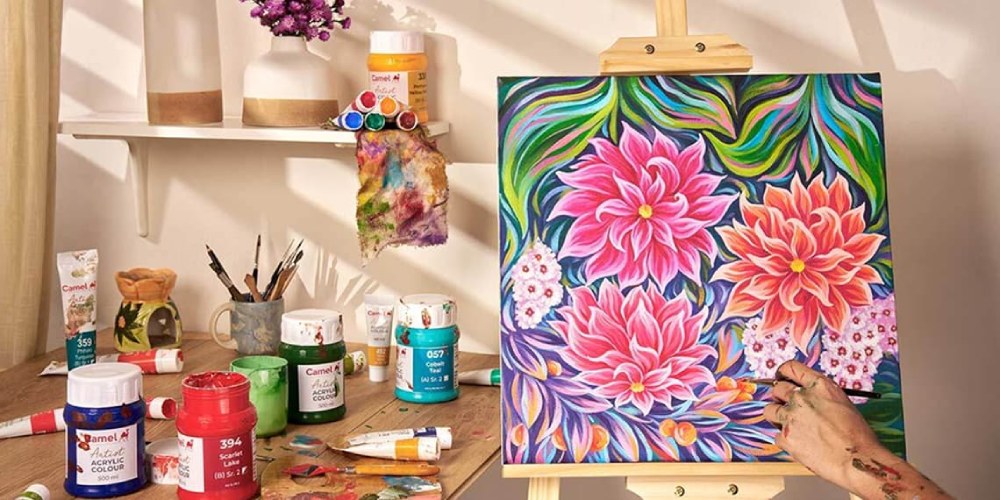
In addition, we will conduct a practical workshop featuring our newly formulated HDAC or Heavy Density Acrylic Colours. These colours meet international quality standards and have been developed to deliver superior texture, pigment strength, and durability. To encourage hands-on exploration, we will provide participants with A4-sized canvases along with the colours, allowing them to experiment freely and understand the product’s capabilities through direct application.
Ultimately, the initiative creates value for everyone involved. For us, it serves as an effective platform to introduce and promote innovative products. Simultaneously, artists gain meaningful exposure, practical experience, and a deeper understanding of professional-grade materials. In that sense, the entire engagement becomes a truly mutually beneficial experience.
Q: How do you assess the standing of Indian artists and their work in the global art landscape?
A: Indian art is truly incomparable because it emerges from one of the world’s richest and most diverse cultural landscapes. Every region in India offers a distinct identity, visual language, and artistic inspiration. Whether you travel to Rajasthan, southern India, or culturally vibrant destinations such as Pushkar, you encounter entirely different traditions, colours, narratives, and lifestyles. Consequently, Indian artists have access to an extraordinary range of subjects and creative possibilities that very few countries can offer.
Moreover, India is home to immensely talented and naturally gifted artists. Their creativity, imagination, and emotional depth stand at par with global standards. However, one important challenge still exists within the Indian art ecosystem. Established artists often sell paintings based on their reputation, signature, and market recognition. In contrast, emerging or lesser-known artists must build their credibility gradually and strategically.
Therefore, upcoming artists should approach pricing with realism and market awareness. While every artist has the freedom to assign any value to their work, pricing must also align with buyer confidence and market acceptance. Many young artists immediately price their paintings at ₹50,000, ₹1 lakh, or even several lakhs without first developing a collector base or market visibility. That approach can limit opportunities rather than expand them.
Instead, artists should focus on allowing their work to circulate, reach collectors, and enter different spaces. When paintings move into multiple hands, they naturally create recognition, visibility, and long-term market demand for the artist. Flexibility and openness to negotiation can play a vital role during this growth phase. Conversely, if artists remain excessively rigid about pricing, they may simply display their paintings for a few days at exhibitions and then carry them back home unsold. That mindset does not help build a sustainable artistic career or a thriving market presence.
Ultimately, artists should prioritise consistent creative excellence, audience connection, and gradual market development. Once credibility and collector trust are established, commercial value follows naturally.
Q: In your view, where do Indian art and printing materials still lag behind international products, and what improvements are needed to bridge that gap?
A: As far as art materials are concerned, I have been associated with this industry since 1995, which gives me more than three decades of experience and observation. During this journey, one principle has remained central to Kokuyo Camlin: we develop products not only for the masses but also for the classes. In other words, we strive to maintain a balance between affordability and uncompromising quality. We ensure that our products remain accessible and pocket-friendly while continuing to meet professional quality standards.
At the same time, our organisational culture does not encourage speaking negatively about competitors. We respect every brand in the market because each product category serves different users and different budget segments. Consumers ultimately make choices based on their individual preferences, artistic requirements, and financial limitations. Therefore, my role is not to criticise competing products but to create awareness and educate artists about material quality, application, and long-term performance. Once that awareness exists, the final decision always belongs to the artist.
Having said that, foreign art materials are undoubtedly excellent in many respects. There is absolutely no denying their quality or global reputation. However, one critical factor often goes unnoticed: most international products are formulated according to the climatic conditions of their respective countries. Many of those regions experience prolonged cold weather, snowfall, moderate humidity, and comparatively controlled environmental conditions. India, by contrast, presents a far more demanding environment for artworks and art materials.
Here, paintings must endure extreme heat, humidity, monsoon conditions, pollution, dust, acidic exposure, fluctuating temperatures, and varying seasonal cycles throughout the year. These environmental factors significantly affect the durability and behaviour of art materials over time. That is precisely where Indian experience and adaptation become critically important.
Kokuyo Camlin carries a legacy of more than five decades, and generations of legendary Indian artists have created enduring works using our materials. Today, many of those artworks remain preserved in prestigious institutions such as the National Gallery of Modern Art, private collections, airports, and major public spaces. Remarkably, several of these paintings have retained their integrity and visual quality for decades without requiring major restoration.
In contrast, foreign products do not yet have the same long-term historical track record under Indian climatic conditions. This observation is not a criticism of international brands; rather, it highlights the importance of environmental compatibility. Ultimately, the defining difference lies in understanding and adapting to India’s unique climatic realities, which play a decisive role in the longevity of artworks.