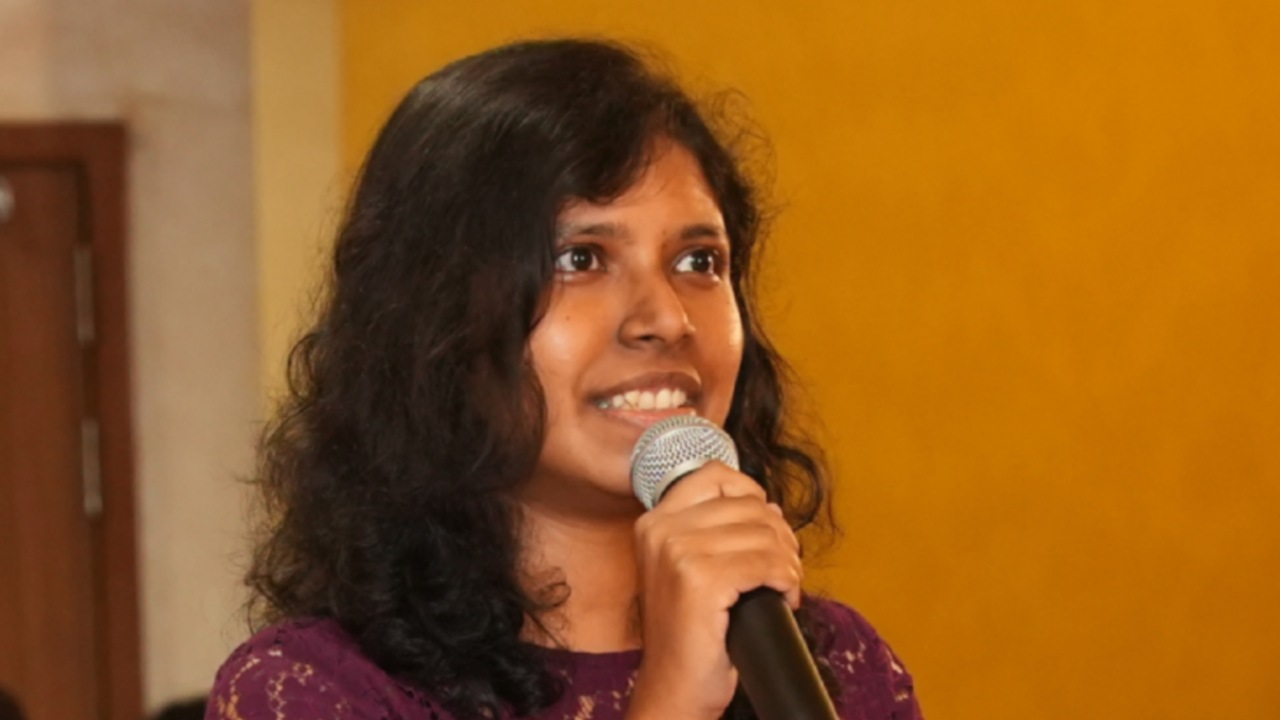

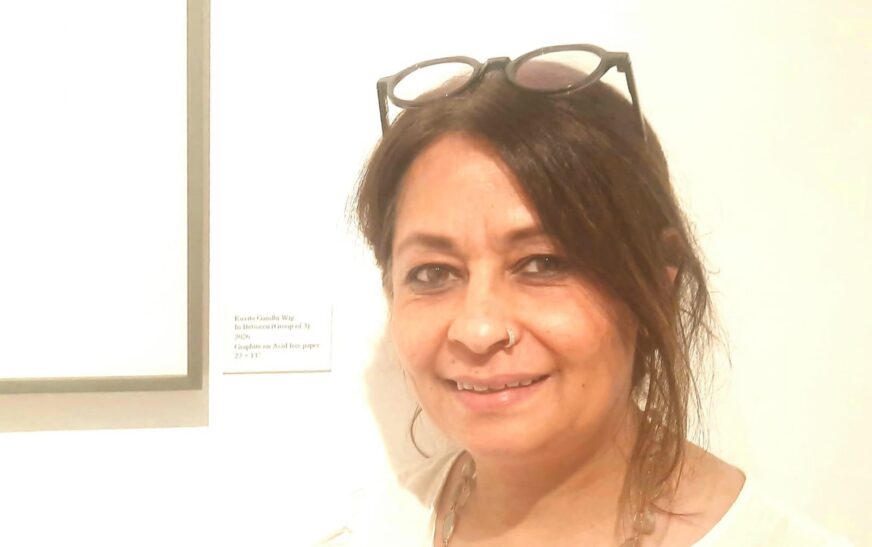
Kavita Gandhi Wig is an Indian visual artist and educator. Her practice integrates contemporary art production with sustained pedagogical engagement. She works primarily through painting and drawing, developing a visual language grounded in expressive figuration, conceptual rigor, and acute material sensitivity in the construct of art.
In parallel, she maintains a strong commitment to art education. She mentors emerging artists through structured learning frameworks that prioritize foundational skill-building, disciplined observation, and the development of creative confidence. In doing so, she consistently balances technical instruction with encouragement of individual expression across diverse age groups and experience levels in art. Consequently, her work sits at the intersection of studio practice and education, contributing meaningfully to contemporary discourse on art pedagogy in India.
In an exclusive conversation with The Interview World, Wig reflects on her artistic practice and the conceptual concerns that shape it. She examines the role of thought and the transitions between thoughts in the evolution of the human mind. She also discusses moments of thoughtlessness and their relevance to inner calm. Moreover, she highlights the possibility of immersive creative work that bypasses constant analytical thinking. Ultimately, she emphasizes the significance of mental clarity and peace of mind in shaping creativity, decision-making, and overall well-being.
Q: Could you elaborate on the artworks you have presented here and the ideas or themes they reflect?
A: These are graphite works created on acid-free paper using graphite pencils. The practice remains grounded in drawing, yet it moves toward abstraction through reduced forms and layered conceptual intent. The series presented here forms a group of four works, although only three are currently on display. I refer to this series as In-Between.
In-Between speaks to the space between thoughts. Each day, the mind generates countless thoughts in rapid succession. We move continuously from one idea to another, from one concern to the next. Within this constant mental activity, these works locate a pause.
They explore what exists in that interval. Not the thought itself, but the space between thoughts. This space becomes essential. Without it, mental activity becomes overwhelming. Therefore, a pause is necessary for balance and clarity.
In that pause, thought recedes and awareness settles. It resembles a meditative state. These thoughtless moments function as a form of meditation, where the mind is not driven by continuous interpretation or reaction.
At the same time, thoughts remain varied and unstable. They can be clear or confusing, uplifting or difficult. They carry emotion, memory, and perception. Yet all of them pass through the same mental field. These drawings respond to that flux. They trace not the content of thought, but its movement and the silence that separates one thought from another.

Q: Why are these thoughts important, and what role do the spaces or transitions between thoughts play in the evolution of the human mind?
A: Equally important is the cultivation of a thought-free space within the mind. Human consciousness cannot sustain an endless stream of thinking without consequence. If thoughts continue unchecked and uninterrupted, they can overwhelm the mind and erode inner balance.
For this reason, practices such as meditation have gained enduring significance. They help us observe our thoughts, regulate them, and restore mental clarity. At times, thoughts become chaotic and uncontrollable. They scatter in multiple directions, creating confusion and restlessness. In response, we consciously attempt to restrain, organize, and channel them toward greater coherence.
Yet beyond the management of thought lies something even more profound. There are rare moments when the mind ceases to think altogether. In those moments, there is no analysis, no internal dialogue, and no mental noise. Instead, there is stillness, presence, and complete awareness.
These thoughtless intervals represent some of the most valuable states of human experience. They offer respite from the relentless activity of the mind and create space for peace, clarity, and renewal. It is within these moments of silence that we often encounter our deepest sense of equilibrium and well-being.
Q: Do you consider moments when the mind is not actively thinking, such as during sleep or deep rest, as “thoughtless moments,” and how would you define them?
A: Certainly, sleep and meditation offer natural pathways to mental stillness. However, I also experience such moments while working. In fact, some of my most profound thoughtless states emerge during the creative process itself.
When I become fully immersed in my work, active thinking often recedes into the background. At those moments, I am not consciously analysing, planning, or engaging in a stream of thoughts. Instead, I enter a state of complete absorption, where the act of creation unfolds intuitively and effortlessly.
For me, these are genuinely thoughtless moments. The mind becomes quiet, yet awareness remains fully present. Rather than being driven by constant mental activity, I simply work. The process takes over, and the artwork evolves through a deeper sense of engagement that transcends deliberate thought.
This state of immersion is both liberating and restorative. It creates a rare space where the mind is free from clutter, allowing creativity to flow with clarity, focus, and ease.
Q: Is it possible for a person to create something while working without active thinking or conscious thought, and if so, how does that process occur?
A: When you become deeply engaged in the act of creation, conscious thought gradually falls away. As momentum builds, you enter a meditative state in which the process begins to unfold naturally and without effort.
At that point, movement no longer feels deliberate. The hands respond instinctively, guided less by active thinking and more by an intuitive rhythm developed through immersion and practice. The body and mind begin to work in harmony, allowing the creative act to flow seamlessly.
I experience this state as profoundly meditative. It is a space where thought quiets, distractions dissolve, and complete presence takes over. Rather than directing every action through conscious analysis, I allow the work itself to guide the process. For me, this effortless continuity between awareness and action embodies the essence of meditation within artistic practice.
Q: How important is peace of mind in shaping one’s creativity, decisions, and overall well-being?
A: Peace of mind is profoundly important. In my own life, it has been a constant source of happiness, balance, and fulfilment. More importantly, I believe it is essential for everyone, regardless of their profession, interests, or way of life.
People pursue peace and inner stability through different paths. Some turn to yoga, while others practice meditation. Many find solace in their work, and others discover it through writing, music, or any activity that allows them to reconnect with themselves. Each individual has unique preferences, rhythms, and avenues for renewal.
For me, art serves that purpose. It is the place I return to when I seek clarity, stillness, and a deeper connection with my inner self. It is both a creative practice and a form of meditation. Through my work, I find a sense of calm that helps me navigate life with greater awareness and equilibrium.
In that sense, my artistic practice extends beyond the act of making art. It becomes a space of reflection, restoration, and peace, a personal sanctuary where creativity and mindfulness converge.