


Speedybyte Services Pvt. Ltd., founded in 2023 by visionary innovators from IIT Ropar, is rewriting the future of automation in India. Based in Rupnagar, Punjab, the startup designs intelligent and cost-efficient navigation systems that enable robots to move with precision and purpose. By integrating advanced hardware with perception-driven software, Speedybyte transforms automation from a distant possibility into a practical reality for industries chasing efficiency.
Its modular robots adapt effortlessly across logistics, warehousing, hospitality, healthcare, and agriculture, delivering scalable solutions with remarkable ease. Incubated at TBIF, IIT Ropar, Speedybyte is not just building robots; it is engineering affordable, intelligent autonomy for the future.
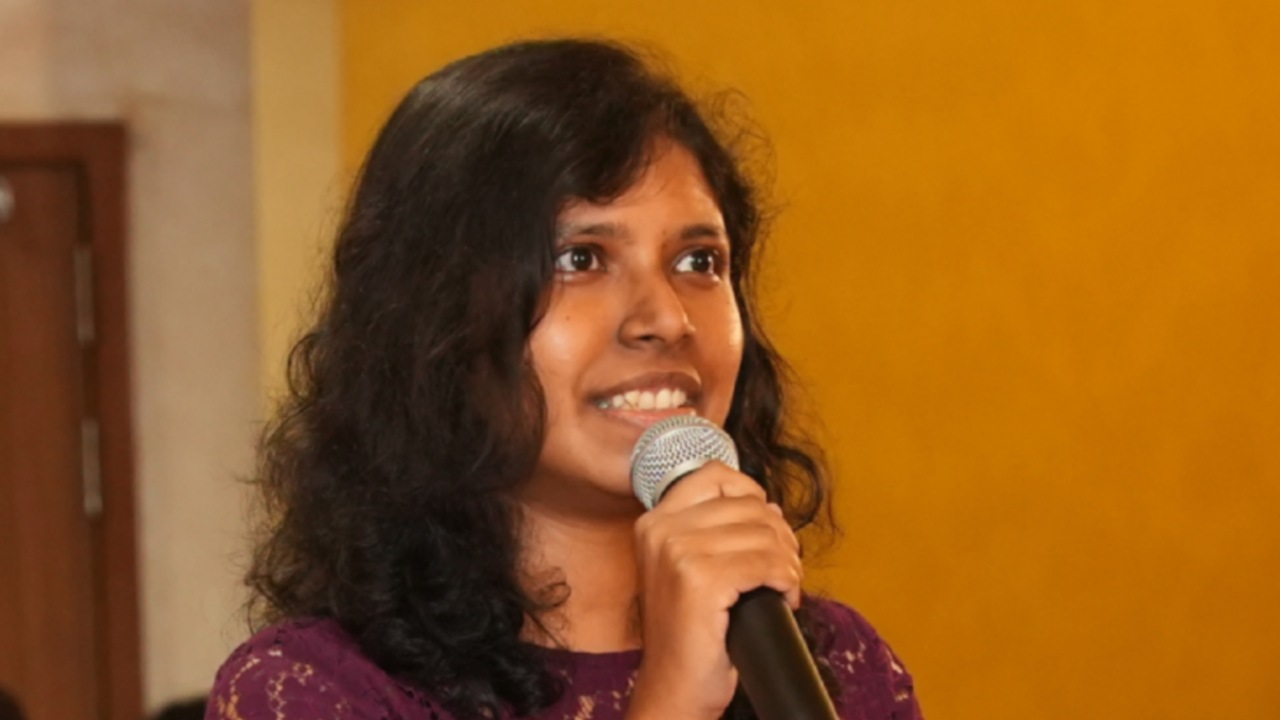
At SPRINT North Edition 2025, hosted by IIT Ropar and iHub–AWaDH, The Interview World engaged in an exclusive conversation with Subham Choudhary, CEO and Co-founder of Speedybyte. In this dialogue, he revealed the company’s groundbreaking innovations in robotic automation, explained the sector-specific roles of autonomous robots, outlined a pricing strategy tailored for India’s price-sensitive market, and shared his long-term vision for growth and innovation.
The following are the key insights from his compelling discussion.
Q: Can you share the key innovations Speedybyte has introduced in automation, and explain how these solutions are helping different industries overcome their current challenges?
A: Autonomous robots have been around for a long time. Many companies either import them or manufacture them domestically. Yet, the biggest challenge remains the same: cost.
In my view, these robots cannot fully replace humans because their high cost makes them impractical. The expense comes largely from the sensors and core technologies that manufacturers have relied on for decades without significant change. At Speedybyte, we aim to break this cycle by introducing a new approach to navigation.
Today, most systems depend on SLAM or conventional algorithms like Dijkstra or Dynamic Window for path planning. Instead, we are developing a navigation framework powered by deep reinforcement learning (DRL). Our plan begins with data, lots of it. To achieve this, we have built a four-wheel differential drive robot that currently operates at Technology Readiness Level 4 (TRL 4). We are testing it across the IIT Ropar campus to collect real-time environmental data.
Rather than mapping static surroundings and relying on pre-programmed paths, our model enables the robot to adapt and learn dynamically from its environment. This means it can operate autonomously in diverse conditions—not just in narrowly defined, high-cost applications. With DRL, a single robot can perform reliably in multiple settings, dramatically expanding its usability.
Our go-to-market strategy is clear. First, we will partner with companies already working in robotics. We will offer them a plug-and-play system that instantly makes their machines autonomous, no complex integration required. Regardless of the robot’s form or function, our technology will enable autonomy.
Most importantly, our algorithms are optimized for minimal sensor dependence. This reduces reliance on expensive imported hardware, lowers costs, and makes advanced autonomy truly accessible.
Q: Could you describe the sector-specific applications of the autonomous robots you are developing and how they are tailored to meet industry needs?
A: Today, the dominant player in autonomous robots is GreyOrange, widely recognized as the largest producer of warehouse automation systems. However, smaller MSME factories in India have yet to adopt such robots, largely because of the prohibitive costs I mentioned earlier. The same challenge exists in agriculture. Companies like XMachines are building agricultural robots, but again, their prices place them far beyond the reach of most farmers.
For India, affordability is the key. Farmers and small businesses can only benefit from robotics if the technology becomes truly accessible. That is why our work on a new navigation stack matters. Once developed, it can power a wide range of autonomous applications, not just in warehouses and logistics, but also in agriculture tasks like spraying, ploughing, and managing docking stations.
The potential extends further. In the defence sector, robots can support soldiers during long missions. Currently, army personnel often carry heavy loads for extended operations, whether covert or conventional. With our approach, robots could carry equipment or even mount weapons while intuitively following soldiers over long distances. Crucially, the robot should behave like a thinking companion, not a machine restricted by rigid programming.
This is precisely what our deep reinforcement learning model delivers. It enables robots to act more like humans, adaptive, intuitive, and responsive, rather than simply executing pre-coded instructions.
Q: Considering India’s price-sensitive market, what pricing strategies are you adopting to ensure your innovations remain both accessible and affordable?
A: Let me share a concrete example. We recently engaged with a company that sells warehouse robots. I won’t name them, but their entry-level robot costs about ₹15 lakh. Now, if a customer opts for an advanced version equipped with a 3D LiDAR sensor, a technology used to map complex 3D environments, the price shoots up by an additional ₹20 lakh. As a result, a single robot designed to carry basic loads ends up costing ₹35–40 lakh.
Our focus is to break this cost barrier. Instead of relying on expensive LiDAR, we are developing an alternative sensor stack. Combined with our algorithms, it can deliver performance comparable to 3D LiDAR while cutting costs by 20–30%. This means a robot currently priced at ₹35 lakh could be offered for ₹15–16 lakh, while those costing ₹15 lakh today could drop to just ₹4–5 lakh.
Such affordability unlocks new models like Robotics-as-a-Service (RaaS), where companies can deploy robots without heavy upfront investments. Importantly, our immediate goal is not to compete head-to-head with established giants. Instead, we will license and supply our technology to them, proving its value in the market. Once validated, we will then expand into niche environments, areas where robotics demand exists but adoption remains untapped solely because of cost.
Q: How do you envision Speedybyte’s growth and innovation trajectory over the next 5 to 10 years?
A: Frankly, my vision is to showcase our innovations on the global stage and prove that India can develop its own core robotics technology. We aim to become the “Android of the robotics industry,” providing a foundational platform that others can build on, just as Android transformed mobile technology worldwide.






1 Comment
The next time I read a blog, I hope that it doesnt disappoint me as much as this one. I mean, I know it was my choice to read, but I actually thought youd have something interesting to say. All I hear is a bunch of whining about something that you could fix if you werent too busy looking for attention.
Comments are closed.