
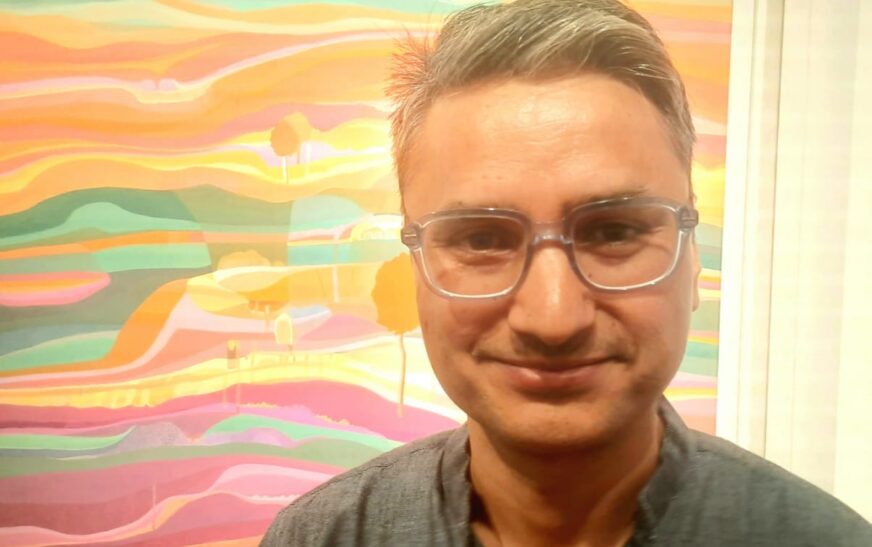
Lalit Bhatt is a contemporary artist from the Kumaon region of Uttarakhand whose work captures the cultural memory, rugged landscapes, and emotional resonance of the Himalayan hills with remarkable sensitivity and depth. Through his paintings and visual narratives, he interrogates themes of identity, nature, folklore, and everyday mountain life through a distinctly contemporary lens. At the same time, he seamlessly fuses traditional Kumaoni ethos with modern artistic expression, thereby creating evocative compositions deeply anchored in regional consciousness. Consequently, Bhatt’s steadily expanding digital presence has introduced Kumaon-inspired art to wider and more diverse audiences, establishing him as one of the emerging creative voices shaping Uttarakhand’s evolving cultural discourse.
In an exclusive conversation with The Interview World during “Location/s: Between Here and Somewhere,” Lalit Bhatt reflects on his artistic journey and discusses the inspirations that inform his creative practice. Furthermore, he offers insights into the thematic essence of his paintings, outlines the number of works he is presenting at the exhibition, and provides an overview of the exhibitions he has participated in so far. He also examines the transformation of painting practices over the past two decades, analyses the changing sensibilities and preferences of art buyers, and articulates the larger message he seeks to convey through his work. Here are the key takeaways from this insightful and thought-provoking conversation.
Q: Could you elaborate on your journey as an artist, and what does influence your paintings?
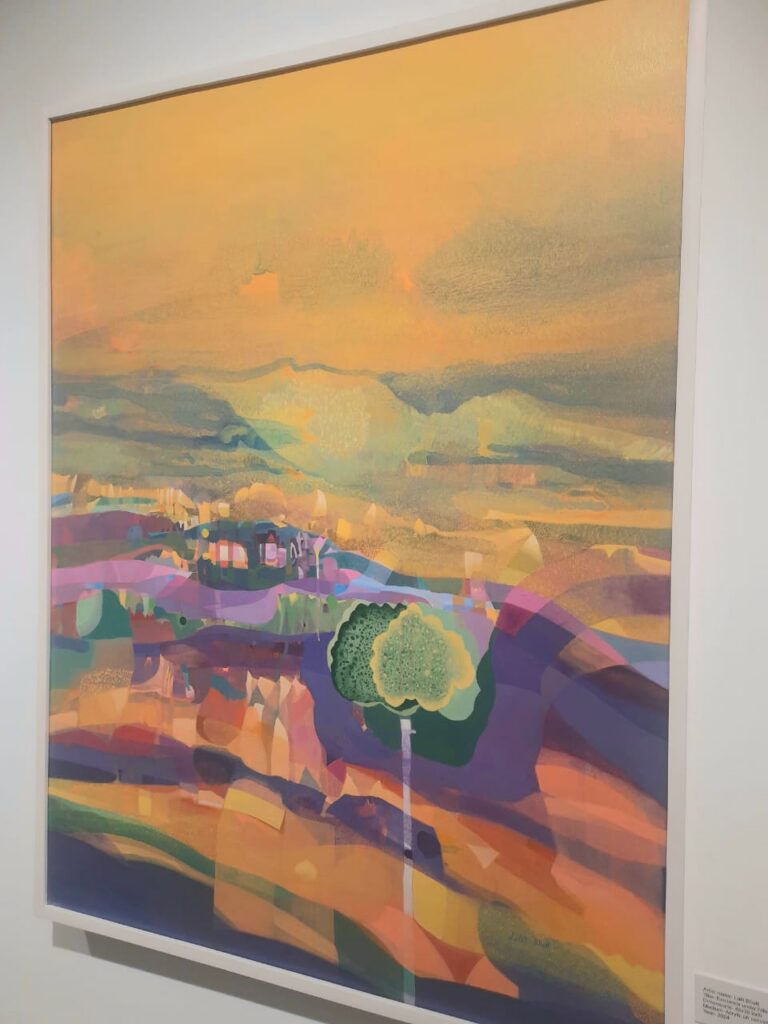
A: I come from the Kumaon region of Uttarakhand, specifically from Almora district. However, I currently live in Delhi, where I have been working for the past 17 years. My association with art began in childhood and has continued to shape my creative identity ever since. Significantly, the colour palette that defines my paintings draws heavily from the visual and emotional landscape of Uttarakhand. Earlier, I painted landscapes, hills, and forests, and I frequently travelled through jungles to absorb their atmosphere and textures. Consequently, those experiences left a lasting imprint on my artistic sensibility. Today, the essence of those spaces continues to surface in my paintings, although in a more fragmented, layered, and often distorted visual form.
Q: Nature is central to your paintings. What themes, landscapes, or interpretations of nature have you explored through the works featured in this exhibition?
A: About a decade ago, I worked primarily in a highly realistic style. However, over time, my artistic language began to evolve, leading me towards semi-abstract forms. Today, I engage more deeply with abstraction, using it as a medium to reinterpret landscapes through emotion, memory, and colour. In particular, I remain deeply fascinated by vibrant and experimental landscapes. Therefore, my current practice revolves around constantly exploring new visual possibilities and pushing the boundaries of form and composition. Through this ongoing experimentation, I hope to arrive at an entirely new artistic vocabulary in the future.
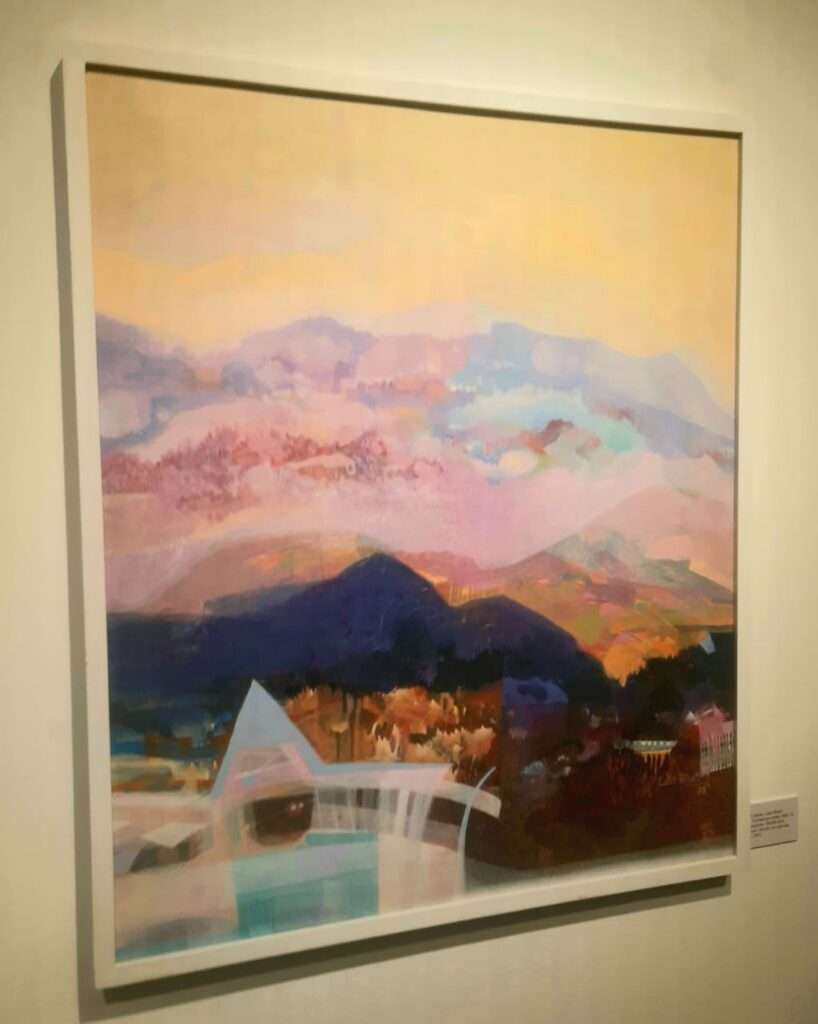
Q: How many paintings are you showcasing in this exhibition, and could you share a brief overview of the exhibitions you have participated in throughout your artistic career?
A: I am showcasing around 22 paintings in this exhibition. Prior to this, I presented a solo exhibition at Triveni Kala Sangam. Additionally, three years ago, I participated in a group exhibition at Jehangir Art Gallery, one of India’s most prominent art spaces. Over the years, I have also taken part in numerous group exhibitions, each of which has contributed significantly to the evolution of my artistic practice and public engagement.
Q: Having been deeply engaged with painting for over two decades, how do you perceive the evolution of contemporary art and painting practices during this period?
A: The artistic landscape has undergone a significant transformation in recent years. Today, artists are increasingly gravitating towards experimentation and interdisciplinary practices. Consequently, they are introducing new media, unconventional materials, and innovative techniques into their work. Earlier, artists largely confined themselves to traditional mediums such as oil, acrylic, tempera, and watercolour. However, contemporary artistic practice has moved far beyond those boundaries.
Now, artists actively experiment with surfaces, textures, and mixed media to create more layered and immersive visual experiences. For instance, many are developing textured canvases using diverse materials and processes, while others are incorporating additional elements to expand the conceptual and material depth of their work. As a result, contemporary art has become far more exploratory, process-driven, and visually dynamic than before.
Q: How have the preferences and expectations of art buyers evolved over the years, and what themes, styles, or qualities do contemporary audiences seem to appreciate most in paintings today?
A: In general, audiences connect more easily with straightforward and representational landscapes because they can immediately recognise and interpret them. However, contemporary artists are increasingly incorporating abstraction into their work, thereby moving beyond literal representation. As a result, engaging with abstract art often demands a deeper visual sensitivity and a certain degree of academic or artistic understanding.
At the same time, abstraction encourages viewers to move past conventional ways of seeing. It challenges them to observe forms, colours, textures, and emotions from fresh perspectives. Therefore, appreciating such work requires not only familiarity with artistic language but also an openness to interpret meaning in new and unconventional ways.
Q: Do your paintings convey a deeper message or perspective, and what would you like viewers to reflect upon or take away from your work?
A: I do not intend to impose a specific message on viewers through my paintings. Instead, I want my work to evoke a fresh emotional and visual experience. More importantly, I want viewers to encounter colours, palettes, and compositions in ways they may not have seen before. Through my paintings, I aim to encourage people to perceive nature differently, not merely as a physical landscape, but as a space of layered emotions, shifting forms, and new visual possibilities.