


Transformation in Indian agriculture depends not only on higher productivity, but on deep inclusion, structural reform, and generational renewal. As climate volatility accelerates, landholdings fragment, and rural aspirations shift, the sector confronts a decisive inflection point. Resilience can no longer rest on subsidies or seasonal relief; instead, it demands systemic redesign. We must redefine who receives recognition, who participates in value creation, and who exercises leadership.
Women stand at the center of this transition. They cultivate, manage, and sustain farms across the country, yet institutions continue to render them invisible. Simultaneously, India must confront another structural fault line: youth disengagement from agriculture, a sector widely perceived as economically precarious and socially undervalued. Unless agriculture offers viability, dignity, and upward mobility, it will fail to attract the next generation.
The way forward requires coordinated, cross-sectoral action. Formal recognition of women farmers must translate into land rights, financial access, and decision-making authority. Youth participation must extend beyond subsistence farming to enterprise creation, agri-innovation, and market-linked value chains. Scientific cultivation, digital integration, decentralized planning, and localized policy design must replace fragmented interventions. Only then can agriculture evolve from a subsistence safety net into a competitive, future-ready industry.
In an exclusive conversation with The Interview World at the Hindu Business Line Agri & Commodity Summit 2026, Chhavi Rajawat, Former Sarpanch of Soda Village, Rajasthan (2010–2020), articulates how inclusive frameworks, entrepreneurial discipline, and intelligent resource stewardship can reposition Indian agriculture as resilient, aspirational, and structurally robust. The following are the principal insights from that discussion.
Q: What forms of inclusivity are essential to build a more resilient and dynamic agricultural ecosystem in India?
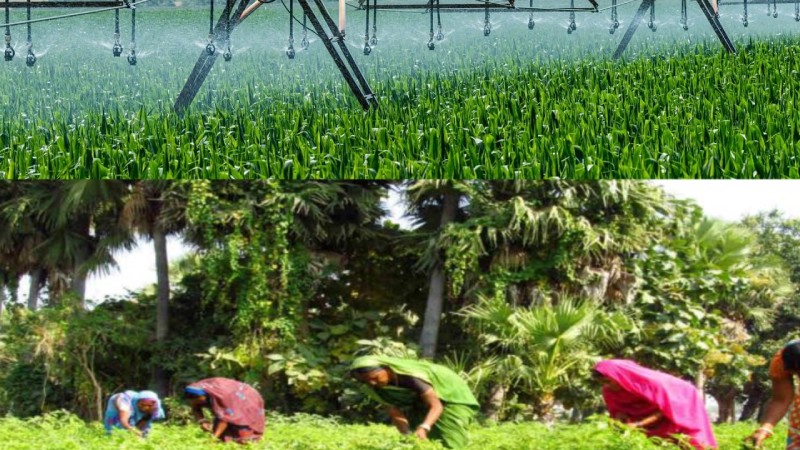
A: We have multiple pathways to make Indian agriculture inclusive and resilient. However, we must begin with a foundational truth: across the country, women are the primary cultivators. They sow, transplant, weed, harvest, manage livestock, and sustain households. Yet when we say “farmer,” society instinctively imagines a man. This cognitive bias erases women’s labour, suppresses their economic identity, and limits their access to credit, land titles, extension services, and institutional support. Therefore, the first reform must be formal recognition. We must acknowledge women not as “helpers” or “labourers,” but as farmers in their own right. Recognition is not symbolic; it is structural. It unlocks value addition, asset ownership, and decision-making power.
At the same time, we must redesign the opportunity architecture. Women with deep agricultural expertise are too often positioned as job seekers. Instead, we should enable them to become job creators and enterprise leaders. This requires market linkages, aggregation models, access to technology, financial inclusion, and entrepreneurship support. When we shift the lens from subsistence to enterprise, we shift outcomes from survival to growth.
Policy intent is not the primary constraint. Government schemes exist, and many are well designed. However, information asymmetry persists. Benefits frequently fail to reach the intended stakeholders, particularly women farmers. This gap reflects not only administrative friction but also entrenched mindsets. Language reveals bias; even our default terminology often diminishes women’s roles. Consequently, inclusion demands both a mindset shift and a structural shift.
Encouragingly, the national narrative is evolving. Policymakers increasingly acknowledge gender inclusion and rural entrepreneurship. Yet rhetoric must translate into implementation fidelity. This is where collective responsibility becomes critical. Civil society, private enterprises, knowledge institutions, and informed citizens must amplify awareness, facilitate access, and monitor delivery. Agriculture, moreover, extends beyond crop cultivation. It includes animal husbandry, fisheries, and allied activities that sustain rural livelihoods. Inclusion must encompass the entire agri-value ecosystem.
Equally important is youth engagement. Rural youth need visibility into schemes, skilling pathways, and agri-enterprise models. Urban youth must also understand the realities of rural India, where the majority resides. When communities remain invisible, they remain peripheral to policy design. Even when policy interventions exist, they often lack contextual grounding at the grassroots.
Therefore, we need intermediaries who operate on the ground, individuals and institutions that translate policy into practice and elevate grassroots voices into policymaking forums. Schemes must be contextualized. India’s diversity, social, economic, agro-climatic, and geographic, precludes a uniform national template. Soil composition, water availability, rainfall patterns, and cropping systems vary widely across regions. Accordingly, inputs, extension strategies, and market interventions must be localized and data-driven.
Inclusion, then, is not a singular reform. It is an integrated framework: recognize women as farmers; convert labour into leadership; ensure last-mile delivery; engage youth; strengthen market linkages; and design region-specific interventions. Only through such a systemic approach can agriculture become genuinely resilient, equitable, and growth-oriented.
Q: What strategies can attract youth to farming and make agriculture a viable, aspirational career ensuring a sustainable future for Indian agriculture?
A: I believe we must confront a difficult truth. Rural youth are not turning away from agriculture in isolation. Even farmer-parents actively discourage their children from entering farming. They understand the economics. Agriculture demands relentless labour, yet it often fails to deliver commensurate returns. Most small and marginal farmers struggle to break even. That is the harsh reality. Moreover, profitability is not guaranteed even with large landholdings. Many such operations merely sustain themselves. Only a small fraction generates consistent surplus.
Therefore, if we want youth participation, we must fundamentally reposition agriculture. First, rural youth must recognize that farming is not guesswork; it is applied science. It integrates agronomy, soil chemistry, water management, genetics, climatology, and market economics. When we deliver structured knowledge in these domains, we elevate farming from subsistence labour to skilled enterprise. Consequently, young people begin to take pride in it.
This intervention must begin early. Schools should integrate agriculture, horticulture, animal husbandry, and biodiversity studies into mainstream curricula. Climate change is no longer theoretical; it directly and disproportionately affects farmers. Hence, students must understand climate-resilient cropping systems, water stewardship, and ecosystem management from the outset.
At the same time, we must shift the narrative from job seeking to job creation. Agriculture can generate enterprises across production, processing, logistics, and agri-services. However, this shift requires capacity building. Youth need training in quality control, post-harvest management, and modern cultivation practices. Traditional methods, especially those that are water-intensive, are increasingly unsustainable. Water scarcity in many rural regions is acute. Yet farmers often lack access to information about drought-resistant seeds, salt-tolerant varieties, and crops suited to arid or high-salinity conditions. This knowledge gap directly suppresses income potential.
Equally critical are market competencies. Farmers must understand price discovery, consumer segmentation, aggregation models, and digital marketplaces. They need practical skills in packaging, branding, and value addition. Processing, grading, and direct-to-consumer channels can significantly enhance margins. When youth learn how to identify buyers, differentiate products, and command premium pricing, agriculture transforms from a survival activity into a growth opportunity.
In essence, the sector suffers not from lack of potential but from lack of structured exposure. Once rural youth recognize that agriculture operates at the intersection of science, sustainability, and entrepreneurship, disengagement will decline. When knowledge, market access, and innovation converge, participation will follow naturally.
Q: What message would you like to share with young women across the country about pursuing agriculture as a viable and rewarding career option?
A: I would not urge young women to “simply take up” agriculture. Instead, I would urge them to learn it, seriously and systematically, because it is a foundational profession. Agriculture is not a fallback option; it is a core industry. Unlike many sectors that fluctuate with market cycles, food production remains non-negotiable. People must eat. Demand is constant. Therefore, the sector’s relevance is permanent.
Today, however, youth instinctively gravitate toward medicine, information technology, or advanced technology because they perceive these fields as perpetually expanding. Yet this perception overlooks a fundamental economic truth: food systems underpin every other industry. Without agricultural productivity, no economy can sustain itself. Once young people internalize this hierarchy of essentials, their perception of agriculture will shift from subsistence activity to strategic sector.
That shift also requires institutional reform. Agricultural universities and training institutes must cultivate the same professional rigor, research intensity, and brand credibility associated with premier institutions such as the IIMs and the IITs. They must project excellence, attract top talent, invest in innovation, and align closely with industry and markets. When agricultural education commands comparable prestige, societal attitudes will follow.
Historically, farmers occupied a position of respect. They were resource stewards, asset holders, and central contributors to economic stability. Over time, that perception eroded. Agriculture became associated with hardship rather than enterprise. However, narratives are not immutable. With deliberate repositioning, through education, policy support, market integration, and visible success stories, the sector can regain stature.
Ultimately, we must recognize agriculture as what it truly is: a strategic, enduring industry that anchors national resilience. When young women and men approach it with knowledge, professionalism, and entrepreneurial ambition, the sector will not merely survive; it will command the respect it deserves.
Q: How can the adoption of smart farming practices drive transformative change in the agricultural sector, and what mindset shift is required among stakeholders?
A: When we discuss smart farming, many, particularly in urban circles, equate it solely with mechanization. However, smart farming extends far beyond tractors, sensors, and automation. At its core, it demands optimal resource utilization. It requires farmers to assess local inputs, soil quality, water availability, biomass, indigenous seed varieties, and deploy them efficiently rather than allow waste or depletion. Precision, not mere machinery, defines intelligence in agriculture.
At the same time, we must restore agronomic fundamentals. Soil nutrition management, crop rotation, mixed cropping, and biodiversity conservation formed the backbone of traditional farming systems. These were not primitive practices; they were scientifically sound ecological strategies. Unfortunately, many such principles have weakened over time. One reason is limited market access. When farmers lack reliable market linkages, they prioritize short-term survival over long-term soil health. Consequently, monocropping and input-intensive practices proliferate.
Therefore, smart farming must integrate three pillars: scientific agronomy, ecological stewardship, and market connectivity. Youth engagement becomes critical at this intersection. When young professionals intervene, armed with technical knowledge, digital literacy, and entrepreneurial ambition, they can strengthen supply chains, enable aggregation models, and facilitate direct market access. As these systems mature, sustainable practices become economically viable. Gradually, alignment occurs between productivity, profitability, and preservation.
Knowledge dissemination is equally important. Experts, researchers, and experienced practitioners must actively transfer domain expertise to farming communities. Although government interventions and schemes exist, awareness gaps and implementation deficits persist. Benefits often fail to reach intended stakeholders due to information asymmetry and weak last-mile delivery.
This is precisely where Indian youth can contribute at scale. They can serve as knowledge intermediaries, technology enablers, and implementation partners. By bridging policy and practice, and by translating technical frameworks into actionable field strategies, they can strengthen outcomes. Smart farming, therefore, is not merely about advanced equipment; it is about intelligent systems, informed communities, and accountable execution.







2 Comments
I’ve read a few excellent stuff here. Definitely value bookmarking for revisiting. I wonder how a lot effort you place to make this sort of wonderful informative website.
Perfectly pent subject matter, Really enjoyed looking through.
Comments are closed.