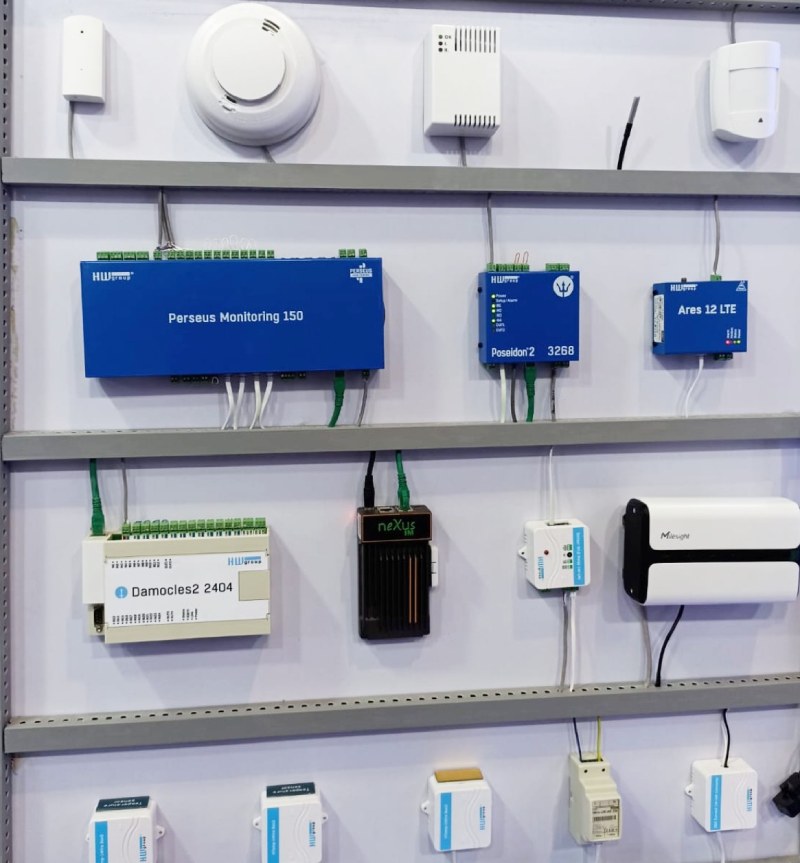


Headquartered in Sydney, Australia, Nexus World operates as a technology solutions provider focused on infrastructure monitoring through integrated IoT systems. It delivers end-to-end capabilities by combining advanced sensor technologies, scalable cloud services, and its proprietary NexusIM platform. As a result, the company enables real-time monitoring, precise control, and data-driven analytics. Moreover, its solutions extend across data centers, smart cities, logistics, healthcare, and industrial environments, thereby enhancing operational efficiency, strengthening safety protocols, and ensuring regulatory compliance. By seamlessly integrating building management systems, SCADA frameworks, and IoT ecosystems, Nexus World equips organizations with actionable intelligence, automated alerting mechanisms, and secure data governance. Consequently, it positions itself at the forefront of intelligent infrastructure and large-scale digital transformation.
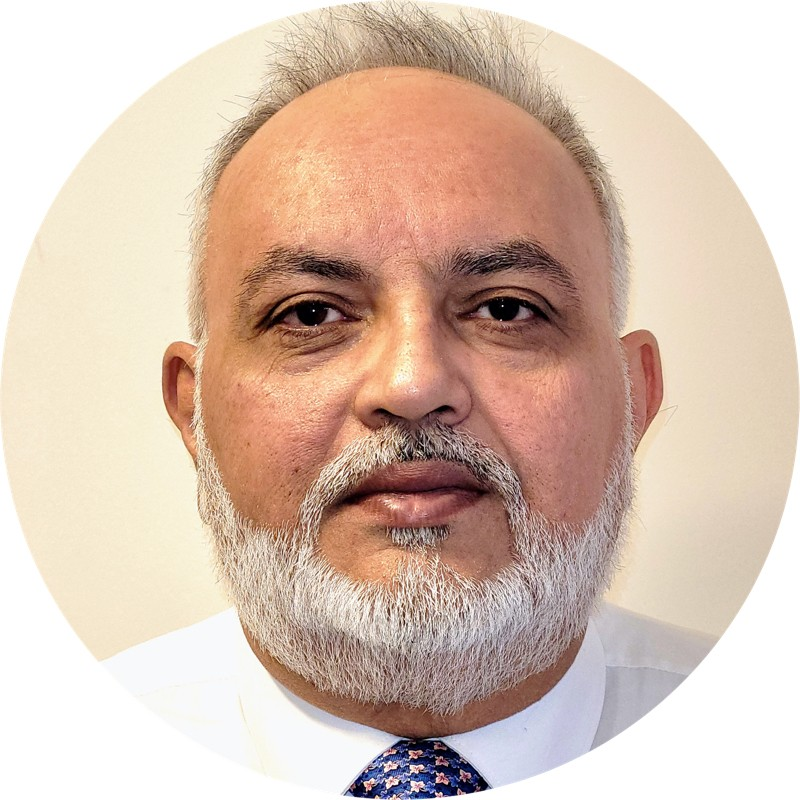
In an exclusive interaction with The Interview World at the 33rd Convergence India Expo, Salin Shakya, Managing Director of Nexus World, articulates the company’s IoT portfolio and the critical challenges it addresses. He further examines the organization’s footprint in India and evaluates customer response in the market. In addition, he outlines the innovation roadmap for the next five years within the IoT domain and underscores how Nexus World’s solutions can drive tangible value for both smallholder and large-scale farmers in India. The following are the key insights from this in-depth discussion.
Q: What IoT solutions does Nexus World offer, and what problems are they solving for their customers?
A: We founded Nexus World 12 years ago with a clear focus on hardware solutions. At that time, however, no single brand or product could effectively serve diverse customer segments. Moreover, even within the hardware landscape, each brand operated its own proprietary monitoring system, which lacked interoperability with others. As a result, fragmentation limited visibility and constrained operational efficiency.
To address this gap, we integrated multiple hardware brands into a unified ecosystem. Subsequently, we engineered our own infrastructure monitoring solution, purpose-built to remain vendor-neutral. This approach ensures seamless compatibility across technologies and eliminates dependence on any single manufacturer.
Consequently, our platform now supports a wide range of industries. It spans oil and gas, data centers, and agriculture, and extends further into healthcare and other critical sectors. By design, it delivers consistent, scalable monitoring capabilities across heterogeneous environments.
Q: Could you share your current presence in the Indian market, and how Indian customers have responded to your offerings so far?
A: We operate offices in Sydney, Australia, and in Nepal. More recently, we transitioned our Delhi operations from fire and safety solutions to a dedicated focus on IoT. However, our engagement with India is not new. In fact, I have been closely associated with the market for over a decade, which provides us with a deep understanding of its evolution.
Over the years, India’s technology landscape has transformed significantly, and it continues to advance at a rapid pace. Accordingly, we have built a growing customer base across diverse sectors. We actively serve multiple industries and continuously expand our reach to address varied operational needs.
In addition, we have executed several deployments in the aviation sector. For instance, we have implemented solutions to monitor and automate generator systems, including those supporting radar towers and other critical infrastructure. These deployments demonstrate our capability to deliver reliable, high-performance IoT solutions in mission-critical environments.
Q: Can you share your innovation roadmap for the next five years in the IoT space, including key technologies and focus areas?
A: The IoT landscape has evolved rapidly, and it continues to transform at pace. Earlier, we relied primarily on short-range wireless technologies such as Wi-Fi and Bluetooth. However, the paradigm has shifted. Today, we deploy long-range communication frameworks that significantly expand operational reach.
For instance, technologies like LoRa now enable connectivity over distances ranging from 2 to 10 kilometers. Consequently, IoT deployments are no longer constrained by proximity limitations. This shift unlocks new use cases, particularly in distributed environments.
Consider agriculture as a case in point. A single gateway can now support devices spread across a radius of several kilometers. As a result, farmers can monitor remote fields and track livestock in real time, even across expansive terrain. This capability enhances visibility, improves asset management, and reduces manual intervention.
Moreover, the trajectory of IoT continues to advance toward integrated ecosystems. Asset tracking, human tracking, and environmental monitoring increasingly converge onto unified platforms. Therefore, organizations can manage diverse operations through a single, cohesive interface. In effect, IoT is no longer a peripheral technology; it is becoming deeply embedded in everyday life and enterprise systems alike.
Q: How do your IoT solutions empower Indian farmers to improve productivity, operational efficiency, and crop yields?
A: Agriculture in India operates within a distinctly different structural context compared to much of the world. Landholdings vary widely. On one end, smallholder farmers manage relatively modest plots; on the other, large-scale operators oversee expansive tracts of land. Accordingly, we design our solutions to address both ends of this spectrum.
For smallholder farmers, the priority lies in affordable and targeted automation. Even with a modest investment, they can remotely monitor critical parameters such as soil condition, water availability, rainfall patterns, and overall field health. Consequently, they can make informed decisions without being physically present on the farm. This level of insight enables timely interventions, including soil treatment and irrigation adjustments, while keeping costs under control.
In contrast, large-scale farms demand a more sophisticated and industrial-grade approach. Here, we deploy multi-sensor systems that enable comprehensive monitoring and automation at scale. These systems can control irrigation pumps, regulate fertilizer application, and optimize resource utilization based on real-time data inputs. As a result, operators achieve higher efficiency and precision across extensive agricultural operations.
Importantly, scalability remains central to our approach. Even small farmers can adopt incremental automation based on their needs and budgets, while larger enterprises can implement fully integrated systems. This flexibility ensures that our IoT solutions remain both accessible and impactful across diverse agricultural segments.