

FaceEcho.ai is an AI-powered facial analysis platform that brings health, wellness, skincare, beauty, and personalized recommendations together in a single digital experience. Its technology analyses facial images to identify visual indicators associated with health and wellness. At the same time, it evaluates skincare concerns, appearance, makeup, and lifestyle patterns to deliver a more comprehensive understanding of the individual.
The platform transforms these insights into personalized reports, skincare routines, beauty recommendations, and wellness guidance. It serves both consumers and healthcare providers, with a growing focus on healthcare integrations that can enable proactive screening, telehealth support, and more data-informed clinical conversations. Ultimately, FaceEcho.ai aims to make personalized health and beauty intelligence accessible through one simple facial scan.
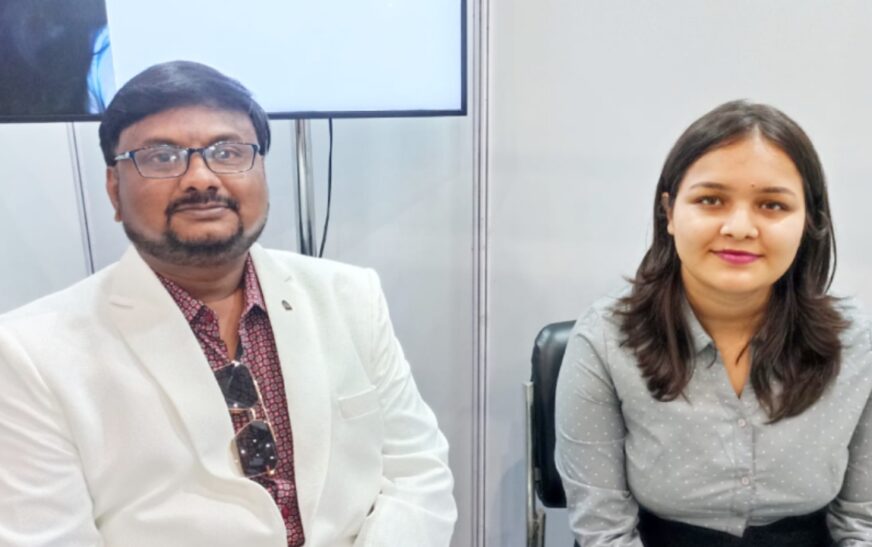
In an exclusive conversation with The Interview World at India Health 2026, Jyoti Rekha Patra, Clinical Operations and Partnership Associate at FaceEcho.ai, shed light on the company’s AI-driven healthcare solutions and their potential to detect or support the diagnosis of multiple diseases through facial signals. She explained how FaceEcho.ai evaluates the accuracy of its AI models against conventional methods and outlined the company’s pricing strategy for B2C customers. She also discussed the new innovations FaceEcho.ai plans to introduce on its existing platform to expand its capabilities and user value.
Here are the key takeaways from the conversation.
Q: Could you elaborate on the AI-driven healthcare solutions offered by FaceEcho.ai, particularly its capabilities for detecting or diagnosing multiple diseases from facial signals?
A: Today, most healthcare journeys begin with a doctor consultation and proceed to prescriptions, medication, diagnostic tests, and, where necessary, surgery. We saw an opportunity to introduce an intelligent pre-consultation layer that prepares patients and doctors before the consultation begins.
A doctor typically needs to collect a patient’s background information, symptoms, behavioural patterns, lifestyle factors, and other relevant data before making an assessment. This process takes valuable time. Our goal is to streamline it by collecting and organizing this information in advance and presenting it to the doctor in a standardized, structured format.
Our primary objective is to integrate this pre-consultation layer with telehealth platforms. We are therefore building a predominantly B2B model, while also planning a B2C offering for individual users.
From a clinical and operational perspective, accuracy is fundamental to our platform. The entire system is built around an AI-powered scanning and assessment model. The AI scan operates through multiple modalities, including a front-facing facial scan, a five-angle facial scan, and a video scan. The platform also incorporates an audio component, along with a comprehensive set of structured questionnaires.
These questionnaires are designed to address the information doctors commonly need during an initial consultation. Instead of requiring the doctor to spend significant time collecting this information manually, FaceEcho.ai captures it during the pre-consultation stage. It then combines the results from the scans, questionnaires, and other inputs into one standardized report.
The report can identify potential medical, wellness, and lifestyle-related indicators that may warrant further attention. It does not replace a medical diagnosis; rather, it helps identify areas that may require professional evaluation. Based on the findings, the platform can guide users toward an appropriate next step, such as booking a doctor consultation or undergoing relevant laboratory tests. For example, if the assessment indicates a potential nutritional deficiency, such as vitamin D or vitamin K, the user can be directed toward appropriate diagnostic testing and subsequent clinical evaluation.
Clinical validation remains a central priority for us. Based on our current database, which primarily comprises data from populations in the United States and the United Kingdom, our present accuracy level is approximately 70–75%. However, we recognize that models trained predominantly on Western datasets may not deliver the same level of performance for Indian populations.
We are therefore conducting a clinical study in India to strengthen and validate the model against Indian datasets. Our study protocol has already received approval from the ISVC Ethics Committee in Mumbai, and the study is currently underway. Over the next six months, we expect to generate and incorporate Indian clinical data into our models, enabling us to retrain and further localize the system.
Our objective is to achieve approximately 90–95% accuracy following this clinical validation and model-training process. This target is important not simply from a technology perspective, but because clinical credibility and evidence-based validation are essential to the platform’s long-term adoption.
Our core business strategy is to collaborate with telehealth providers and integrate FaceEcho.ai into their existing consultation workflows. By adding an intelligent pre-consultation layer, we can help streamline online consultations, provide doctors with structured patient information before the interaction, and potentially make the overall process more efficient.
We also see significant opportunities in physical clinics. In this environment, we plan to explore a B2B SaaS model, enabling clinics to deploy the platform as part of their patient-intake and pre-consultation workflows.
At the same time, individual users will be able to access FaceEcho.ai through a consumer application. The B2C product is designed for people who want to monitor their skincare, wellness indicators, and lifestyle patterns on a regular basis. This offering will be available through app stores and will operate primarily on a subscription model.
Ultimately, our vision is to build an intelligent layer that sits before the traditional healthcare consultation. By combining AI-based facial and multimodal assessment, structured questionnaires, standardized reporting, and clinical validation, FaceEcho.ai aims to help patients arrive better prepared and help healthcare professionals begin consultations with more structured, relevant information.
Q: Could you clarify whether the projected 95% AI accuracy will match conventional diagnostic accuracy after clinical validation, or remain an AI-specific benchmark?
A: We are not positioning the solution as a diagnostic tool. Instead, we position it as a pre-diagnostic and awareness platform that helps users identify possible signs of a skin condition before they consult a doctor.
Our objective is to make healthcare awareness more accessible, affordable, and convenient. The device is designed to be portable and easy to use, allowing users to monitor their skin regularly rather than waiting until a condition becomes serious. This is particularly relevant because the skincare and dermatology market has grown significantly, while access to timely and affordable professional assessment remains a challenge.
In terms of accuracy, we do not claim that the solution provides a definitive diagnosis. Instead, it identifies possible signs or indicators associated with a particular condition. The results are intended to guide the user toward the next appropriate step, which may include consulting a qualified doctor. Therefore, the solution does not replace medical consultation; it serves as a pre-consultation support tool.
This approach can also help users avoid unnecessary expenses. Today, laboratory tests can cost anywhere from ₹2,000 to ₹3,000 or more, depending on the test and condition. A specialist consultation can also cost approximately ₹700 to ₹800 or more. Users may therefore spend significant amounts simply to determine whether further medical attention is necessary.
Our solution aims to make that initial assessment simpler and more accessible. Instead of paying for repeated preliminary consultations, users can use the platform regularly to monitor their skin and identify potential concerns. They can then seek professional medical advice when the results indicate that further evaluation may be appropriate.
Eventually, our goal is not to replace doctors or conventional healthcare services. Our goal is to simplify the healthcare journey by making early awareness, preliminary assessment, and access to appropriate medical care easier, more affordable, and more convenient for everyone.
Q: What pricing strategy do you envision for the B2C platform to make it affordable and competitive compared with traditional diagnostic models available in India?
A: At this stage, we are offering the solution through pilot studies and have not yet launched it commercially. Therefore, we are not making any definitive statements about pricing until we complete the clinical study.
We expect to complete the clinical study within the next six months and target a market launch in 2027. At that point, we will be in a better position to define the commercial pricing strategy.
The pricing model will be flexible and customized according to each company’s requirements and preferences rather than following a fixed pricing structure. However, the subscription component will follow a standardized, fixed pricing model.
Q: What new innovations or features are you planning to develop on top of your existing platform to enhance its value and differentiate it from competitors?
A: Earlier, our approach was based on approximately 512 parameters, which we used to train our models. Using these parameters, we can currently detect more than 30 disease patterns and 45 wellness patterns.
However, we do not intend to remain limited to the current scope. As AI capabilities continue to advance, we will expand both our models and the underlying health assessment framework. We will also introduce more comprehensive questionnaires, which will provide additional inputs and enable us to identify a broader range of health conditions.
Our primary focus will be on expanding the platform’s ability to assess physical health conditions in greater depth. At present, we primarily address generalized health patterns. Going forward, we will move toward a more comprehensive and clinically relevant assessment of physical health.
Ultimately, our objective is to build a broader health platform that can serve as a pre-diagnostic health assessment system, helping users identify potential health risks and patterns at an early stage, while continuously expanding the range and depth of conditions the platform can assess.