

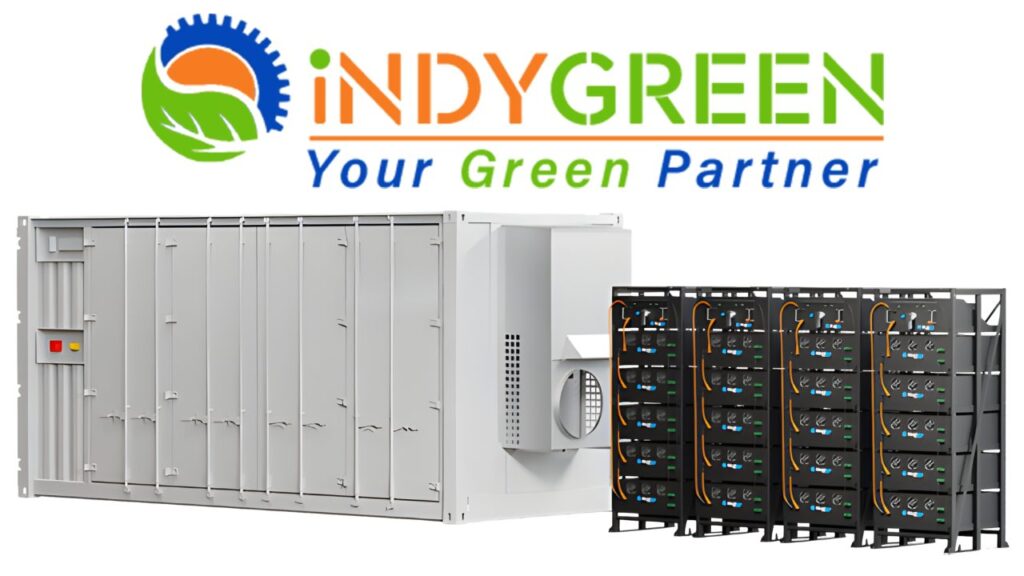
Indygreen Technologies operates as an innovation-led renewable energy company that designs and delivers turnkey production line solutions for solar PV modules, lithium battery cells, and energy storage systems. It provides fully integrated, end-to-end services, from engineering design to equipment supply, installation, and commissioning, thereby ensuring seamless execution across the value chain. As a result, the company enables global clients to achieve efficient, scalable, and cost-optimized manufacturing.
Moreover, Indygreen actively collaborates with technology partners, investors, and governments to accelerate the clean energy transition. At the same time, it addresses the global energy gap by deploying sustainable, high-performance, and future-ready industrial solutions.
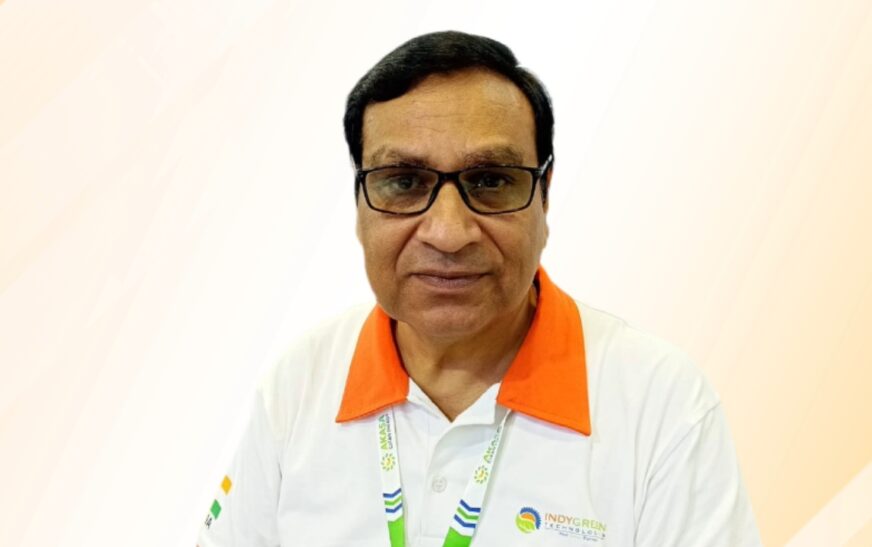
In an exclusive interaction with The Interview World at AutoTech Asia 2026, Ajay Kaushika, Chief Marketing Officer at Indygreen Technologies, articulates the company’s core renewable energy offerings. He further shares perspectives on market focus, evaluates the evolving renewable energy landscape, outlines key innovation priorities, and examines the scope of large-scale energy storage opportunities in India. The following are the principal insights from this substantive and forward-looking discussion.
Q: What core renewable energy solutions does Indygree Technologies offer, and which specific industry pain points are they designed to solve?
A: We design and supply advanced machine technologies that serve not only the EV sector but also a broad spectrum of battery applications, including solar and energy storage. More recently, we have expanded our portfolio to include solutions for Battery Energy Storage Systems (BESS), which support grid-scale as well as commercial and industrial applications. This domain now forms a core part of our expertise.
We deliver far more than equipment. We install and commission systems, train operational teams, and provide ongoing technical support where required. In particular, we place strong emphasis on the underlying battery technologies, especially thermal management, which is critical to long-term performance and safety.
To this end, we have partnered with a global leader in thermal management. Large-format batteries must operate reliably over extended lifecycles and across extreme environmental conditions—from sub-zero climates to high-temperature regions such as Rajasthan. Therefore, robust and adaptive thermal management systems are indispensable, and we integrate these capabilities into our offerings.
In addition, we have introduced solutions for the internal transportation of battery systems. For instance, a 20-foot containerized 5 MW battery unit can weigh up to 60 tonnes. Consequently, manufacturers require specialized handling systems to move batteries, modules, and racks efficiently from assembly lines to container integration points. We address this need through Automated Guided Vehicles (AGVs), which enable safe, precise, and high-load material movement within production facilities.
Taken together, these capabilities define our comprehensive approach. We cover the entire manufacturing lifecycle, from cell testing and validation to final container integration. This end-to-end execution remains our core strength.
Q: Is your current market focus primarily domestic or international?
A: We possess the capability to serve customers globally. In fact, we already operate in international markets through our solar module production line solutions, which we have successfully delivered to overseas clients.
On the battery side, we have not yet established a comparable international footprint. However, we have built the technical readiness, operational capacity, and delivery infrastructure to support customers anywhere in the world.
Q: How do you assess the renewable energy landscape in light of increasing government emphasis?
A: At present, the evolution of the industry in India reflects a clear trajectory. It began with strong momentum in the two- and three-wheeler segments, which continue to perform well. However, building on these learnings, the focus has now shifted decisively toward Battery Energy Storage Systems (BESS).
In this context, the convergence of solar energy and lithium-based storage represents one of the most effective synergies in the renewable energy landscape. Consequently, this combination has emerged as a central priority for the government. Aligning with this direction, we have also sharpened our focus on this space.
Q: What are your key innovation priorities over the next five years?
A: We remain sharply focused on machine technologies, the equipment that underpins battery and energy storage manufacturing. That is our core domain.
However, when viewed from a broader technology perspective, the manufacturing ecosystem is evolving rapidly. Increasingly, advanced capabilities such as smart Battery Management Systems (BMS), IoT integration, and AI-driven optimization are becoming integral to these solutions. While these are not our in-house specializations, we integrate them by partnering with domain experts who lead in these areas.
Accordingly, we act as the front-end integrator for such technologies. As with Automated Guided Vehicles (AGVs), thermal management systems, and other specialized equipment, we identify best-in-class global partners and bring their solutions to market. This approach becomes essential because much of this advanced machinery is not yet manufactured in India and must be sourced internationally.
At the same time, we focus on strategic positioning. We invest early in technologies that remain underpenetrated in the domestic market. For instance, while few players currently address AGVs or advanced thermal management in this space, we have already developed strong capabilities in both. Similarly, on the lithium cell side, we are fully prepared to enable local manufacturing by supplying the required technology.
As a result, we operate ahead of the current demand curve. We anticipate industry needs, build capabilities in advance, and position ourselves to deliver solutions as the market matures.
Q: What is your perspective on large-scale energy storage opportunities in India?
A: If you examine the tender landscape, the scale becomes immediately evident. By current estimates, approximately 33 gigawatts of storage capacity has already been tendered. Moreover, the forward pipeline remains substantial, indicating a rapidly expanding market.
However, government and utility-led tenders represent only part of the opportunity. In parallel, a much larger, faster-growing, and potentially more profitable segment is emerging within commercial and industrial applications. In this context, the integration of solar power with Battery Energy Storage Systems (BESS) is evolving beyond a mere backup solution. Instead, it is becoming a reliable and dispatchable energy resource.
Consequently, industries must reassess how they approach energy consumption. By engaging with experts and adopting solar-plus-BESS solutions, they can actively manage and optimize their energy costs. More importantly, this approach enables them to cap and stabilize operational expenditure, particularly in the face of rising and volatile energy prices.






1 Comment
Thank you for sharing this! I really enjoyed reading your perspective.
Comments are closed.