

Hemex Health is a global medtech company focused on building affordable, accessible diagnostic solutions for frontline and low-resource healthcare settings. Founded in 2016, the company is driven by a clear mission: to deliver accurate, easy-to-use diagnostics where they are needed most. To achieve this, Hemex Health works closely with clinicians, public health experts, and academic partners, translating real-world challenges into practical, high-impact technologies.
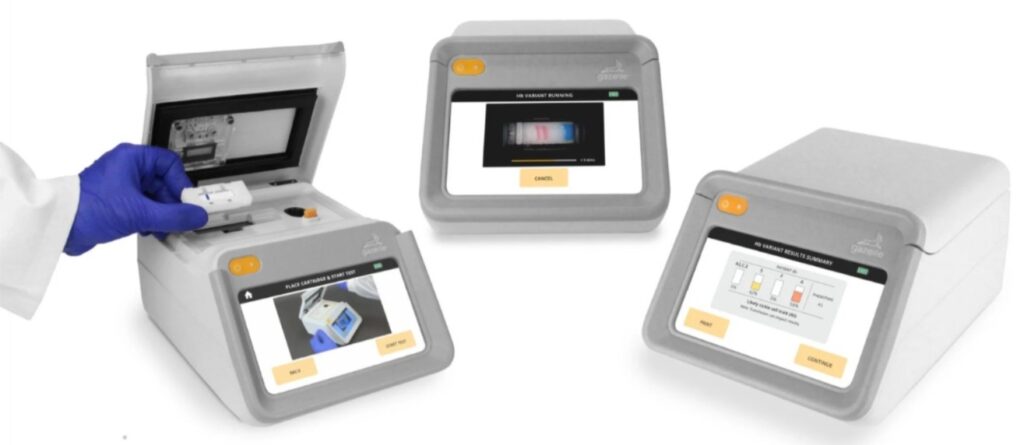
At the core of its portfolio is Gazelle, a portable point-of-care diagnostic platform that rapidly detects and quantifies blood disorders such as sickle cell disease and beta thalassemia. Gazelle delivers results within minutes, requires minimal training, and performs reliably in harsh and resource-constrained environments. In addition, its cloud-enabled architecture supports data capture and tracking, strengthening population-level health insights.
Headquartered in Portland, Oregon, with strategic operations in India through HemexDx, Hemex Health has scaled Gazelle across more than 40 countries. The platform now plays an active role in national screening programs and global health initiatives worldwide.
In an exclusive interaction with The Interview World at Medical Fair India 2026, Anurag Sharma, Growth Manager at Hemex Health, offers in-depth insights into Gazelle’s innovation. He explains how the device detects sickle cell disease, details its operation in remote areas with limited internet connectivity, outlines its international market presence, and underscores its certification by global regulatory agencies.
The following are the key takeaways from this compelling conversation.
Q: How does Gazelle function as a portable point-of-care diagnostic platform, and what specific technologies enable it to rapidly detect and accurately quantify blood disorders such as sickle cell disease?
A: Hemex Health’s flagship product, Gazelle, precisely identifies sickle cell disease and other hemoglobin variants while also enabling ferritin testing. It integrates two advanced technologies on a single platform. First, electrophoresis accurately detects and quantifies all clinically relevant hemoglobin variants. Second, fluorescent immunoassay (FIA) enables reliable ferritin measurement.
Traditionally, point-of-care and solubility tests were used for sickle cell screening. However, these methods are no longer sufficient, as they are prone to false-positive results and lack diagnostic precision. In contrast, Gazelle is a patented platform that delivers quantitative results—capability that conventional point-of-care devices simply do not offer.
Equally important, Gazelle is engineered for speed and simplicity. It delivers complete diagnostic reports in just eight minutes, enabling rapid clinical decision-making at the point of care. To date, more than 3,000 Gazelle systems have been deployed across government healthcare programs, underscoring both scale and trust.
Designed for versatility, Gazelle is ideally suited for Community Health Centres (CHCs), Primary Health Centres (PHCs), district hospitals, and remote locations. Its impact is especially significant in tribal and underserved regions, where the prevalence of sickle cell disease and related disorders is disproportionately high. As a result, Gazelle plays a critical role in expanding early detection and improving outcomes in populations that need it most.
Q: In regions with limited or unreliable internet connectivity, how do you ensure patient access to testing, and what alternative connectivity or operational mechanisms do you use to deliver and manage diagnostics in such settings?
A: We supply the device with a preloaded USB drive that contains the required software, ensuring seamless operation from the outset. In addition, the system runs on a robust battery that provides eight to ten hours of uninterrupted power. While the device is Wi-Fi enabled, it does not depend on continuous internet connectivity to function effectively.
This design is particularly critical for Primary Health Centres (PHCs) and remote facilities where Wi-Fi or internet access may be inconsistent or entirely unavailable. After completing a test, users can securely save the reports directly onto the USB drive. Later, once connectivity is restored, they can easily transfer the data to a computer or mobile device for upload, review, or sharing.
As a result, the device delivers full diagnostic capability at the point of care, without compromising performance in low-connectivity environments.
Q: Have you expanded into international markets through product exports, and which geographies or countries currently represent your key export destinations?
A: We currently export our products to nearly 40 countries worldwide. Beyond the United States, where our headquarters is located, our international footprint spans key markets across Brazil, Africa, and several other regions. In India, our operations are headquartered in Mumbai, from where we support manufacturing, deployment, and regional expansion efforts.
Q: What international regulatory certifications or approvals has Gazelle obtained, and how do these endorsements position the product for adoption across global healthcare markets?
A: Gazelle represents a significant innovation in point-of-care diagnostics. In recognition of its impact, the platform secured second place at the previous Medical Fair and earned first prize in the Health Technology Assessment (HTA). Furthermore, the Indian Council of Medical Research (ICMR) has recommended Gazelle under the National Health Mission (NHM), reinforcing its clinical relevance and public health value. The product also holds formal ICMR certification.
In addition, Gazelle complies with the highest global regulatory and quality standards. It is certified by the US FDA, CE-marked for European markets, and accredited under ISO standards. The device is also approved by the Central Drugs Standard Control Organization (CDSCO). Collectively, these endorsements validate Gazelle’s safety, quality, and reliability across diverse healthcare settings.