
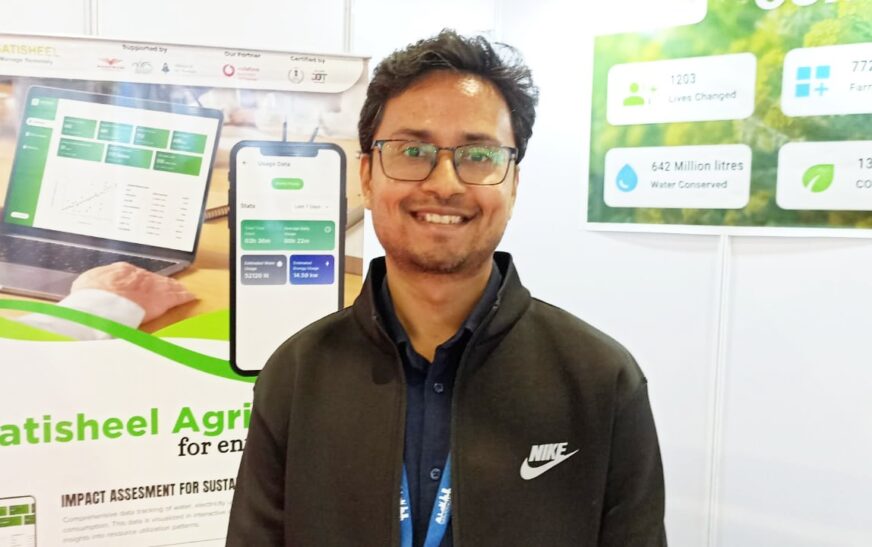
Gatisheel, an India‑based technology startup, is redefining water and irrigation management through cutting-edge IoT‑enabled solutions. Its integrated Remote Management and Intelligent Automation Platform combines connected sensors, cloud computing, and advanced analytics to optimize operations, lower costs, and enhance efficiency across water infrastructure, from pump houses and treatment plants to agricultural irrigation systems. The platform empowers enterprises, governments, and farmers with real-time monitoring, automated control, and data-driven decision-making. Founded in 2023 and headquartered in Gurugram, Haryana, Gatisheel is committed to sustainable, scalable water automation that promotes smarter resource use and resilient infrastructure.
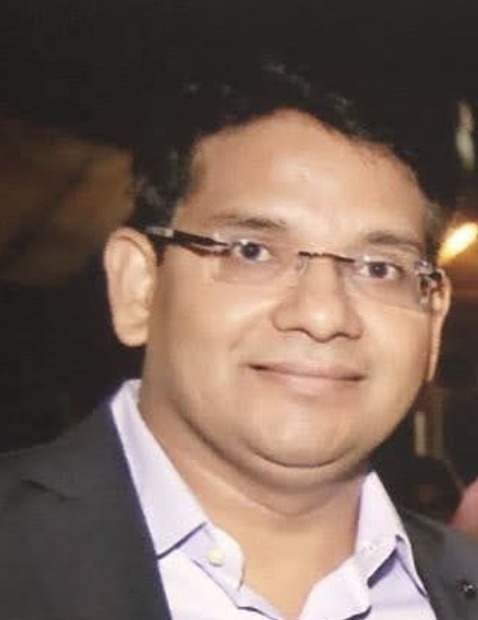
In an exclusive discussion with The Interview World at Municipalika 2026, Utkarsh Shah, Co-founder of Gatisheel Agritech Private Limited, delves into his automation platform’s core features, highlights targeted use cases in agriculture, and demonstrates its measurable impact on water and energy conservation. He also shares insights into market reception and outlines the innovations planned to expand the platform over the next five years. Below are the key takeaways from his insightful and forward-looking conversation.
Q: Can you elaborate on the core features of Gatisheel automation solution, and explain how are they different from similar products in the market?
A: At Gatisheel, we offer a Remote Management and Intelligent Automation Platform for water infrastructure. Our solution supports a wide range of systems: irrigation networks, water treatment plants, sewage treatment facilities, and urban or rural water supply schemes. What truly differentiates our platform is its hardware-agnostic design.
Traditionally, automation requires replacing existing hardware with proprietary smart devices that connect to a vendor-specific platform. We take a different approach: we upgrade your existing infrastructure, making it intelligent without the need for hardware replacement. This approach cuts implementation costs by 70–80% compared to conventional automation, while keeping the system light, scalable, and highly adaptable.
Despite its simplicity, our platform delivers the full spectrum of features typically found in expensive, specialized hardware and software solutions, enabling enterprises to achieve advanced automation at a fraction of the cost.
Q: Are these hardware components developed domestically, or are they procured from international sources?
A: Our product is purely a software platform, not a hardware solution. Existing hardware at plants and sites remains intact; we simply connect it to our platform via cloud technology. In essence, we are a software company delivering an automation platform and a companion app that enables users to monitor, manage, and control hardware components efficiently. Importantly, our platform is hardware-agnostic, giving organizations the flexibility to modernize operations without replacing existing infrastructure.
Q: Can you share insights on the specific use cases your solutions address within the agriculture sector?
A: I can highlight two key use cases for our platform. The first targets individual farmers. They can use our app to remotely operate irrigation motors in their fields. Larger farmers who manage multiple motors find the app especially convenient. By using it, they can conserve water and reduce energy consumption while managing their operations more efficiently.
The second use case addresses agri-enterprises. Companies, such as FMCG firms, often oversee numerous farmers under contract farming arrangements. They need to track water usage, energy consumption, and machinery uptime across all their farms. Our dashboard provides real-time monitoring and control, enabling enterprises to optimize resource use, ensure operational efficiency, and maintain consistent oversight of their entire network.
Q: What measurable impact do your solutions have on water and energy savings compared to conventional methods?
A: When it comes to savings, automation delivers significant results. Our studies show that automating irrigation can reduce resource use by 20–40% compared to manual operations. In our own installations with farmers, we consistently observed savings of 20–25%.
So far, our platform has achieved a measurable impact: it has conserved approximately 642 million liters of water and saved 160 megawatts of electricity across multiple deployments. These results highlight the tangible efficiency and sustainability benefits our solution brings to agriculture and water management.
Q: How has the market responded to your product so far?
A: The market response has been highly positive. I would like to highlight two key indicators. First, we have been collaborating with a state government’s Jal Shakti Department, automating water supply schemes and a sewage treatment plant. These systems have been running reliably for over a year. In recognition of our performance, the government issued a certificate noting the platform’s reliability and its role in significantly reducing maintenance and service costs.
Second, the state government has granted technical approval for deploying our technology across the entire state. Together, these developments serve as strong validation from our customer and underscore the trust and confidence in our platform.
Q: What new innovations are you planning to develop on your existing platform over the next five years?
A: We are focusing on two key advancements. First, we are enhancing advanced analytics, particularly for predictive maintenance. Our platform can now assess the health of a motor, anticipate potential failures, and alert users in advance. By analysing historical data, we can identify likely faults and recommend timely servicing, reducing downtime and preventing costly repairs.
Second, we are expanding the automation capabilities of our platform. Most existing solutions offer only visibility or basic control, such as switching devices on or off. Complex logic, like activating motors based on sensor readings, typically requires on-site programming at the PLC or SCADA level. We are developing the ability to configure and modify these complex operational logics remotely, giving users full control without needing to access the physical site.