
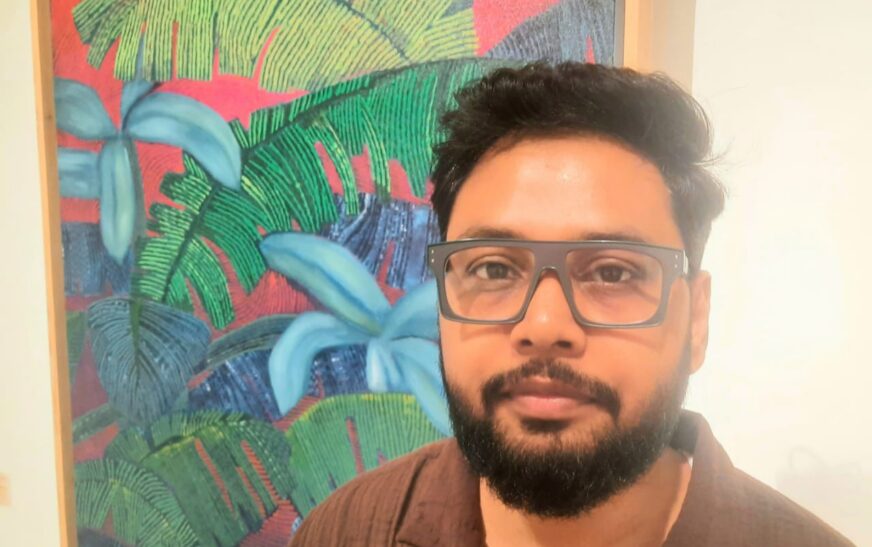
Dr. Vikram Kumar stands at the confluence of education, art, and cultural scholarship. As an Assistant Professor at the State Council of Educational Research and Training (SCERT), he has built a distinguished academic presence through his sustained engagement with art education, teacher training, and curriculum-oriented cultural initiatives. At the same time, he continues to shape contemporary artistic discourse as a practicing visual artist committed to nurturing emerging creative voices.
Through Artist in Studio, Dr. Kumar actively mentors and promotes young talent, creating meaningful opportunities for aspiring artists to engage with wider artistic communities. His work draws deeply from the lived realities of society and education while remaining firmly rooted in nature, folk traditions, and enduring human values. Consequently, his artistic expression carries both intellectual depth and cultural sensitivity.
Beyond the canvas, Dr. Kumar has made significant contributions to India’s evolving discourse on art-integrated learning. He has also authored important works on folk art, reinforcing his commitment to preserving and advancing indigenous artistic traditions within contemporary educational frameworks. By seamlessly integrating creativity with pedagogy, he continues to inspire students, educators, and emerging artists across diverse platforms.
In an exclusive conversation with The Interview World, Dr. Vikram Kumar discusses the central themes that define his artistic practice, reflects on the inspirations that shape his creative vision, and speaks extensively about the books he has authored on folk art. He also shares insights into the encouraging response to his first solo exhibition and outlines the new artistic ideas and conceptual directions he intends to explore in the future. Presented below are the key insights from this thought-provoking and deeply engaging interaction.
Q: Could you elaborate on the artistic theme or conceptual direction you are currently exploring in your work?
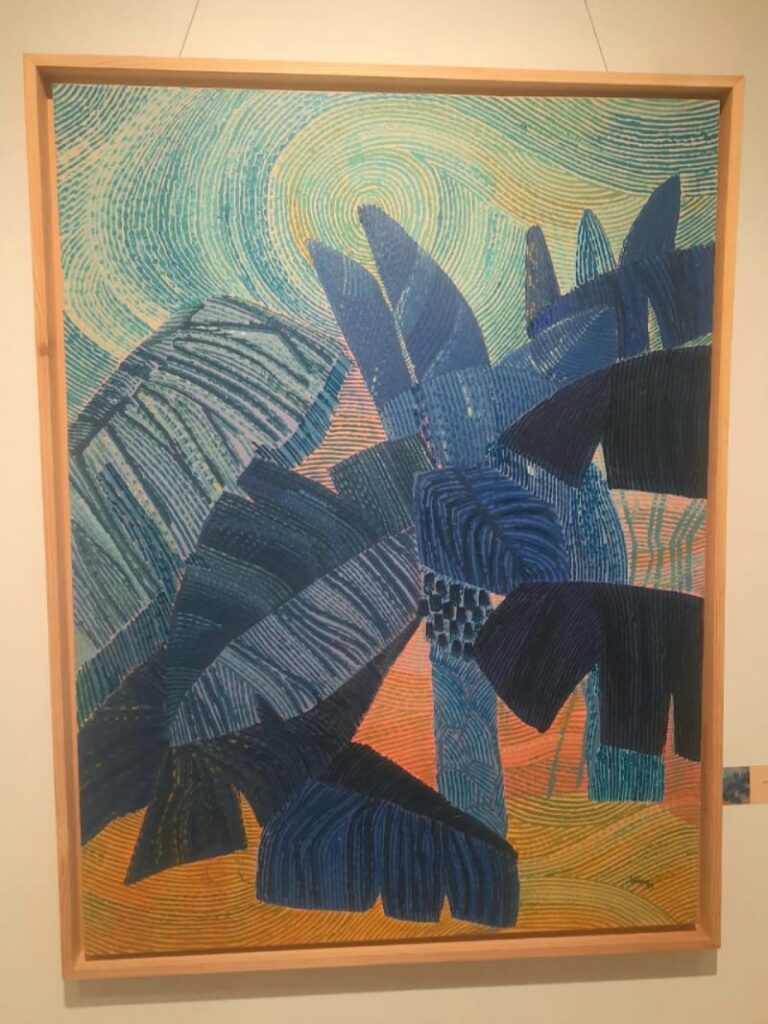
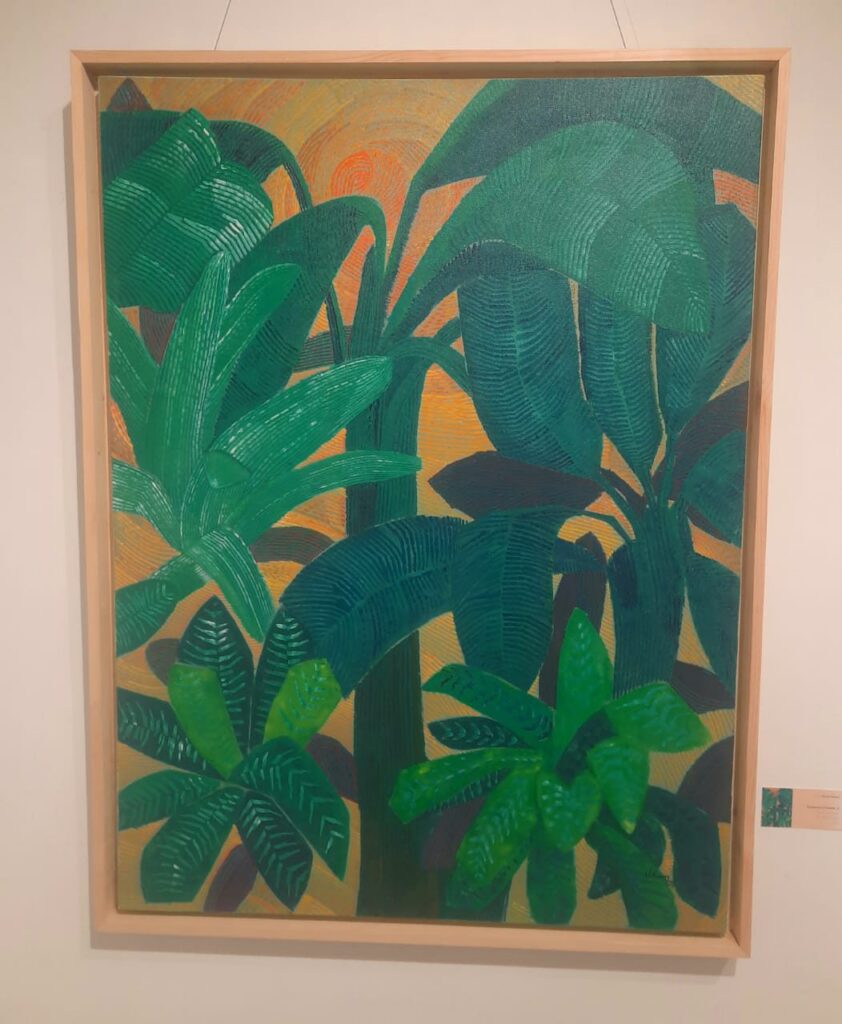
A: My artwork draws profound inspiration from folk traditions. Through my paintings, I explore the intricate patterns of leaves, the rhythm of the natural environment, and the visual language embedded in nature itself. At the same time, I employ vibrant and unconventional colours that people often overlook in their everyday perception of the natural world. Consequently, my work seeks not merely to depict nature, but to reinterpret it through a more expressive and imaginative chromatic lens. Ultimately, I aim to uncover and celebrate the hidden spectrum of colours that exists within nature but frequently escapes human attention.
Q: What inspired you to choose nature as a central element in your work, and what significance do the vibrant colours hold in your artistic expression?
A: As I mentioned earlier, people often perceive nature through a limited palette, primarily brown and green. However, nature embodies a far richer and more dynamic spectrum of colours than most observers recognize. At present, for instance, the colours of trees are constantly transforming with the changing season. Therefore, I consciously follow the rhythm and evolution of nature in my artistic process. Through my paintings, I attempt to capture these subtle transitions and reveal the extraordinary diversity of colours that nature continuously unfolds before us.
Q: Is painting a personal passion for you, or have you received formal training as a painter?
A: Painting has remained my deepest passion since childhood. I began painting at an early age, and over the years, art has evolved into an integral part of my identity and creative expression. This exhibition marks my first solo show; however, before reaching this milestone, I participated in nearly ten group exhibitions that helped shape my artistic journey and public engagement.
Significantly, the World Trade Center Metro Manila invited me from India to represent and showcase folk art, an opportunity that further strengthened my commitment to preserving and promoting traditional artistic forms on an international platform. Alongside my artistic practice, I am also authoring books on folk art with the objective of documenting, interpreting, and advancing India’s rich cultural heritage for wider academic and artistic discourse.
Q: Have you authored any books or publications on folk art?
A: Yes, I have authored several books on Indian folk and tribal art traditions. My work specifically focuses on Madhubani painting, Warli painting, and Pithora painting. Each of these art forms embodies a distinct cultural identity and carries profound historical and spiritual significance.
At the same time, these traditions remain deeply rooted in ritual practices, ecological consciousness, and collective storytelling. Through my writings, I aim not only to document their aesthetic richness, but also to highlight the social, cultural, and philosophical narratives embedded within them. Consequently, my work seeks to preserve these indigenous artistic traditions while bringing their enduring relevance into contemporary academic and artistic discourse.
Q: What kind of response have your paintings received from audiences here?
A: I have received an overwhelmingly positive response to the exhibition. Visitors are engaging deeply with my paintings and appreciating both their visual language and emotional resonance. In particular, many viewers observe that banana leaves and such natural imagery are not commonly encountered in Delhi’s urban landscape. Consequently, the paintings evoke a strong sense of nostalgia and reconnect them with memories of their childhood and their lived experiences with nature.
As a result, the audience does not merely view the artworks aesthetically; they experience them emotionally and personally. That emotional connection, in many ways, has become one of the most rewarding aspects of the exhibition.
Q: What new ideas or artistic concepts are you currently exploring beyond these works?
A: Apart from these explorations, I am also developing artistic compositions that merge animal forms with the organic structure and patterns of leaves. Through this approach, I seek to create a visual dialogue between wildlife and nature, while simultaneously emphasizing the intrinsic interconnectedness of all living forms within the natural world.
Q: Could you tell us a bit more about your books and the themes or subjects they explore?
A: I have authored a four-volume series titled Folkart, dedicated to India’s diverse folk and tribal art traditions. The first volume examines Warli painting, Madhubani painting, Pithora painting, and Bhil painting. Similarly, the second volume explores Gond painting, Manjusha art, and Tikuli art. In the third volume, I focus extensively on Hast Chitra and related traditional artistic practices.
Importantly, the Government of Delhi has published these books, and they are currently accessible through the official website of the State Council of Educational Research and Training. More significantly, the series is designed to support classroom practices in folk art education for students from nursery to Class VIII. Therefore, the books aim not only to preserve India’s artistic heritage, but also to integrate traditional art forms meaningfully into contemporary school education.
Q: Is there anything else you would like to share about your paintings or your artistic journey?
A: This marks my first solo exhibition, and through it, I am exploring a multilayered artistic framework centered on flora and fauna. At present, my work examines the organic relationship between natural forms, ecological balance, and visual storytelling. Subsequently, I intend to expand this exploration toward animal forms and their interaction with the environment they inhabit and depend upon for survival.
Through these compositions, I seek to portray not merely the physical presence of animals, but also their relationship with livelihood, coexistence, and the larger ecosystem. In essence, every living being possesses a distinct way of life, and I believe that reality must find meaningful expression within art. Therefore, my paintings aim to reflect the interconnectedness of nature, survival, and existence through a deeply symbolic visual language.