

Eurys Infosystems Pvt. Ltd. stands at the forefront of conversational AI, speech science, and digital engagement. The company designs and deploys advanced solutions, ranging from conversational IVR and enterprise-grade speech platforms to AI-driven innovations, robotics, and omni-channel engagement tools that enable organizations to streamline communication and elevate service delivery. By tightly integrating speech and web technologies, Eurys translates complex AI capabilities into practical, real-world applications. As a result, it has successfully executed more than 250 implementations across diverse industries, consistently delivering scalable, reliable, and high-impact customer interaction systems. At its core, Eurys remains driven by a clear mandate: to equip businesses with dependable, everyday technology that works without friction.
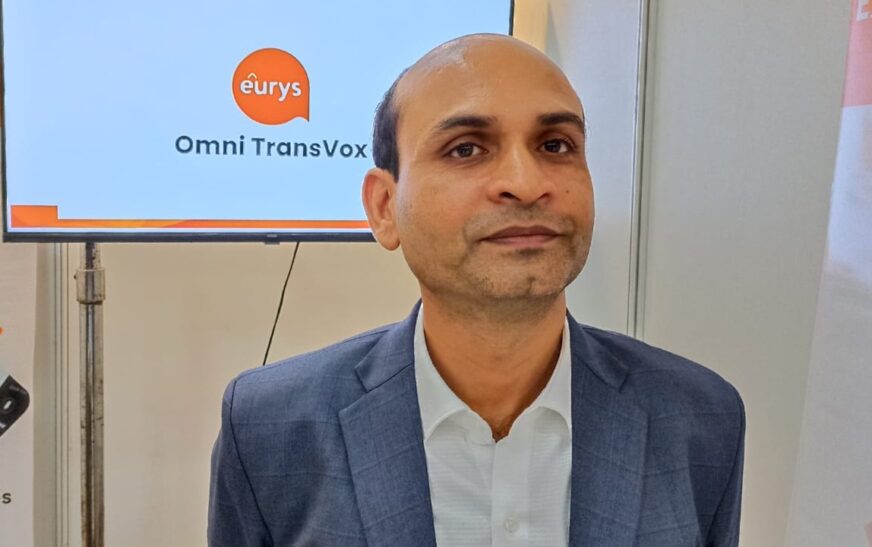
Against this backdrop, in an exclusive interaction with The Interview World at the 6th Edition of the FICCI AI India Conclave 2025, Rajeev Prasad, Director, Eurys Infosystems Pvt. Ltd. offered a deeper view into the company’s strategic DNA. He articulated the decisive differentiators that distinguish Eurys in an increasingly crowded conversational AI ecosystem. Furthermore, he detailed the company’s implementation-first model, illustrated how the platform has tangibly improved operational efficiency and workforce productivity for clients, and outlined the innovations Eurys aims to layer into its platform over the next five to ten years. He also shed light on the firm’s growing international footprint. What follows are the key takeaways from a conversation that was as substantive as it was forward-looking.
Q: Could you elaborate on the key differentiators that set Eurys apart in the conversational AI landscape?
A: Let me first clarify what this technology represents. A conversational AI platform enables citizens to engage with governments and enterprises in a simple, intuitive manner. Today, people typically reach these institutions through fragmented channels. They place phone calls. They navigate websites in search of information. They message business WhatsApp accounts. They send emails. These remain the dominant modes of interaction.
Conversational AI unifies these channels through intelligent, AI-powered bots. At the very first point of contact, AI takes the lead. Consider the calling channel. When a citizen dials a government or enterprise number, the interaction no longer begins with a human agent. Instead, a conversational bot responds. It communicates in natural language, much like a human conversation. It asks clear, context-aware questions, what do you need, how can I help, and guides the caller efficiently toward resolution.
Behind this interaction lies deep system integration. The bot connects to a structured knowledge repository specific to the government or enterprise. It also integrates directly with backend systems through secure APIs. As a result, every response is accurate, contextual, and authenticated, drawing from verified internal data rather than static scripts.
Equally critical is the platform’s sovereign AI architecture. No data tokens are routed to external systems or public LLM providers. Eurys deploys large language models entirely on its own in-house GPU infrastructure. This ensures complete control over computation, data processing, and model execution.
Consequently, all enterprise and government data: knowledge banks, transactional records, and conversational logs, remain within the client’s own data premises. Nothing leaves the system. Nothing moves outside institutional boundaries. In an era defined by data sensitivity and regulatory scrutiny, this approach delivers not only intelligence and scale, but also uncompromising data sovereignty and trust.
Q: Do you operate on a B2B or B2C implementation model, or do you support both?
A: We operate strictly on a B2B model. Accordingly, we work exclusively with governments and enterprises. One illustrative example is the Bureau of Immigration under the Ministry of Home Affairs, specifically its e-Visa Division. This department issues approximately 3.5 to 4 million e-visas each year. Every foreign national seeking to enter India must apply through this system, making it both high-volume and mission-critical.
To address this scale, we have fully automated all citizen-facing channels using conversational bots. We deployed an intelligent chatbot on the official website. In parallel, we implemented voice bots across the helpdesk infrastructure. We also introduced a WhatsApp bot to extend support onto widely used messaging platforms. Together, these channels deliver a unified, always-on engagement layer.
As a result, when applicants encounter difficulties, whether they struggle to complete the e-visa form, face a submission failure, or remain uncertain about their application status, they no longer need to navigate complex processes or wait for human assistance. Instead, they simply call the helpdesk or initiate a digital conversation. The bot takes over immediately and guides them step by step.
For instance, when an applicant asks about visa status, the bot requests the application ID and passport details. It then connects seamlessly with backend systems through secure integrations. Based on real-time data, the bot provides precise updates. It may confirm that the visa is under processing and will be issued within three days. Alternatively, it may flag missing documentation, specify what is required, and direct the applicant to respond to an already triggered email.
This is the value we deliver: intelligent automation that replaces friction with clarity, reduces dependency on manual intervention, and ensures accurate, timely responses at massive scale, without compromising reliability or security.
Q: Could you share examples of how your platform has measurably improved efficiency and productivity within client organizations?
A: To extend the same example of the Bureau of Immigration, the impact is both immediate and measurable. Earlier, the department relied on more than 50 human agents to manage incoming inquiries. Today, that number has been reduced to just five. Importantly, these agents were not displaced. Instead, the organization reassigned them to higher-value, complex tasks that demand human judgment and intervention.
The operational gains are equally striking. Previously, the helpdesk could manage only 1,500 to 2,000 calls per day. With conversational AI in place, the system now handles more than 10,000 calls daily, without expanding infrastructure or manpower.
This shift underscores the true power of conversational AI. Using the same physical infrastructure and largely the same human capacity, the organization has increased its call-handling throughput by nearly tenfold. In doing so, it has transformed a capacity-constrained operation into a scalable, high-efficiency service model, one that delivers speed, accuracy, and resilience at scale.
Q: What innovations or strategic enhancements do you envision building on the platform over the next five to ten years?
A: We are now advancing the next phase of our platform: language modelling at national scale. In India, regional languages are not optional, they are essential. Recognizing this reality, we have already deployed our large language models across 10 Indian languages. In parallel, we are actively developing support for 19 languages, with several already in advanced stages of implementation.
Looking ahead, our focus sharpens on deeper regional and rural adoption. We are preparing targeted deployments across southern India, including Tamil, Telugu, and other widely spoken languages. This expansion will allow conversational AI to reach citizens where they are most comfortable, linguistically and culturally, thereby removing one of the most persistent barriers to digital access.
At the same time, we are strengthening our sovereign, box-based AI architecture. Data sovereignty is no longer a preference; it is a mandate. Governments and enterprises increasingly demand assurance that their data never flows to external LLM providers or public AI platforms. We have already delivered on this requirement. Now, we are investing further to build a more sophisticated, hardened infrastructure that simplifies on-premise deployment while preserving complete control over data, models, and computation.
Together, these initiatives, deep multilingual capability and fully sovereign AI, define our roadmap. They ensure that our platform scales responsibly, deploys seamlessly, and serves India’s linguistic diversity without compromising security or compliance.
Q: Do you currently offer your services primarily in India, or do you also serve international clients?
A: We identified this opportunity early and moved decisively. Today, we are actively engaged with customers in the United States. We have already deployed our platform with a leading global IT services major, enabling them to extend advanced conversational AI capabilities to their own enterprise clients.
In parallel, we are collaborating with Cognizant as well as the Government of Maryland, supporting their initiatives with our platform. These engagements underscore the platform’s readiness for international markets and validate its ability to meet the stringent performance, security, and compliance expectations of both large enterprises and public-sector institutions in the U.S.







1 Comment
I hadn’t considered this angle before. It’s refreshing!
Comments are closed.