

CITiLIGHT is redefining how cities illuminate their streets. As a pioneer in intelligent street-lighting, the company fuses IoT precision, real-time automation, and deep data intelligence to help municipalities light their streets with sharper purpose. Its technology goes far beyond turning lamps on and off. CITiLIGHT transforms public lighting into a responsive, efficient, and future-ready urban system.
Today, CITiLIGHT has automated more than one million street lights across 100+ Indian cities and over 140 cities worldwide. In doing so, it has reshaped city nightscapes while delivering measurable reductions in energy consumption and carbon emissions. Its flagship VELOCiTI LMS platform — combined with versatile controllers built for NEMA, Zhaga, and pole-mount configurations — operates seamlessly across LoRaWAN®, LTE, RF, and NB-IoT networks.
Guided by its bold vision to “amaze people through innovative technology,” CITiLIGHT continues to champion connected, resource-intelligent infrastructure that empowers governments to build cities that are brighter, safer, and unmistakably smarter.
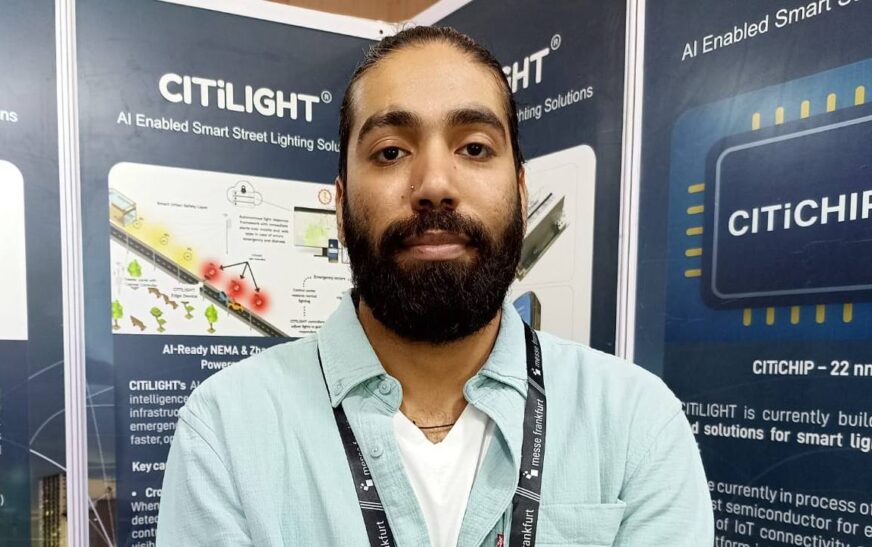
In an exclusive conversation with The Interview World at LED Expo New Delhi, Satnamji Arora, Senior Manager – Business Development at CITiLIGHT, delves into the company’s smart light controllers and their unique differentiators. He also outlines how CITiLIGHT leverages emerging technologies such as AI and IoT, explains the indigenous development behind their products, offers insights into their expanding domestic and global client base, and envisions the next layer of innovation over the coming 5–10 years.
The following are the key takeaways from his compelling discussion.
Q: Could you elaborate on your smart light controllers and explain how they meaningfully differentiate themselves from competing solutions?
A: Our core focus lies in smart light controllers — that is the heart of what we do. What truly sets us apart is the quality of our service. Most controllers available in the market are neither developed nor manufactured in-house. Many providers lack dedicated R&D teams, rely heavily on imports from China, and ultimately deliver poor service experiences.
In contrast, we design, develop, and support our controllers entirely in-house. With our own R&D and service teams, we provide reliable, end-to-end support backed by years of hands-on experience.
This expertise has enabled us to deliver large-scale projects globally. For example, we deployed more than 90,000 controllers in Montevideo, Uruguay. We also manage the entire New Delhi Municipal Council (NDMC) project in partnership with Havells, supplying all controllers for the city’s smart lighting network.
Across India, we have executed major installations in Bathinda, KDMC, and several other cities. Building on this momentum, we are now expanding into international markets, including the United States and Singapore. This is the direction we are driving with clear focus and purpose.
Q: As you leverage emerging technologies like AI and IoT, what specific solutions are you currently delivering to your customers?
A: When we talk about IoT, our entire solution is built on it. IoT — the Internet of Things — enables direct, internet-based control of physical infrastructure. Every controller we manufacture, whether individual or group-based, operates through a software platform we developed in-house.
With a single click, users can switch lights on or off, set schedules, or dim lights automatically. Once configured, the system executes everything seamlessly — no manual intervention required.
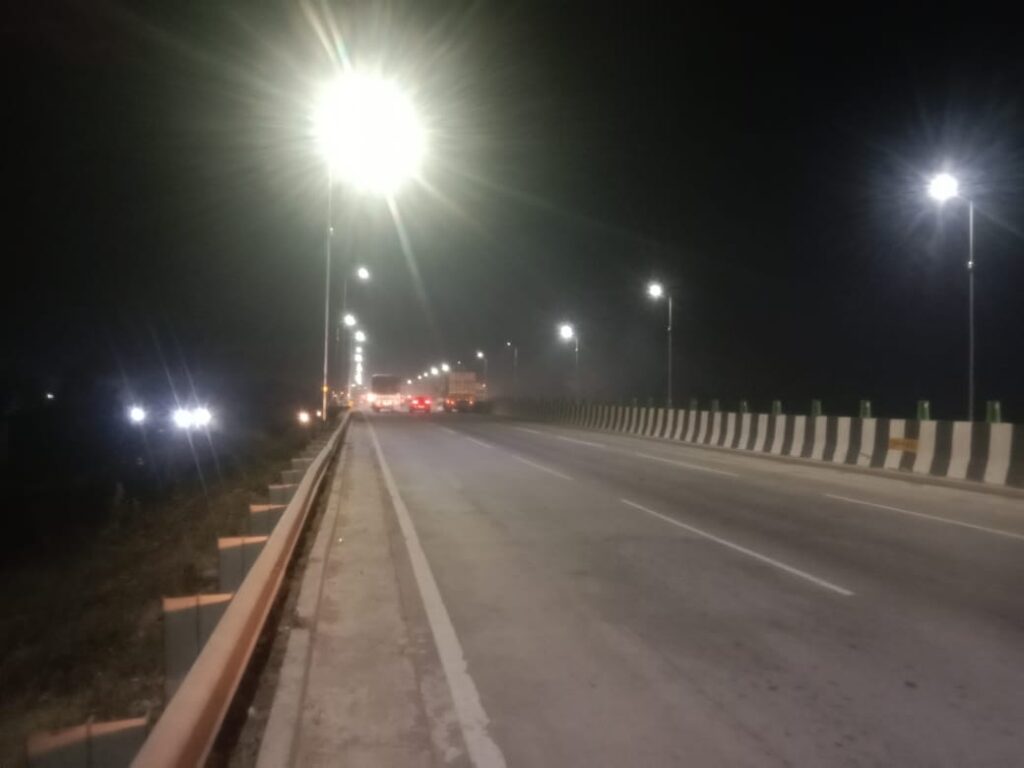
On the AI front, the possibilities expand even further. Many countries, especially in the Middle East, use smart poles equipped with cameras to detect emergencies. However, they often lack a reliable way to guide emergency responders precisely to the incident site. This is where our controllers become critical. By changing light colors or triggering coordinated flickering near the detected emergency, our system creates a highly visible beacon that responders can identify from a long distance — even on highways.
GPS pings alone can be inaccurate by 100–200 meters. But when poles at the exact location shift from standard yellow to flashing red, emergency teams can spot the target point from nearly two kilometers away. Our controllers enable this capability through AI-driven edge detection — making emergency response faster, clearer, and far more accurate.
Q: Are all your products manufactured in India, or do you also source certain components from abroad?
A: Yes, all our products are entirely made in India. With our in-house R&D and engineering teams, we design, develop, and manufacture every component from the ground up within the country. Every stage — from concept to production to after-sales support — is executed in India. In short, the entire solution is built, powered, and supported by India itself.
Q: Could you share insights into your domestic and international client base and how these segments are evolving?
A: Domestically and internationally, we primarily partner with OEMs. In fact, we work with nearly every major LED manufacturer, including Signify (Philips), Bajaj, Havells, and Panasonic. Whenever they require individual smart controllers, we are already their chosen partner.
We have active projects with all of them across India, and we are now expanding into global deployments with these OEMs as well. One of our most significant international milestones is the large-scale project in Montevideo, the capital of Uruguay, where we successfully deployed and managed 90,000 streetlights.
This success stems from our comprehensive capabilities — we deliver both the hardware and the software solutions that power these advanced lighting networks.
Q: Where do you envision CITiLIGHT in the next 5–10 years, particularly in terms of its next layer of innovation?
A: As you can see here, our next layer of innovation is already taking shape. We are developing our own IC, the CITiCHIP, designed to eventually replace the multiple modules and components currently required in IoT devices. Today, every controller depends on a separate module and a separate IC. With this new chip, we aim to consolidate everything into a single, intelligent unit.
This IC will not only transform street-lighting technology but also redefine the broader IoT ecosystem. It is an AI-enabled smart chip engineered to replace existing IoT modules and chips available in the market.
The advantage is significant. Most ICs today are designed for developed countries, making them nearly four times more expensive than what a developing nation actually needs. Our goal is to create a chip tailored for developing markets, powerful, scalable, and far more cost-effective, at nearly one-fourth the current price.
This is the breakthrough we are driving toward over the next five years, a leap that could reshape IoT infrastructure at its very core.







2 Comments
Great job simplifying something so complex.
This gave me a whole new perspective on something I thought I already understood. Great explanation and flow!
Comments are closed.