
India’s sustainability transition has entered a decisive phase. For decades, businesses treated environmental and social considerations as peripheral concerns, often relegated to corporate social responsibility initiatives rather than embedded in core strategy. However, that paradigm is rapidly changing. As resource constraints intensify and regulatory frameworks grow more robust, companies must fundamentally reassess the relationship between growth, operational efficiency, and environmental stewardship. Consequently, sustainability is no longer a reputational exercise; it is emerging as a central driver of long-term economic value. In this context, the expert examines how ESG is evolving across India’s industrial landscape. He argues that waste should not be viewed as an inevitable by-product but as a misallocated resource. Furthermore, he explains how circularity, process integration, and disciplined policy enforcement can reposition sustainability, from a compliance obligation to a strategic economic imperative that will shape the country’s future.
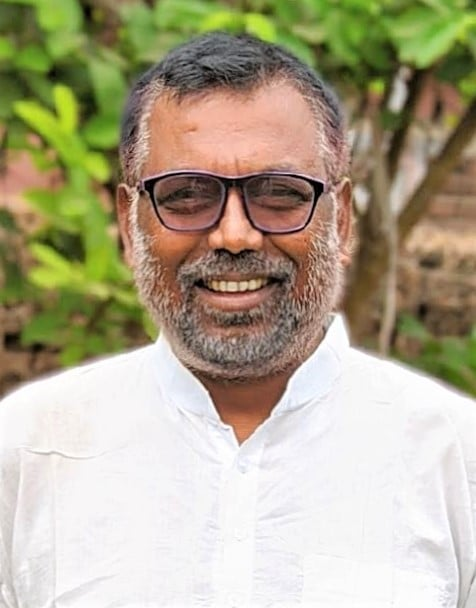
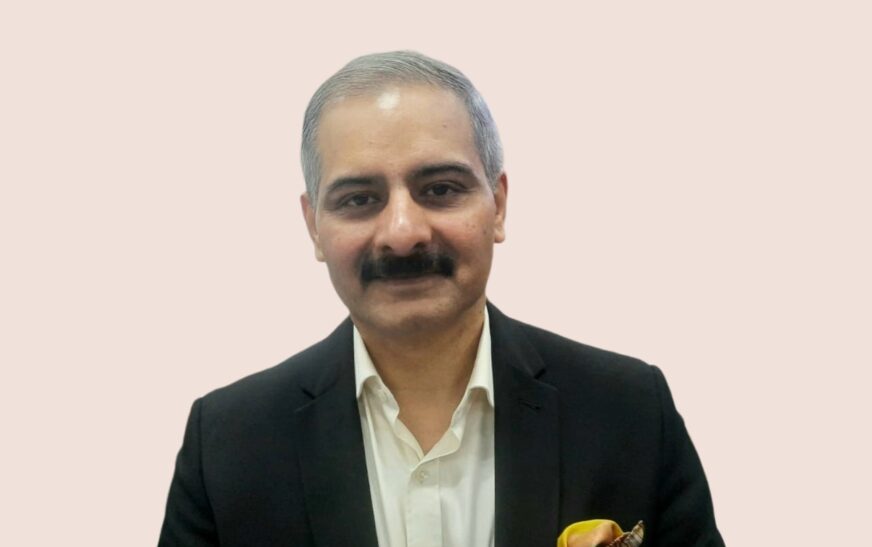
In an exclusive conversation with The Interview World at the 10th Sustainable Business Futures Summit organized by FICCI, Masood Mallick, Group Managing Director and CEO of Re Sustainability Limited, evaluates the current ESG landscape in India and its resilience amid emerging sustainability challenges. He also outlines the importance of process integration within waste-management systems and underscores the urgent need for rigorous implementation of existing sustainability policies across industry. In addition, he shares his perspective on circularity and explains why it has become indispensable for businesses seeking to transition toward resource-efficient and sustainable operating models. The following are the key insights from this thought-provoking discussion.
Q: How do you assess the current ESG landscape in India, and how resilient do you think it is in the face of evolving sustainability challenges?
A: We are at the early stages of the mainstreaming of ESG and the broader sustainability agenda. Why do I say this? Because, for a long time, organizations treated ESG as something peripheral to business, an additional activity rather than an integral one. It was often approached in the same way as corporate social responsibility: companies ran their core operations first and then pursued CSR as a separate initiative. ESG, however, does not function that way. Sustainability cannot remain an adjunct to business; it must be embedded within the business model itself.
That shift is now underway. Sustainability is increasingly becoming inseparable from core strategy, operational design, and long-term value creation. In other words, it is moving from the margins of corporate activity to the center of decision-making.
To understand this transition, we must reconsider how we view environmental impact. What we currently describe as pollution is, in many cases, simply a misallocated resource, a resource in the wrong place, at the wrong time, or in the wrong quantity. Yet it remains a resource nonetheless. Consider air emissions released from industrial stacks, wastewater discharged from manufacturing plants, or the solid waste generated during production processes. Each of these streams contains materials, energy, or inputs that could be recovered, reused, or repurposed. When viewed through this lens, environmental management becomes a question of resource optimization rather than mere compliance.
India’s economic realities reinforce this perspective. The country operates under significant resource constraints. Approximately 80 percent of India’s energy, particularly crude oil, and therefore petrochemical inputs such as plastics, is imported. Between 60 and 70 percent of several critical metals, including copper, also come from external sources. Moreover, India imports nearly all of its supply of strategic minerals such as nickel, cobalt, lithium, manganese, and many rare earth elements. These dependencies create structural vulnerabilities in supply chains and industrial growth.
Consequently, the strategic logic becomes clear: India cannot afford to waste resources. Waste is simply too valuable to discard. The imperative, therefore, is to capture value from what was previously treated as waste and reintegrate it into productive use.
This realization is driving the integration of ESG and sustainability into the core of Indian business strategy. Companies are beginning to treat resource efficiency, circularity, and environmental stewardship as economic imperatives rather than purely ethical considerations. However, this transformation is still in its early phase. The foundations are being laid, but the journey toward full integration has only just begun, and from here, it will continue to accelerate and expand.
Q: How critical is process integration within waste management systems to enable efficient and scalable recycling?
A: Every stage in a resource or waste management chain carries the risk of leakage and efficiency loss. Consider, for example, a typical waste collection system. Primary collection introduces its own inefficiencies. Secondary collection or aggregation introduces another set. Treatment or primary processing adds further constraints. Finally, the conversion of recovered material into new products creates yet another layer of efficiency challenges.
When independent operators manage each of these stages in isolation, the system inevitably loses both material and value. By the time the material reaches the final processor, it has already shed a significant portion of its economic worth. Fragmentation weakens the chain.
A simple example illustrates this clearly. Suppose households keep their waste segregated, food waste separated from plastic waste. In that case, the plastic remains clean and can be recycled economically. However, the moment food waste mixes with plastic waste, contamination occurs. The plastic then requires washing before recycling. That additional washing step dramatically increases processing costs. In many cases, the cost alone renders recycling economically unviable.
Therefore, influencing households to segregate waste at the source, separating wet waste from dry waste, creates immediate value. When plastics remain uncontaminated, recyclers can process them efficiently and profitably. Once contamination occurs, however, recycling becomes expensive and often impractical.
This is precisely why integration across the value chain matters. Integration reduces leakage, preserves material quality, and protects economic value throughout the system.
Equally important, integration enables scale. Recycling activities, whether in plastics, paper, textiles, used oil, or other materials, rarely succeed when operated at a small or cottage scale. At that level, operators struggle to cover costs. They often cut corners, fall out of regulatory compliance, and ultimately fail to build sustainable enterprises.
Industrial-scale operations, by contrast, unlock efficiency and margin. Scale spreads fixed costs, improves process control, and strengthens supply chain coordination. As a result, the business becomes economically viable and operationally sustainable.
For this reason, integration and scale together serve as the critical enablers of any circular-economy business model.
Q: In your view, where are the key gaps in existing sustainability policies for industry, and what policy interventions could the government introduce to drive stronger adoption of sustainable practices?
A: The government has already established the essential policy architecture. A notable example is the National Circular Economy Framework. This landmark document represents a significant step in shaping India’s transition toward circularity.
Importantly, the framework did not emerge solely from government deliberation. Instead, Indian industry developed it through a voluntary, industry-led process. The initiative has produced detailed circularity and recycling roadmaps for twenty key commodities. As a result, the strategic direction is now clearly defined.
Consequently, the central issue is no longer policy creation. The necessary laws already exist. The policy frameworks are in place. Moreover, the regulatory instruments, particularly Extended Producer Responsibility (EPR), have been formally established.
What the system now requires is consistent enforcement.
Enforcement has begun, but it remains uneven across states. Some states implement these regulations rigorously. Others enforce them far less consistently. This variation creates uncertainty and slows progress.
At the same time, many industries still lack a clear and practical understanding of the regulatory framework. Compliance often suffers not from resistance, but from insufficient clarity about operational requirements.
Therefore, the priority should be alignment. Regulators must align the intent of the law with its execution on the ground. Industries must interpret and implement the regulations with greater precision. Once this alignment improves, measurable results will follow.
In short, India does not need additional legislation. The country already possesses the necessary policy and regulatory foundation. What it now requires is disciplined implementation and consistent enforcement.
Q: What is your perspective on the concept of circularity, and how important is it for businesses transitioning toward sustainable and resource-efficient models?
A: When most people discuss circularity today, they usually limit the concept to recycling and energy recovery. In other words, they define circularity primarily as what happens after a product becomes waste. However, this interpretation reflects a narrow, and largely Western, understanding of the circular economy.
A broader perspective exists, particularly within Eastern and Indian traditions. Historically, circular thinking began much earlier in the value chain. The first question was not how to recycle resources, but whether they should be consumed at all. What should we consume? What should we avoid? Do we truly need the product in the first place? These questions form the foundation of genuine circularity.
This perspective becomes especially important in India. From a per-capita standpoint, the country has only just entered its modern consumption cycle. At the same time, India supports a large share of the global population on a very small share of the world’s land and freshwater resources. Moreover, most of the country’s future infrastructure has yet to be built. Under these conditions, replicating traditional consumption models would place enormous pressure on natural systems. Therefore, circularity must begin with rethinking consumption itself.
Repair offers another critical dimension. Modern technology and consumer products are increasingly designed for rapid obsolescence. Packaging lasts only hours, while many electronic devices become outdated within a few years. In the past, consumers routinely repaired durable goods. Today, however, repair culture has largely disappeared. Yet repair creates economic value, extends product lifecycles, and generates significant employment opportunities.
Policy interventions can also drive circular outcomes. When European regulators required device manufacturers to standardize charging connectors to USB-C, the shift reduced resource use dramatically. A single design change eliminated vast amounts of unnecessary material consumption.
Ultimately, circularity extends far beyond recycling. It includes smarter consumption, product longevity, shared assets, and collaborative business models. For India, where future consumption will expand rapidly, this broader definition offers both an economic necessity and a strategic opportunity.