

Digital Surveillance Inc. (DSI Robotics) is an India-based research and development engineering company founded in 2006. It is headquartered in Noida, with its origins in Delhi. The company designs and manufactures advanced robotic systems for pipeline inspection, wastewater management, and confined-space infrastructure applications.
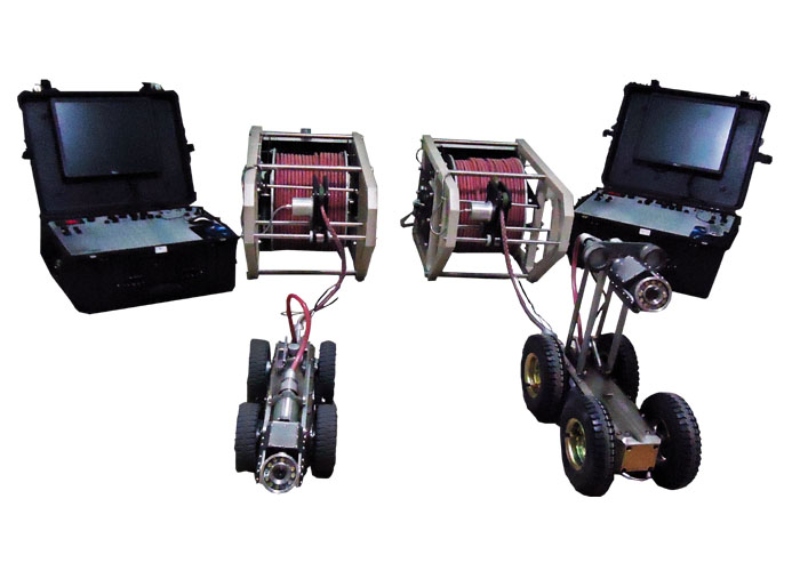
DSI Robotics stands as a pioneer in indigenous pipeline inspection robotics in India. It develops and deploys solutions such as CCTV inspection crawlers, desilting robots, and underwater robotic platforms. These systems serve water, sewage, marine, and industrial pipeline networks. Consequently, they enhance operational safety, improve inspection efficiency, and enable data-driven maintenance practices.
The company emphasizes in-house innovation. In doing so, it delivers cost-effective, high-performance robotic solutions tailored for government bodies and industrial clients.
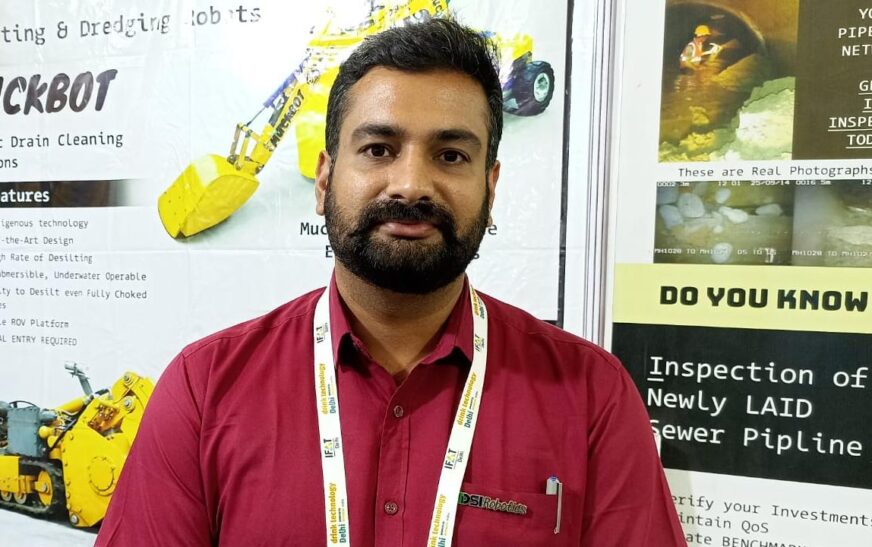
In an exclusive interaction with The Interview World at IFAT Delhi 2026, Dheeraj Bandral, Business Manager (Projects), Digital Surveillance Inc., discussed the company’s innovative robotics portfolio in detail. He highlighted the indigenous development of these technologies and explained their role in delivering significant cost savings. Furthermore, he outlined the company’s export strategy and its roadmap for future innovation. The following are the key takeaways from this conversation.
Q: Could you elaborate on the innovative robotic solutions developed by DSI and the key industry challenges they are designed to address?
A: The core objective is to eliminate human entry into desilting zones, large pipelines, and other hazardous environments. To achieve this, the company has developed advanced robotic systems that operate directly inside pipelines and accurately map underlying issues.
These robots travel through the pipeline network and pinpoint exact failure points. In addition, they generate detailed condition assessment reports. As a result, operators gain a clear, data-backed understanding of internal pipeline health.
Today, many municipalities and Urban Local Bodies (ULBs) struggle because they cannot identify where blockages or system failures actually occur. Consequently, end users often fail to receive reliable service outcomes. This technology directly addresses that gap.
Once deployed, the system operates without any human presence inside the pipeline. Operators remain at a safe, remote location and control the robot in real time. Moreover, the system delivers live video feeds from inside the pipeline, enabling precise identification of defects.
It detects cracks, fractures, choke points, blockages, and structural collapses with high accuracy. At the same time, it provides actionable intelligence on the extent and nature of intervention required. This includes where to intervene, how to intervene, and what method to adopt for restoration.
Beyond inspection, the company also integrates robotic cleaning capabilities. Therefore, the same systems not only diagnose issues but also actively clean pipelines. These solutions extend across municipal sewage networks, seawater intake pipelines, effluent treatment plants (ETPs), sewage treatment plants (STPs), and other hazardous infrastructure.
Ultimately, the approach removes human exposure from high-risk environments. At the same time, it replaces manual intervention with precise, scalable, and fully robotic operations.
Q: Are these robotic products developed entirely in India, or do they incorporate components or technologies sourced from other countries?
A: Approximately 95% of our manufacturing takes place in India. This is a conservative estimate, but it accurately reflects our operating model. We function as OEMs and have been active in this industry for the past 18 years. Our journey began in 2007, and since then, we have steadily built deep engineering capability.
Over time, we have aligned ourselves with global industrial benchmarks. In fact, our components, processes, and manufacturing systems meet international standards and, in many cases, surpass comparable machines in the market.
We execute almost everything in-house. We also deliver complete end-to-end solutions under one roof. This ensures tighter quality control, faster iteration, and greater reliability.
However, we also allow limited flexibility for specialized requirements. Roughly 5% of our system architecture accounts for such customization needs. In most cases, we develop these adaptations internally based on client specifications. Only in rare situations, where certain industrial-grade components are unavailable or require external sourcing, do we look outside.
Even then, this remains an exception rather than the norm. Ultimately, our core philosophy stays consistent: we design, develop, and manufacture almost entirely in India. In doing so, we reinforce a strong “Make in India” foundation across all our systems.
Q: What types of cost savings are achieved through your robotic products?
A: Consider this scenario. A municipal corporation or contractor takes up a pipeline project spanning several kilometers, with an estimated cost of ₹300–400 crores. In such cases, our intervention can reduce that expenditure by more than 50%. In fact, we have already demonstrated this outcome in multiple deployments.
Our robotic solutions assess the actual internal condition of pipelines with precision. As a result, they often reveal that full replacement is unnecessary. Instead, targeted intervention restores functionality effectively. In many cases, a limited repair is sufficient to extend pipeline life by another 50–60 years.
However, conventional approaches often rely on assumptions rather than data. Because stakeholders lack visibility into internal pipeline conditions, they default to complete replacement. This approach drives up both cost and time.
We eliminate that inefficiency. By providing accurate, real-time diagnostics, we enable data-driven decision-making. Consequently, clients avoid unnecessary excavation and replacement work.
In practical terms, we help execute projects at nearly one-third of the conventional cost. At the same time, we significantly reduce project timelines. Ultimately, this approach delivers both substantial financial savings and faster operational outcomes for end users.
Q: Are you currently exporting these robotic products, or is your focus primarily limited to the Indian market?
A: We are actively exploring opportunities beyond India as well. However, at present, we deploy our existing solutions in international markets directly through our company operations. Within India, we continue to focus on sales and large-scale deployments across core sectors.
At the same time, we remain open to global expansion. While current execution remains India-centric, we are steadily building international presence through selective engagements. Ultimately, we cannot predict the future with certainty, but we are clearly positioning ourselves for broader global markets.
Q: What new robotic innovations are you planning to develop over the next five years?
A: Our core objective is to eliminate manual intervention in repair operations entirely. Specifically, we aim to ensure that no one needs to enter manholes or hazardous confined spaces for maintenance work. Instead, we are building a system where robotic solutions perform end-to-end repairs autonomously, from the manhole entry point to deep within the pipeline network.
Over the next five years, we are working toward this transformation as a clear strategic goal. In parallel, we intend to remove all human exposure to hazardous conditions in such environments. This shift is not only about safety; it is also about scale, precision, and reliability.
At the same time, we focus on delivering measurable value to end users. We aim to improve repair efficiency, reduce lifecycle costs, and enhance operational outcomes across infrastructure systems. As a result, cities and utilities can address sewage management, water distribution challenges, difficult sanitation conditions, and even river cleaning more effectively.
Ultimately, this is the direction we are pursuing: fully robotic, safer, and more efficient infrastructure maintenance at scale.






1 Comment
Great article, i really enjoy reading it, i hope you post more, keep up the good wok , is gona come follow you for more , nice reading it.
Comments are closed.