


At a time when AI, data science, and deep technologies are fundamentally reshaping healthcare innovation, the stakes around trust, transparency, and equitable impact have intensified. These are no longer peripheral concerns; they define the credibility and sustainability of modern healthcare systems. Blockchain for Impact operates precisely at this convergence. It does not function as a conventional philanthropic funder. Instead, it acts as a systems architect, designing the structural foundations for next-generation healthcare innovation.
Registered in the Netherlands and deeply anchored in India’s research and innovation ecosystem, the organization is redefining how biomedical discoveries progress from laboratory insight to scalable, real-world application. It advances this mission by integrating blockchain’s core principles, decentralization, immutability, and verifiability, with the analytical power of AI. Through this convergence, Blockchain for Impact confronts some of healthcare’s most persistent challenges head-on: data integrity, institutional governance, and public trust.
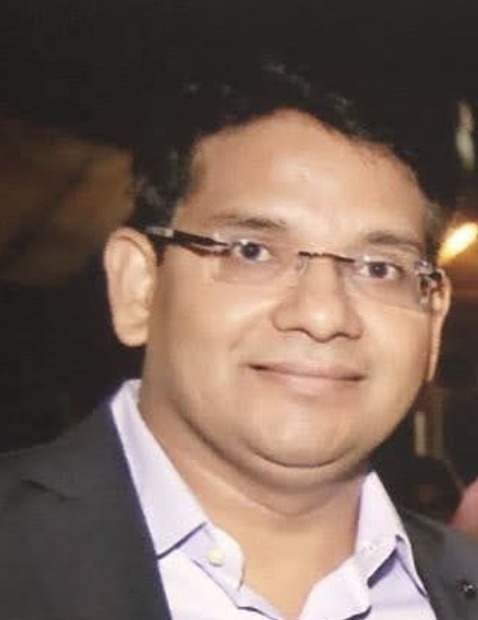
In an exclusive conversation with The Interview World at the Winter Dialogue on Responsible AI for Synergistic Excellence (RAISE), hosted by the NIMS Institute of Public Health and Governance at NIMS University, Dr. Gaurav Singh, CEO of Blockchain for Impact, articulates this vision with clarity and conviction. He explains how the organization is building an end-to-end innovation pipeline, enabling startups and research institutions across India, and shaping a future in which advanced technologies deliver healthcare outcomes at population scale. Secure, transparent, and inclusive by design, this model harnesses the combined power of AI and blockchain to translate innovation into measurable impact. The following are the key takeaways from this compelling dialogue.
Q: Could you explain the role of Blockchain for Impact as an organization in advancing healthcare solutions, particularly how the combined use of blockchain and AI enables data security, integrity, and trust?
A: Blockchain for Impact is a Netherlands-registered philanthropic organization dedicated to advancing research and innovation in the biomedical sciences. Since its inception, the organization has funded a wide portfolio of initiatives across India. Today, it supports more than 100 active projects spanning IITs and other leading academic institutions, medical colleges, startups, and incubators nationwide. Its mandate is clear and focused: to fund deep-technology innovation in healthcare, wherever it demonstrates the potential for meaningful impact.
In practice, this deep-tech focus frequently converges with artificial intelligence. In fact, many of the initiatives Blockchain for Impact supports are fundamentally AI-driven. Against this backdrop, the integration of blockchain and AI is not a complex proposition; it is a necessary one. Concentrating AI development and governance in the hands of a few dominant actors risks shaping outcomes, narratives, and societal behaviour according to narrow interests rather than the public good. Models trained and deployed without transparency can produce results that reflect predefined agendas, not objective reality, an outcome that undermines trust and, ultimately, social equity.
Blockchain technology addresses this structural imbalance by enabling transparency, decentralization, and democratic oversight. It creates the foundation for open, verifiable AI systems in which stakeholders can inspect how models are trained, how decisions are made, and where influence is exerted. Several organizations are already pursuing this approach. Notably, Sentient Technologies, founded by one of Blockchain for Impact’s founders, is working to make AI open source and genuinely democratic. The objective is straightforward but profound: to ensure that anyone can understand what occurs behind the backend systems, distinguish manipulation from legitimate computation, and hold AI systems accountable to the public they are meant to serve.
Q: Is your organization collaborating with startups and innovators in India, and if so, what types of innovations are emerging from this ecosystem?
A: Blockchain for Impact primarily invests in medtech incubation, medtech innovation, and veterinary laboratory incubation. We fund all three domains with equal strategic intent. Within medtech, in particular, we channel capital through a structured network of incubators across India. At present, we support eleven incubators nationwide, including some of the country’s most respected institutions. These include the Centre for Cellular and Molecular Platforms (C-CAMP), Venture Center, and the Foundation for Innovation and Technology Transfer at IIT Delhi. In Hyderabad, our partners include the AIC-Centre for Cellular and Molecular Biology (CCMB) and IKP Knowledge Park. Collectively, these eleven incubators form the backbone of our incubation strategy.
Our funding model is designed to catalyse early momentum. We provide seed-stage “Kickstarter” grants alongside founder fellowships to qualifying organizations. Typically, an eligible startup receives an initial grant of INR 30 lakhs, complemented by a monthly fellowship of INR 1 lakh for the founder. Through this approach, we have already invested USD 15 million in India. Looking ahead, we plan to deploy an additional USD 200 million over the next decade, reinforcing our long-term commitment to the Indian innovation ecosystem.
The next phase of our strategy focuses on delivering a comprehensive innovation full stack to Indian startups. Today, the innovation landscape remains deeply fragmented. Entrepreneurs ideate in one environment, develop prototypes in another, validate technologies elsewhere, navigate regulatory pathways independently, and then struggle to achieve market adoption. This disjointed journey slows progress and increases failure risk. We are addressing this gap by building an integrated program that brings every component of the innovation lifecycle under a single umbrella.
From ideation through Technology Readiness Level (TRL) 8 and market entry, startups gain access to end-to-end support within one coordinated ecosystem. IIT Delhi, where we are present today, serves as a cornerstone of this effort. The mPragati facility at IIT Delhi, established by the Indian Council of Medical Research (ICMR) and developed in partnership with Blockchain for Impact, plays a critical role in this model. It is specifically designed to help startups navigate the most challenging phase of innovation, often referred to as the “valley of death,” spanning TRL 3 to TRL 7. Through this partnership, we aim to systematically de-risk innovation and accelerate the translation of research into scalable, market-ready solutions.
Q: How long does the journey from piloting to go-to-market typically take, what costs are involved, and how can startups manage them to enable scalable, affordable, and inclusive deployment for larger populations?
A: The most significant challenge confronting medtech startups today is prolonged gestation. A typical medtech venture requires seven to ten years to reach the market, far exceeding the time horizon most contemporary investors are willing to tolerate. As a result, promising innovations often stall long before they achieve clinical or commercial impact.
This extended timeline is not inherent to medtech innovation; rather, it is a consequence of systemic fragmentation. As discussed earlier, startups must navigate disconnected stages, development, validation, regulation, and commercialization across multiple institutions and environments. If these elements were consolidated within a single, integrated program and physical ecosystem, the timeline could be dramatically compressed. We believe a seven-to-ten-year journey can realistically be reduced to approximately two and a half years through such structural integration.
Capital requirements present an equally complex challenge. While medtech is widely perceived as capital intensive, funding needs vary significantly by product category and technological depth. Some solutions can be developed and brought to market with investments as modest as USD 1 million. Conversely, truly deep-technology innovations may demand hundreds of millions of dollars, and, in certain cases, even that level of capital may prove insufficient. Ultimately, both time and capital inefficiencies stem from the same root cause: a fragmented innovation ecosystem that must be rearchitected to enable speed, scale, and sustainability.
Q: As you focus on medtech and healthtech, where do you see India over the next decade in terms of product innovation, quality, and global competitiveness of its startup ecosystem?
A: In the current era of artificial intelligence, long-term forecasting has become inherently uncertain. Predicting a full decade is increasingly unrealistic; even two to three years can bring profound technological shifts. Nevertheless, India is moving decisively in the right direction. Government-led initiatives such as the Anusandhan National Research Foundation (ANRF) and the Research, Development, and Innovation (RDI) Fund are injecting substantial capital, running into lakhs and crores, directly into the innovation ecosystem. This sustained public investment is materially strengthening the country’s research and deep-technology foundations.
Against this backdrop, the outlook for India is unequivocally positive. The national innovation narrative is evolving. We are moving beyond an era defined primarily by frugal innovation and entering a phase centered on original, high-quality, deep-tech breakthroughs. In the coming years, this shift will translate into a wave of globally competitive, first-class products emerging from India.
Recent developments underscore this momentum. The successful indigenous development of an MRI machine, for example, marks a critical inflection point. While MRI technology has existed globally for over three decades, building it domestically establishes the technical and manufacturing base required for adjacent advancements, such as PET and CT systems. These milestones are not isolated achievements; they signal a broader capability build-up across the ecosystem. The direction is clear, the momentum is tangible, and the collective pulse of the innovation landscape confirms that India is firmly on the right path.




1 Comment
I enjoyed your take on this subject. Keep writing!
Comments are closed.