


In a world where hunger and malnutrition persist alongside overconsumption and environmental strain, the humble fish is emerging as an unsung hero of global nutrition. Small, indigenous, and locally adapted aquatic species, those that feed naturally, flourish within local ecosystems, and deliver concentrated protein, essential fatty acids, and bioavailable micronutrients, hold immense, yet often overlooked, potential. They can simultaneously address the intertwined challenges of hunger, malnutrition, and livelihoods. Far from mere subsistence fare, these species act as compact, nutrient-dense systems capable of transforming public health, easing ecological pressure, and empowering smallholder communities.
During an exclusive conversation with The Interview World at ANVESH 2026, hosted by NIFTEM-K in collaboration with the Ministry of Food Processing Industries, Dr. Shakuntala Haraksingh Thilsted, Senior Nutrition Expert at CGIAR, former Global Lead for Nutrition and Public Health at WorldFish, and 2021 World Food Prize Laureate, shared her insights on designing nutrition-sensitive aquatic food systems. She explained how thoughtfully structured aquatic systems can bridge ecological sustainability, dietary adequacy, and social equity.
Dr. Thilsted emphasized that aquatic foods are far more than dietary options; they are strategic tools for tackling the complex, interconnected issues of hunger, hidden micronutrient deficiencies, and climate-sensitive food production. She highlighted why small fish matter, how aquatic biodiversity can be harnessed to improve global health, and why people-centric approaches must form the foundation of sustainable aquatic food ecosystems.
Here are the key takeaways from her compelling conversation.
Q: You place particular emphasis on small fish species in your research. What makes them so significant?
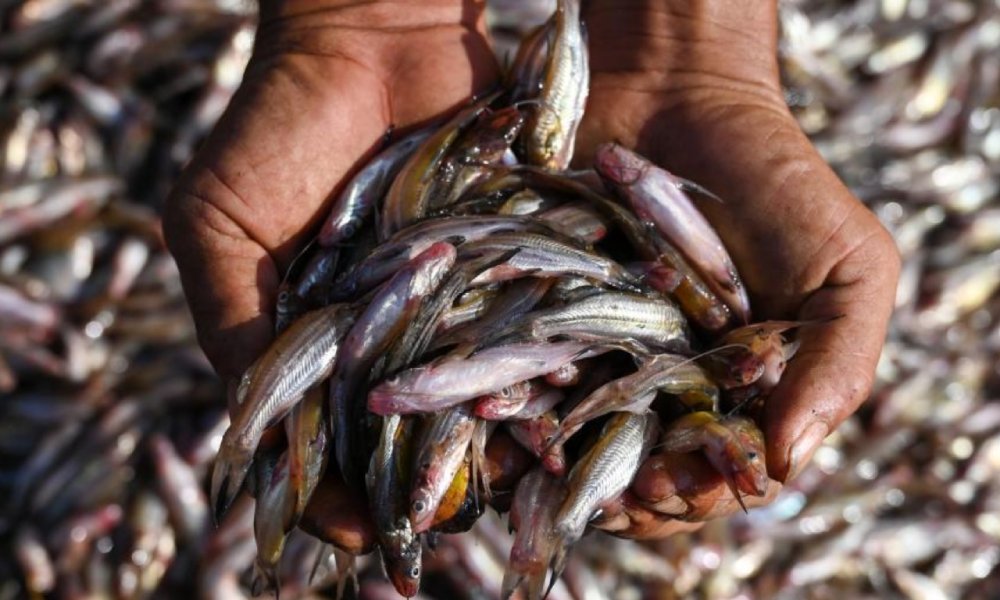
A: Let me illustrate the principle clearly. We deliberately work with diverse fish species, not only with species that depend on industrial feed inputs such as fish oil or compounded aquafeed. Instead, we prioritize small indigenous and locally adapted species. These fish feed naturally within ponds and wetlands. They require no specialized feed. Consequently, production costs decline, ecological pressure eases, and adoption becomes far more feasible for smallholders.
Moreover, small indigenous species deliver exceptional nutritional returns. People consume them whole bones, head, viscera, and all. As a result, they provide substantially higher levels of bioavailable calcium, iron, zinc, vitamin A, and essential fatty acids than filleted fish. In effect, they function as compact, nutrient-dense food systems in themselves.
Empirical evidence reinforces this value proposition. A recent longitudinal study conducted in Japan found that regular consumption of small whole fish correlates with lower all-cause mortality and increased life expectancy. These findings move the argument beyond theory. They position small fish not merely as subsistence foods, but as strategic public health assets.
Furthermore, seasonal preservation methods extend their impact. Communities can sun-dry these fish and mill them into nutrient-rich powders. They can then fortify complementary foods with minimal processing infrastructure. For example, UNICEF has incorporated fish powder into fortified wafers to address child malnutrition in parts of Asia. This approach links local biodiversity, nutrition science, and programmatic delivery within a single, scalable intervention.
Q: Why are aquatic foods pivotal in the global fight against hunger and malnutrition?
A: Hunger today is inherently multidimensional. We simultaneously confront undernutrition, micronutrient deficiencies, often described as “hidden hunger,” and overnutrition. This triple burden imposes overlapping metabolic, developmental, and economic costs. Consequently, policy responses must move beyond calorie sufficiency and instead prioritize foods that deliver high nutrient density and superior bioavailability.
For decades, however, public discourse reduced aquatic foods to “fish” and framed them almost exclusively as protein sources. This reductionist lens constrained both policy imagination and investment. In reality, aquatic food systems comprise thousands of species harvested or cultivated in marine and inland waters, including finfish, crustaceans, mollusks, seaweeds, and even microorganisms. Therefore, the nutritional potential embedded within aquatic biodiversity far exceeds conventional protein-centric narratives.
Emerging evidence now clarifies this broader value proposition. Aquatic foods supply not only high-quality, digestible protein but also essential fatty acids, particularly long-chain omega-3s, alongside highly bioavailable minerals such as iron, zinc, and calcium. They also provide critical vitamins, including A, D, and B12. Moreover, seaweeds contribute substantial amounts of iodine, a micronutrient central to thyroid function and cognitive development. Taken together, this nutrient profile positions aquatic foods as strategic instruments in addressing the full spectrum of malnutrition.
Iodine offers a particularly instructive example. Seaweed constitutes a naturally concentrated source of this micronutrient. Yet global public health interventions have relied predominantly on iodized salt to combat deficiency disorders. Although effective in expanding coverage, this strategy embeds micronutrient delivery within a vehicle whose excessive consumption contributes to hypertension and cardiovascular disease.
Had we historically leveraged seaweed as a primary iodine source, we might have delivered iodine within a broader nutrient matrix while simultaneously avoiding the systemic risks associated with excessive sodium intake. In this sense, a more expansive and ecologically grounded understanding of aquatic foods could have aligned micronutrient security with long-term chronic disease prevention rather than placing them in tension.
Q: You frequently refer to “nutrition-sensitive” food systems. How do you define that concept, and why is it important?
A: Nutrition-sensitive systems must move decisively beyond calorie sufficiency. They must embed nutritional adequacy at their core. At the same time, they must uphold ecological responsibility, respect cultural diversity, ensure affordability, and operationalize zero-waste principles. In other words, they must align human health, planetary boundaries, and social equity within a single systems architecture.
Food loss and waste expose the fragility of our current model. For years, analysts estimated that roughly one-third of all food produced was lost or wasted. Updated assessments now place the figure closer to 40 percent. This scale of inefficiency reflects not a marginal leak, but a structural failure. It squanders land, water, energy, and labour. Moreover, it exacerbates food insecurity while intensifying greenhouse gas emissions. Ethically and environmentally, such waste is indefensible.
Therefore, waste reduction cannot remain an afterthought. Policymakers must embed it directly into dietary guidelines, procurement standards, and supply-chain design. Likewise, food system redesign must treat loss prevention, surplus redistribution, circular resource use, and valorisation of by-products as core performance indicators. Only then can nutrition-sensitive systems achieve coherence, credibility, and long-term sustainability.
Q: What role will aquatic products play in feeding a growing population while meeting sustainability targets?
A: Sustainability is not an abstract aspiration; it is a function of biological choice. When producers cultivate indigenous species, they rely on fish that thrive within existing ecosystems. These species require minimal or no external feed inputs. They seldom require antibiotics. They exhibit greater resilience to local environmental stressors. Consequently, farmers reduce production costs, limit chemical dependence, and lower ecological disruption. For these reasons, prioritizing local varieties is not merely a cultural preference; it is a systems-level efficiency strategy.
This logic holds particularly true in regions such as Bangladesh and parts of India, especially around inland ecosystems like the Yamuna River basin in Haryana. In these contexts, small indigenous fish are locally available, economically accessible, and culturally embedded in dietary patterns. Therefore, scaling their production and consumption aligns ecological suitability with market feasibility and social acceptance.
Moreover, if public policy seeks to moderate terrestrial meat consumption for environmental and health reasons, aquatic foods offer a pragmatic alternative. They generally exert a lower environmental footprint. They often remain more affordable. And they deliver dense nutritional value with fewer resource inputs. At the same time, they provide high-quality protein alongside essential micronutrients, vitamins, minerals, and long-chain fatty acids. In effect, they combine sustainability with nutritional sufficiency rather than forcing a trade-off between the two.
In parallel, broader sustainability imperatives, climate resilience, biodiversity conservation, and ecosystem integrity, have moved to the center of global strategy. Aquatic systems, however, remain highly sensitive to climate variability, temperature shifts, and hydrological disruption. Therefore, integrating aquatic food systems into national and global planning is not optional. It is both nutritionally strategic and environmentally imperative.
Q: You advocate for a people-centric approach for aquatic food ecosystem. Why is placing people at the center so critical?
A: Aquatic systems matter because they sustain entire geographies and populations. Coastal zones support millions of people who live along shorelines and derive income and food directly from the sea. Likewise, inland water bodies, rivers, floodplains, reservoirs, and lakes, anchor the livelihoods of vast rural communities. These ecosystems are not peripheral; they are foundational to local economies and food security.
Consider Africa as a case in point. The African Great Lakes support millions through fisheries, trade, and associated value chains. For low-income households in particular, these waters function as both pantry and employer. They provide affordable animal-source foods rich in micronutrients, while simultaneously generating income in contexts where formal employment opportunities remain limited.
Therefore, aquatic resources are not supplementary assets for poor communities; they are primary livelihood systems. Any strategy that overlooks inland and coastal fisheries risks undermining both income stability and nutritional security for some of the most vulnerable populations. Eventually, a people-centric approach is critical for warranting livelihoods.








1 Comment
You have brought up a very good details , thanks for the post.
Comments are closed.