
Transforming Indian Railways into a bankable, scalable, and investor-ready platform must be treated as a strategic imperative. Although it commands a vast asset base and anchors the national logistics ecosystem, it continues to operate under structural inefficiencies, constrained private capital participation, and suboptimal asset monetization. To unlock its full potential, policymakers must activate the critical levers that can reposition the system as a commercially viable, performance-driven enterprise. In turn, this pivot will help evolve Indian Railways into a seamlessly functioning, high-efficiency ecosystem.
To achieve this shift, the sector must implement financing reforms and transition decisively toward a multi-operator model. At the same time, it must sharpen its focus on freight competitiveness and significantly enhance asset productivity. These priorities will define the pathway to sustained growth and operational excellence.
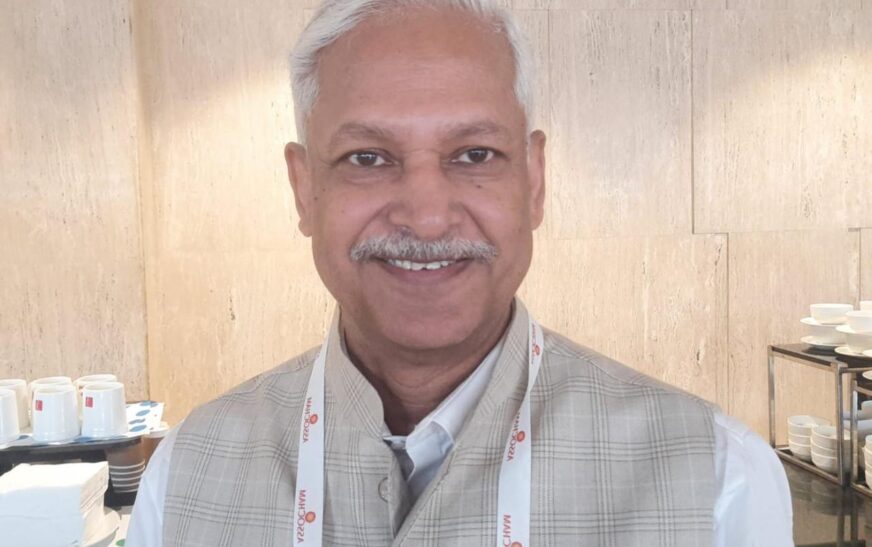
Against this backdrop, The Interview World engaged Mukesh Kumar Singh, Professor of Practice at the Arun Jaitley National Institute of Financial Management, during ASSOCHAM’s National Conference on “Future Ready Railways for Viksit Bharat.” In this conversation, Singh outlined a clear roadmap to position Indian Railways as a bankable, scalable, and investor-friendly ecosystem. He emphasized the urgency of structural reforms to increase freight modal share, highlighted the transformative potential of modern technologies in improving operational efficiency, and explained how the Railways can unlock greater economic value from its land assets. The following are the key takeaways from this insightful discussion.
Q: What will it take to make Indian Railways a bankable, scalable, and investor-friendly ecosystem?
A: Railway financing demands a structural shift. Non-railway stakeholders must become integral to the sector’s growth trajectory. In India, public funding accounts for only about 30% of gross capital formation, while private capital contributes the remaining 70%. Given the capital-intensive nature of railway infrastructure, the sector must actively attract and integrate private investment.
However, this integration hinges on creating a credible investable environment. Without it, private participation will remain constrained. Investors require clear and consistent policy signals. They expect non-discriminatory treatment, regulatory certainty, and, critically, a predictable pathway to earn reasonable returns on capital. Therefore, policymakers must institutionalize these principles within the system. Only then can the railways evolve into a robust engine of national growth and align with the long-term vision of Viksit Bharat 2047.
At present, private investors remain cautious. A single, dominant operator exercises effective control over train operations, which restricts operational autonomy and suppresses competitive incentives. This structural dependence deters meaningful participation. To address this, the sector must introduce multiple operators and enable open access. Simultaneously, it must implement a transparent and rational track access charging framework. Together, these reforms will foster competition, enhance efficiency, and, most importantly, establish a genuinely investor-friendly ecosystem.
Q: What structural reforms must Indian Railways undertake to increase its modal share in freight?
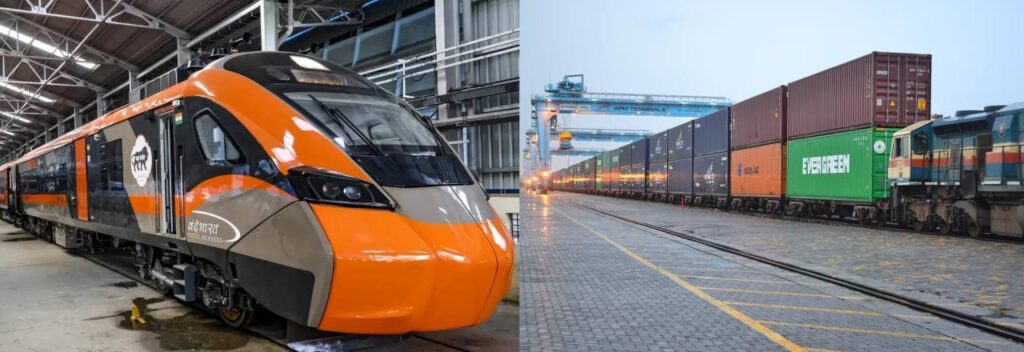
A: The Dedicated Freight Corridor (DFC) demonstrates what structural reform can achieve. Although it constitutes barely 4% of the railway network, it now carries approximately 13% of total traffic. This performance is not incidental; rather, it reflects deliberate design. By separating the DFC from the conventional network and granting it operational and commercial autonomy, policymakers enabled it to make independent decisions, optimize capacity, and respond to market demands with agility.
In contrast, the broader rail system continues to underperform, with freight share stagnating at an abysmally low ~27%. The root cause lies in entrenched vertical integration. This structure diffuses accountability, constrains flexibility, and suppresses efficiency. Therefore, the system must undergo systematic unbundling. Distinct functions, operations, infrastructure, and services, must operate with clear commercial mandates. Moreover, stakeholders must adopt a market-oriented mindset. They must move beyond reliance on public funding and instead generate sustainable revenues. Every rupee must be earned through efficiency, competitiveness, and value creation. Only then will the system achieve meaningful productivity gains.
Furthermore, India must aggressively expand rail’s share in freight movement toward global benchmarks, approximately 40% in economies such as the United States and Russia. This shift is not merely desirable; it is economically imperative. Rail transport offers significantly lower logistics costs compared to road, enhances energy efficiency, and reduces environmental externalities. Consequently, increasing rail’s modal share will strengthen national competitiveness while delivering long-term systemic benefits.
Q: How can modern technologies be leveraged to transform the operational efficiency of Indian Railways?
A: The railway system must first transition from a single-operator model to a multi-operator framework. At present, the Ministry of Railways functions as the sole operator, which concentrates control and limits competitive dynamism. Therefore, the sector must open itself to multiple operators. This expansion will introduce competition, enhance accountability, and drive operational efficiency.
Once competition takes root, digital optimization will follow as a natural progression. Operators, driven by performance and cost pressures, will adopt advanced digital tools to improve scheduling, asset utilization, and service reliability. The railways have already demonstrated this potential through systems such as the Freight Operations Information System (FOIS). However, the next phase requires scaling such initiatives into integrated, interoperable platforms.
Accordingly, the system must develop robust digital architectures, standardized operating modules, and strong institutional mechanisms. These elements, working in tandem, will enable faster decision-making, real-time visibility, and seamless traffic movement across the network. Ultimately, this transformation will shift the railways from a rigid, centralized structure to a responsive, technology-driven ecosystem.
Q: How can Indian Railways unlock greater economic value and growth from its land assets?
A: Indian Railways controls an extensive land bank of nearly 18 lakh hectares. However, it has yet to fully leverage these assets for monetization or to attract private capital at scale. This underutilization reflects structural and governance constraints rather than a lack of opportunity.
Instead of pursuing outright privatization, the system should adopt a calibrated approach centered on corporatization. Specifically, it should establish asset-focused entities with independent boards, clear mandates, and commercial accountability. Such a framework will professionalize asset management, unlock latent value, and enable disciplined capital allocation. Consequently, it will enhance returns while retaining public ownership, thereby aligning efficiency with strategic control.