

Nasiko is a research-led technology initiative dedicated to advancing the foundations of agentic AI systems. It investigates how intelligent software agents discover opportunities, collaborate with one another, and execute tasks autonomously across complex digital environments.
Operating at the convergence of distributed systems, AI infrastructure, and trust engineering, Nasiko develops the architectural frameworks required to power secure, autonomous, and interoperable AI ecosystems. Specifically, the organization focuses on agent orchestration, governance, and adaptive computation. Through this work, it enables enterprises to effectively manage the rapidly expanding ecosystem of AI agents.
Moreover, Nasiko prioritizes transparency, safety, and coordinated intelligence in every layer of its research and development. Consequently, it is building the foundational infrastructure for an emerging “agentic web,” a digital environment in which intelligent systems can interact, collaborate, and operate responsibly at scale.
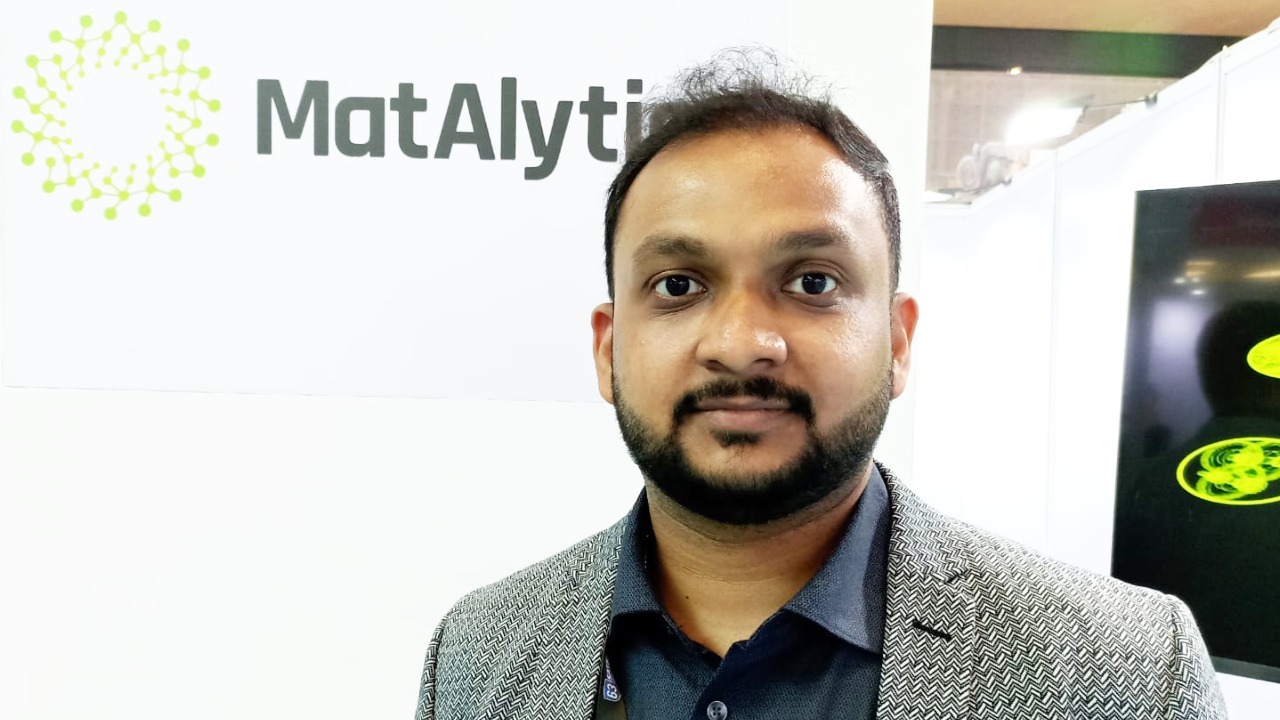
In an exclusive conversation with The Interview World during the India AI Impact Expo 2026, Monisha Asnani, Manager at Nasiko, explains how the company’s distributed agentic AI systems function in real-world environments. She also discusses the organization’s commercialization strategy, outlines the next wave of innovations planned over the coming five years, and describes its market expansion roadmap. The following are the key insights from this engaging discussion.
Q: Could you explain how distributed agentic AI systems are designed by Nasiko and how they enable autonomous, intelligent behaviour across multiple agents?
A: At Nasiko, we have developed an intelligence control plane for AI agents designed to bring clarity, governance, and security to increasingly complex agent ecosystems.
To understand the need for such a system, consider a simple scenario. If an organization deploys five AI agents, managing their collaboration and consolidating their outputs remains relatively straightforward. However, as the number rises to fifty agents, the operational landscape changes. At that scale, teams must constantly track which agent is performing which task. They must also determine how the twenty-eighth agent’s output aligns with or influences the work of the twenty-fifth agent, and so on. Consequently, coordination becomes far more intricate.
Now extend this scenario further. Suppose a large enterprise, such as a multinational corporation, deploys hundreds of AI agents, perhaps five hundred or more. At that point, complexity escalates exponentially. Without a structured framework, organizations quickly lose the ability to correlate agent activities, orchestrate collaboration, and ensure that each agent executes its assigned task accurately and in sync with others. In other words, managing such an ecosystem without systematic oversight becomes nearly impossible.
This is precisely where Nasiko’s intelligence control plane plays a critical role. We are building a structured framework that enables organizations to orchestrate, monitor, and secure large-scale AI agent ecosystems with precision and confidence.
Our system rests on four foundational pillars. First, the Agent Registry, which maintains a structured inventory of all agents and their capabilities. Second, Semantic Routing, which ensures that tasks and data flow intelligently between agents based on contextual understanding. Third, Clear Visibility, which provides comprehensive observability into agent activities and interactions. Finally, Security, which safeguards the entire ecosystem and enforces governance across agent operations.
Together, these pillars form the core architecture of Nasiko’s intelligence control plane, and they define how we currently position our technology in the evolving landscape of large-scale agentic AI systems.
Q: What kind of market response are you observing across various industries for distributed agentic AI systems?
A: At present, Nasiko operates in stealth mode. Nevertheless, our work already contributes to a significant global initiative. Specifically, we serve as a foundational layer for Networked Agents and Decentralized AI (NANDA), a program led by Massachusetts Institute of Technology that seeks to advance the next generation of decentralized, networked AI systems.
Through this collaboration, NANDA aims to pioneer the future architecture of the emerging agentic web, where intelligent agents interact, coordinate, and operate across distributed digital environments. In this broader vision, Nasiko is building the core infrastructure required to enable that ecosystem.
Accordingly, while we remain a stealth-stage company today, we are laying the technological groundwork for what we believe will become a critical layer of the future agent-driven internet. As the ecosystem evolves, we expect our role to expand significantly and position Nasiko as a key contributor to the emerging agentic AI landscape.
Q: What new innovations are you planning to develop over the next five years?
A: As I mentioned earlier, Nasiko’s architecture rests on four foundational pillars. At present, we have already established two of them: the Nasiko Agent Registry and a robust security framework. These components form the operational backbone of our platform by cataloguing agents, defining their capabilities, and enforcing secure interactions across the ecosystem.
Looking ahead, we are enabling direct communication between agents, initially with human oversight in the loop to ensure reliability and governance. Over time, however, these interactions will become increasingly autonomous as the system matures.
Importantly, this approach represents a clear departure from traditional architectures. Historically, digital systems relied on static routes and predefined endpoints to move data and execute tasks. In contrast, AI agents operate in dynamic environments. They require routing mechanisms that can interpret intent, context, and task relevance in real time.
Therefore, our next phase of development focuses on semantic routing and deep observability. Semantic routing will allow the system to direct tasks intelligently based on contextual understanding, while observability will provide end-to-end visibility into agent behaviour, interactions, and outcomes. Together, these capabilities will significantly enhance coordination, accountability, and performance across large-scale agent ecosystems.
Q: What are your plans for market expansion?
A: At this stage, our market expansion strategy remains deliberately open-ended. We are not restricting the platform to a conventional B2B or B2C model. Instead, we are designing it as a foundational layer for the broader agent ecosystem.
Specifically, the platform, and particularly the agent registry, serves any organization or developer that deploys AI agents or seeks to connect multiple agents into a coordinated system. In other words, it enables users to register, discover, and link agents so they can interact and collaborate effectively.
Consequently, our approach naturally extends beyond traditional market boundaries. Rather than targeting a narrow segment, we envision a significantly larger and more inclusive market, one that spans enterprises, developers, and emerging agent-driven platforms. As the agentic AI ecosystem expands, we expect the addressable market for such infrastructure to grow accordingly.