

Visotonics is an AI-native technology company that automates vision-centric operations across logistics and supply chain ecosystems. It converts existing CCTV infrastructure into intelligent, real-time inspection systems. Its platform deploys proprietary computer vision and OCR models to detect container damage, such as dents, corrosion, and rail cuts, read container and vehicle identifiers, track object movement, and extract critical data from logistics documentation.
Crucially, the system integrates seamlessly through APIs and does not require additional hardware. As a result, it strengthens operational efficiency, improves inspection accuracy, and delivers end-to-end transparency. At the same time, it reduces manual intervention, minimizes error rates, and lowers operating costs across yards, ports, and warehouse environments.
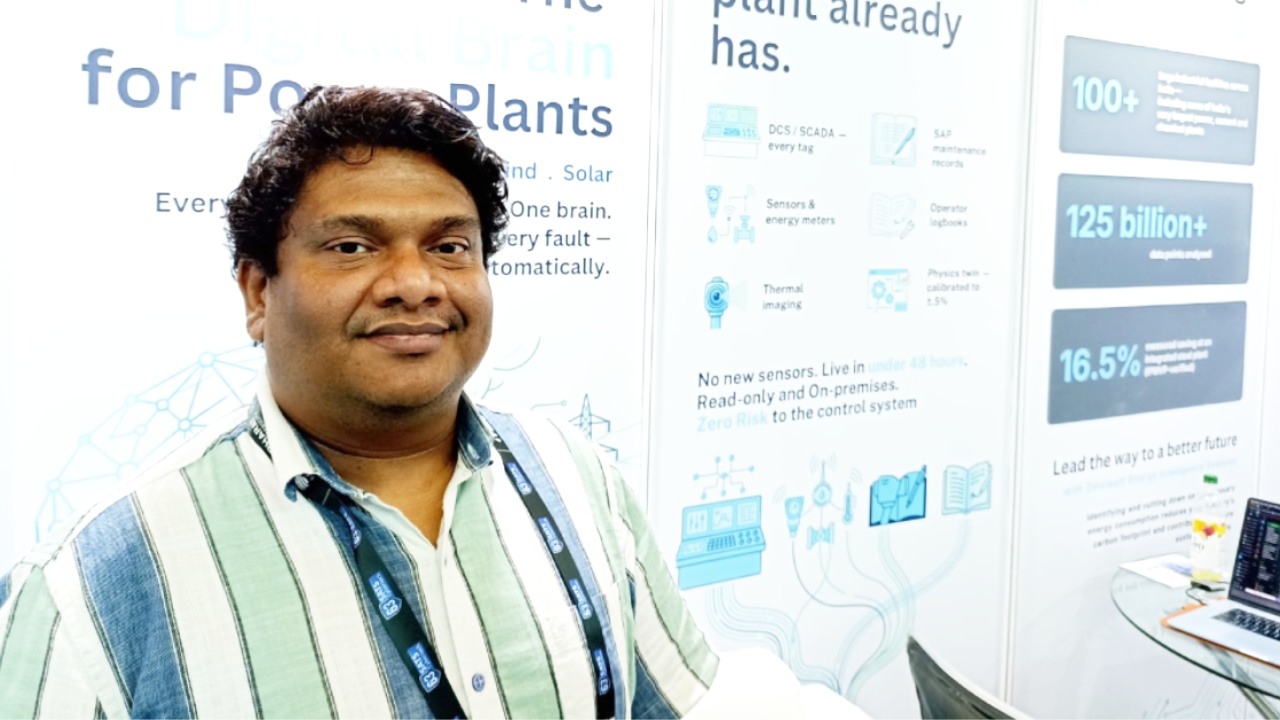
In an exclusive interaction with The Interview World at the India AI Impact Expo 2026, Pranav Asthana, Co-founder and Business Head of Visotonics, articulates the foundational architecture of the company’s sovereign vision intelligence infrastructure. He explains how Visotonics operationalizes sovereign AI frameworks while enforcing rigorous data security standards across client environments. Furthermore, he outlines the company’s evolving client landscape, defines its five-year strategic roadmap, and identifies the next layer of innovation that will shape its growth trajectory.
What follows are the principal insights from that discussion.
Q: Could you elaborate on the core capabilities of Visotonics’ sovereign vision intelligence infrastructure solutions?
A: Here, “sovereign” means that we build the entire technology stack in India. We do not import foreign technology. We do not license or rely on external AI models. Instead, we design and train our neural networks from first principles. Indian engineers architect, develop, and deploy every layer of the system. As a result, the intellectual property, model governance, and infrastructure remain fully indigenous and self-reliant.
Moreover, we define our platform as vision intelligence infrastructure because it enables comprehensive inspection and monitoring of industrial assets at scale. In practical terms, this means organizations can digitize and automate visual oversight across diverse asset classes. These assets may include shipping containers, metal tubes, ceramic tiles, or any other industrial component.
Furthermore, our infrastructure operates across heterogeneous camera environments. It ingests and processes visual data from Android devices, conventional CCTV systems, and specialized industrial cameras. Therefore, clients can leverage existing hardware while activating advanced AI-driven inspection capabilities.
For these reasons, we characterize the platform as a sovereign vision intelligence infrastructure: indigenous in origin, independent in architecture, and universal in industrial applicability.
Q: In building sovereign AI infrastructure, how do you ensure indigenously developed Indian hardware and software, and manage integration challenges?
A: We operate on two parallel tracks.
First, we maximize the use of existing hardware already deployed across client premises. Most facilities have CCTV systems, industrial cameras, or even Android devices in place. Therefore, we architect our platform to integrate seamlessly with this installed base. By doing so, we accelerate deployment, minimize capital expenditure, and eliminate unnecessary hardware replacement.
Second, we are developing our own proprietary hardware stack. This includes purpose-built cameras, optimized edge processors, and integrated cloud connectivity modules. We expect to bring this end-to-end hardware ecosystem to market within the next one to two years.
Until then, we continue to leverage existing industrial camera infrastructure to ensure uninterrupted scalability and operational continuity.
Q: How do you guarantee data security across client operations?
A: We operate a two-tier model architecture.
First, we maintain a generic, foundational vision model. This model is domain-agnostic and trained to handle broad inspection and monitoring tasks across industries. It serves as the core intelligence layer and enables rapid deployment across multiple environments.
Second, we design and deploy fully customized models for specific enterprises and use cases. In these instances, we build tailored datasets, taxonomies, and performance definitions aligned precisely with the client’s operational requirements.
Importantly, we isolate each client’s data within a dedicated silo. That data does not intermingle with datasets from other organizations. The company retains full ownership of its data, annotations, configurations, and derived intelligence. Furthermore, where required, we add a blockchain-backed security layer to reinforce data integrity and traceability. Because blockchain integration carries a premium, we implement it upon client request.
Consequently, each enterprise operates within a secure, segregated environment. Its data, model definitions, and operational parameters remain protected, independent, and fully controlled.
Q: Can you provide an overview of your client landscape?
A: We have deployed our solution across 25 operational yards. Most of these sites are container freight stations. Consequently, our strongest footprint lies within the container logistics sector, where precision inspection and real-time visibility are mission-critical.
In addition, we serve select manufacturing enterprises. For example, we support a company in Ahmedabad that manufactures advanced antennas for the Indian Space Research Organisation. These antennas enable satellite communication systems and demand exacting quality standards.
Accordingly, we focus on two primary markets. First, we target shipping yards and container logistics hubs, where scale and throughput require automated vision intelligence. Second, we engage high-precision manufacturing industries that produce mission-critical, high-value assets and require uncompromising inspection accuracy.
Q: What is your five-year strategic vision for expansion, and which new innovation layers will define your next phase of growth?
A: We aim to build the definitive intelligence layer for the vision industry. In other words, we seek to create a platform that enables any form of visual inspection or monitoring through a unified, scalable system. Our objective is clear: to become the default infrastructure for machine-led visual decision-making across industrial environments.
Accordingly, we are positioning ourselves as the category leader in visual inspection. In the specific use cases we currently address, our models already outperform general-purpose multimodal systems such as Gemini and ChatGPT. We achieve this because we engineer domain-specific architectures optimized for industrial accuracy, latency, and reliability rather than broad conversational performance.
Therefore, our ambition extends beyond incremental growth. We intend to define the benchmark for vision intelligence and sustain long-term leadership in the industrial vision ecosystem.