
Janyu Technologies Pvt. Ltd. (JanyuTech) is an Indian robotics and industrial automation company that designs, develops, manufactures, installs, and commissions customized automation solutions. Its portfolio covers complete line automation, material handling, smart conveyors, gantry systems, automated storage and retrieval systems, robotic systems, AMR/AGV solutions, and special-purpose machines. The company serves diverse industries, including pharmaceuticals, healthcare, food and beverage, FMCG, engineering, automotive, defence, aerospace, and e-commerce. Beyond industrial deployment, JanyuTech advances robotics through industry-academia collaborations and Centres of Excellence with institutions such as MAHE, NIT Raipur, IIT Bhilai, and Mumbai University. Its approach integrates automation, applied research, skill development, and indigenous technology to solve complex real-world operational challenges.
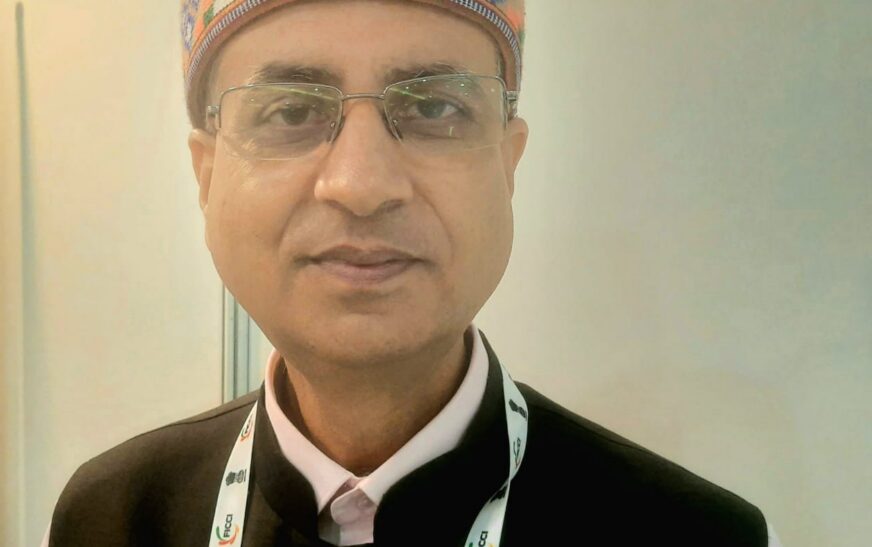
In an exclusive conversation with The Interview World on the sidelines of the 3rd FICCI Conference on Digitalization, AI, Automation & Technology Integration in Mining & Metals, Sudhir Jha, Head – BD, Janyu Technologies Pvt. Ltd., discusses the company’s innovations in smart robotics for high-temperature environments. He also outlines key areas where enterprises are adopting robotics, highlights the industries deploying JanyuTech’s solutions, and shares insights into the company’s growing customer base. Further, he explains JanyuTech’s robotics solutions and services for international markets. Here are the key takeaways from the conversation.
Q: Could you elaborate on JanyuTech’s initiatives in smart robotics for high-temperature operating environments, including the challenges you are addressing?
A: JanyuTech is a deep-tech company specializing in robotics and industrial automation solutions. Its journey began at the National Centre of Excellence, IIT Bombay, and in 2016, the company formally ventured into the business domain. Since then, JanyuTech has developed advanced robotic interventions for challenging and mission-critical environments where human intervention is difficult, hazardous, or unsuitable.
The company focuses particularly on high-temperature environments, confined spaces, and other demanding operational conditions across industries. Its solutions serve diverse sectors, including mining, metals, defence, and nuclear applications. At its core, JanyuTech aims to mitigate risks to human life by deploying robotics where machines can perform tasks more safely, reliably, and efficiently.
Building on this foundation, the company has expanded its capabilities into multiple domains of industrial automation. Today, JanyuTech combines deep-tech expertise, robotics, and automation engineering to address complex operational challenges and enable safer, smarter, and more efficient industrial processes.
Q: Could you explain the key areas and industry applications where enterprises are adopting robotics?
A: Consider the challenges faced by steel plants, particularly in hot areas and rolling mills. Materials pass through multiple high-temperature processes and furnaces, where scale deposits accumulate over time. These deposits require periodic cleaning, usually during a shutdown period of seven to eight days. However, humans cannot safely enter the furnace until its temperature falls from around 1,500°C to near-ambient levels, typically around 60°C. As a result, cleaning becomes tedious and time-consuming, while the prolonged shutdown directly impacts production.
To address this challenge, we developed a fully integrated robotic system combining visual cameras, sensors, automation solutions, and vacuum systems. The robot can enter the furnace once the temperature falls to approximately 550–600°C, rather than waiting for it to cool to ambient temperature. It then begins removing scale deposits while the furnace remains at a temperature that is unsafe for human intervention. This approach significantly reduces exposure to hazardous conditions and eliminates the associated risk to human life. More importantly, it can reduce the overall shutdown period from seven or eight days to approximately four and a half to five days, delivering substantial productivity gains. Ultimately, using industrial resources more safely, efficiently, and productively is not merely a business advantage; it contributes to a broader national productivity objective.
We have applied similar robotic solutions to other difficult industrial environments. For instance, industrial effluents often flow through underground pipelines that collect waste from different plant sections. Over time, these pipelines can become severely clogged, making conventional cleaning extremely difficult. We developed robots equipped with visual cameras that can enter these underground pipelines while operators control and monitor the operation remotely. The robot cuts through the accumulated material, while high-pressure water jetting dissolves and mobilises the waste. The material is then pumped out, restoring the pipeline without requiring major excavation or replacement.
At Tata Steel, we successfully cleared approximately 2.5 kilometres of clogged pipeline using this approach. Instead of discarding the existing infrastructure and undertaking a replacement project estimated at around ₹500 crore, the robotic intervention achieved the required outcome at approximately ₹25 crore. This demonstrates how robotics can simultaneously improve safety, reduce downtime, preserve critical infrastructure, and deliver significant economic value.
Q: How many companies currently use JanyuTech’s robotics solutions and services?
A: We are innovation partners to leading Indian industrial groups, including Tata, Aditya Birla, JSW, and Vedanta, working across a broad spectrum of businesses. Over the past decade, we have developed and deployed solutions for complex challenges across Aditya Birla’s steel, aluminium, cement, and other businesses. This sustained engagement has established us as a trusted, elite innovation partner to some of India’s largest enterprises.
We have now moved beyond the proof-of-capability stage. Over the past several years, we demonstrated that India possesses the talent, engineering depth, and technological capability to develop world-class industrial solutions. Today, we are firmly in the scaling phase.
Our business has now crossed ₹125 crore in annual turnover. In Coimbatore, we operate a 17-acre manufacturing facility with more than 1.5 lakh square feet of workshop space. It houses advanced precision-machining capabilities comparable with the best facilities globally. In fact, machines of this calibre are available at only a handful of facilities worldwide. This infrastructure gives us the capacity to convert innovation into industrial-scale execution.
Q: Are you also offering your robotics services and solutions to companies in international markets?
A: We develop advanced robotics solutions for complex industrial operations, including those in Europe. For aluminium plants in Sweden and Spain, we addressed a critical challenge: operators were still manually handling molten aluminium at temperatures of around 1,100°C. We developed and deployed a robotic solution that automates this high-temperature operation, significantly reducing human exposure to extreme working conditions and eliminating the need for manual intervention. More importantly, this technology demonstrates how Indian engineering and innovation can solve sophisticated industrial challenges anywhere in the world. Our capabilities now extend beyond domestic applications. As a result, several of our Made-in-India technologies are gaining demand across international markets. This global adoption reflects both the maturity of our engineering capabilities and the growing recognition of India as a source of advanced, scalable industrial technology solutions.
Q: Is there anything else you would like to share with our readers?
A: We must grow together as a team. This initiative is one step in that direction. Many promising startups are emerging, but they still lack the ecosystem needed to scale their innovations. Therefore, we must focus on building the right ecosystem and enabling stronger pathways from innovation to impact.
The government is also investing in projects and launching several ambitious initiatives. However, funding alone cannot create sustained success. Academic institutions, government, industry, and startups must collaborate far more closely. By bringing these stakeholders together, we can strengthen our capabilities, accelerate technology adoption, and build a robust innovation ecosystem. Ultimately, this collaboration will help us turn our technology and Make in India initiatives into globally competitive solutions designed in India, built in India, and created for the world.