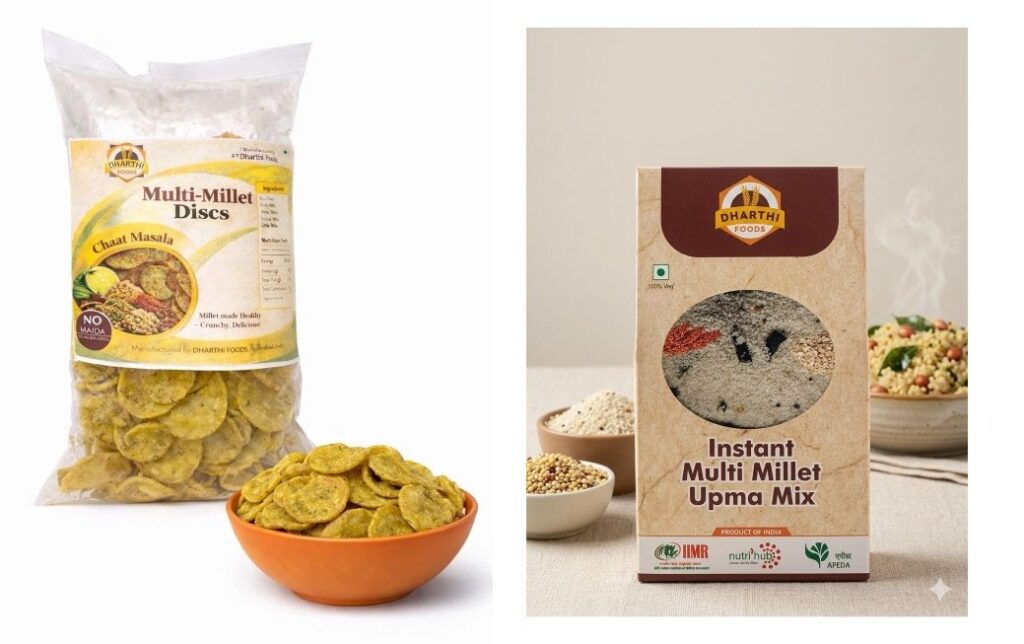

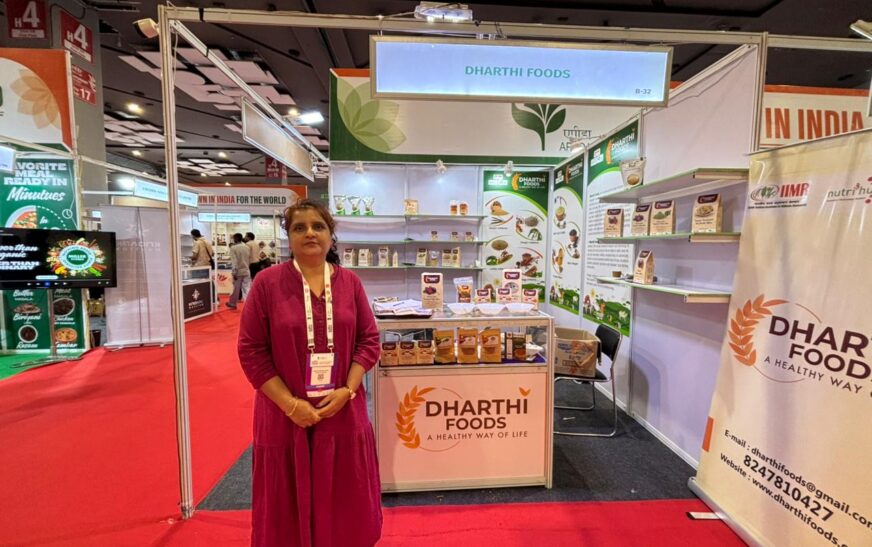
Dharthi Foods is a Hyderabad-based, women-led food enterprise that is bringing India’s ancient millet heritage into modern kitchens. Founded in 2021, the company works with women farmer collectives across Telangana and Andhra Pradesh to source nutritious millets and transform them into convenient, wholesome food products. Its portfolio spans millet soups, snacks, breakfast mixes, noodles, khichdi and upma.
Incubated by the Indian Institute of Millets Research (IIMR), Dharthi Foods is FSSAI-certified, APEDA-registered and a recipient of a Central Government grant. The company combines nutrition, sustainability, clean ingredients and women’s empowerment to build a millet-focused food brand with a growing presence across India and emerging international markets.
In an exclusive conversation with The Interview World, Thakur Reshma Singh, Founder, Dharthi Foods, discusses the key indicators of the company’s growth, explains the product differentiators that drive customer adoption, reflects on a critical turning point that helped her overcome a business challenge, and outlines her vision for strengthening farmer empowerment and sustainable food production. Here are the key takeaways from the conversation.
Q: What best demonstrates Dharthi Foods’ success so far, in terms of customer demand, repeat purchases, sales or distribution growth?
A: Dharthi Foods’ journey reflects a steady transition from a small millet-focused venture into a growing food brand serving customers across India and building an international presence. More than 2,000 families have purchased from or engaged with Dharthi Foods. At the same time, we have expanded our portfolio to more than 12 millet-based products spanning breakfast mixes, noodles, soups and snacks. From our Hyderabad base, we now reach customers across multiple Indian states.
Our entry into international markets marks another significant milestone. We have successfully exported our products to Canada and the USA, demonstrating our ability to meet international customer expectations as well as export requirements. Our publicly available export profile also identifies Canada as an export destination.
Institutional recognition and ecosystem support have further strengthened our growth. Dharthi Foods has been incubated by the Indian Institute of Millets Research (IIMR), received government support for millet innovation and registered with APEDA. These milestones have strengthened our credibility and created a solid platform for our next phase of domestic and international expansion.
Ultimately, our success is reflected not only in the number of products we have developed or customers we have reached, but also in our ability to build a credible millet-food business with the capacity to scale.
Q: Dharthi Foods offers millets in convenient formats such as breakfast mixes, noodles, soups and snacks. What has it taken to create products that customers choose regularly for taste and convenience as well as nutrition?
A: We quickly realised that nutrition alone does not determine what consumers buy repeatedly. People want healthier food, but they also expect good taste, convenience and an enjoyable eating experience. Therefore, we focus on taking familiar Indian foods and making them more nutritious and convenient by incorporating millets.
Our Spinach Foxtail Millet Idly Mix is a good example. Idly is already a familiar food for millions of Indian families. We therefore developed an instant mix that combines foxtail millet and spinach with the convenience of a quick preparation process. It brings the nutritional benefits of millets to the breakfast table while reducing the time and effort traditionally required to prepare and ferment idly batter.
We also keep our formulations clean by avoiding preservatives, artificial colours and MSG.
The response from families, particularly those with children, has been especially encouraging. One customer told us that her four-year-old child, who had previously resisted healthy foods, became excited about the colourful green idlis and willingly joined the family at the breakfast table.
That experience reinforced an important lesson for us: nutrition may create interest, but taste, familiarity and convenience drive regular consumption.
Q: Can you share a turning point at Dharthi Foods that helped you overcome a business challenge?
A: One of the most important turning points in my journey with Dharthi Foods was learning that asking for help is not a weakness. It is essential to building a scalable business.
During the early stages, I personally handled almost every aspect of the business—from product development and sourcing to operations, customer interactions and business development. However, as our product portfolio expanded, I realised that sustainable growth required specialised expertise, stronger systems and experienced guidance.
Our association with the Indian Institute of Millets Research (IIMR) became a major milestone in that journey. Through its incubation ecosystem, we gained access to technical expertise, mentoring and a research-oriented approach to product development. This support helped us look beyond simply creating millet-based products. We began paying greater attention to formulation, nutritional value, convenience, consistency and scalability.
At the same time, I learned to delegate operational responsibilities and seek guidance from mentors and strategic partners. That shift allowed me to devote more time to strategy, partnerships and market expansion.
Our journey from a small venture to a portfolio of more than 12 millet-based products has demonstrated the value of building a strong team and a supportive ecosystem around the business. The lesson has been clear: scaling a company requires not just a good product, but also the willingness to build capabilities beyond oneself.
Q: Over the next three to five years, how do you want to grow Dharthi Foods while advancing your goals of farmer empowerment and sustainable food production?
A: Over the next three to five years, I want to establish Dharthi Foods as a recognised Indian millet-food brand with a strong domestic presence and an expanding international footprint. At the same time, we want to create lasting value for farmers, consumers and the environment.
Our immediate priority is to expand our range of convenient, nutritious millet products across categories such as instant breakfast mixes, noodles, soups and healthy snacks. We want to make millets easier to incorporate into everyday diets without compromising taste, quality or affordability.
We also plan to strengthen our distribution network across India and expand into international markets. Our experience in Canada provides a foundation for further expansion into the USA and other markets. To support this growth, we will invest in production capacity, strengthen quality systems and enhance our supply chain and packaging capabilities.
Farmer empowerment will remain at the heart of this expansion. We aim to build stronger and more reliable linkages with millet farmers, encourage millet cultivation and create dependable markets for their produce. By connecting farmers more effectively with the value chain, we can help ensure that the growth of the millet industry translates into better economic opportunities at the farm level.
We will measure our progress through conventional business indicators such as revenue, production, distribution and exports. However, we will also track the impact we create through the number of farmers connected, procurement volumes, market access and the adoption of sustainable practices. Our larger vision is to demonstrate that commercial growth and social and environmental responsibility do not have to compete with one another. With the right model, business growth, farmer prosperity, better nutrition and sustainable food production can advance together.