

Securacy.AI is an emerging AI security and risk assessment firm that enables modern enterprises to adopt artificial intelligence with confidence and control. It integrates expert-led methodologies with AI-augmented assessments to detect vulnerabilities at an early stage; consequently, it reduces operational friction and reinforces trust in AI systems. Moreover, the platform prioritizes proactive risk discovery, ensures continuous evaluation, and aligns rigorously with evolving security and compliance standards. By demystifying complex security challenges, Securacy.AI accelerates innovation while safeguarding data, models, and AI-driven processes. As a result, it positions itself as a strategic partner in advancing secure and responsible AI adoption.
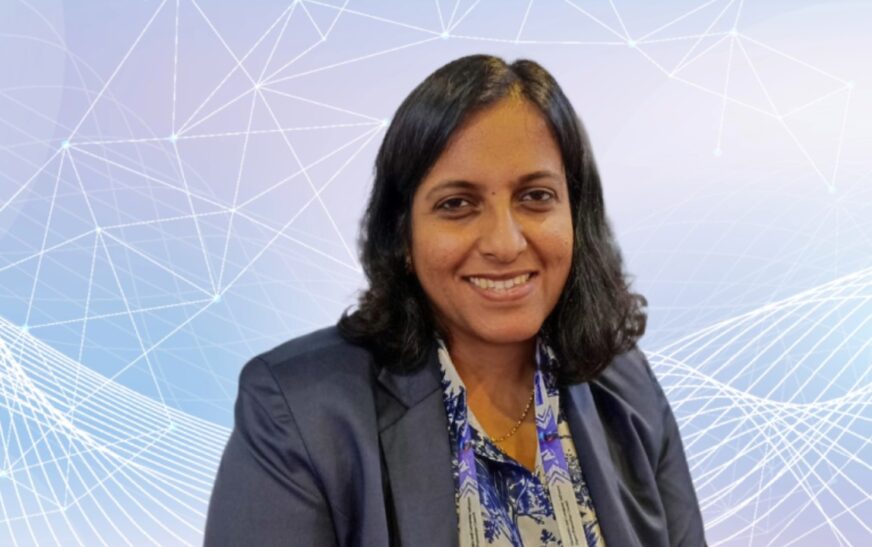
In an exclusive interaction with The Interview World at the 33rd Convergence India Expo, Priyanka Raghavan, Co-founder and CTO, Securacy.AI articulates how the company differentiates itself amid rapidly evolving security challenges. She further explains how the platform detects, prevents, and adapts to automated cyber threats in AI/ML-driven environments. In addition, she outlines key sectoral applications of their cybersecurity solutions and highlights strategic priorities for market expansion and product innovation over the next five years. The following are the key takeaways from this insightful conversation.
Q: In an increasingly hyper-digital ecosystem, how does Securacy.AI differentiate itself in addressing evolving security challenges, and what core innovations underpin your approach?
A: Securacy.AI addresses a fundamental imperative of the digital economy: organizations must not only build for scale but also rigorously assess the risks they introduce. To that end, it anchors its approach in threat modelling, a well-established discipline that has evolved over the past two decades and remains central to modern security architecture.
Accordingly, Securacy.AI has developed a platform that democratizes this capability. It enables organizations of any size to evaluate their systems rapidly and with precision. Within approximately ten minutes, users can assess whether their applications are secure, identify potential vulnerabilities, and surface critical risk factors, without requiring deep domain expertise. Moreover, the platform integrates compliance evaluation into the same workflow; therefore, organizations can understand not only where they stand against regulatory requirements but also where they may fall short.
However, Securacy.AI moves beyond a compliance-centric mindset. It encourages organizations to build with security as a foundational principle rather than as a regulatory obligation. In doing so, it ensures that enterprises do not merely check compliance boxes but actively validate that their solutions are resilient, trustworthy, and safe by design.
Q: How does your platform detect, prevent, and adapt to automated cyber threats in AI/ML-driven environments, and what differentiates its cybersecurity approach?
A: Securacy.AI extends its capabilities through a dedicated AI threat modelling module that addresses the distinct risk profiles of modern AI systems. It differentiates clearly between applications that simply consume large language models, such as integrations with platforms like Google Gemini or Claude, and systems that build and operationalize proprietary AI or machine learning models. Accordingly, it tailors its risk assessment to the specific architecture and usage context.
When organizations develop their own AI/ML models, the risk landscape becomes significantly more complex. For instance, adversaries may attempt data poisoning attacks; moreover, they may exploit vulnerabilities within data pipelines to inject malicious inputs, an attack vector increasingly observed in real-world conflict scenarios and high-stakes environments. Therefore, a superficial assessment is insufficient.
To address this, Securacy.AI conducts a structured analysis of end-to-end workflows. It evaluates the entire data lifecycle, from data ingestion and model training to deployment and ongoing operations. Consequently, the platform identifies latent vulnerabilities, highlights systemic gaps, and surfaces potential attack vectors with precision.
Furthermore, the tool enforces a disciplined, “think-through” approach to security. It compels organizations to examine each stage of their AI/ML and MLOps lifecycle in detail. As a result, users not only gain visibility into existing weaknesses but also receive clear, actionable guidance on mitigation strategies. In doing so, Securacy.AI transforms threat modelling from a theoretical exercise into a practical, continuous security capability.
Q: Can you outline key sectoral use cases where your cybersecurity solutions are deployed?
A: Our client base is currently concentrated in three primary sectors: oil and gas, e-commerce, and logistics and supply chain. However, cybersecurity is inherently a horizontal capability; it does not belong to or depend on any single industry. Consequently, its applicability extends across all sectors.
While our initial clients come from these three domains, we are intentionally building a sector-agnostic model. In other words, any organization can leverage our solutions. This approach is both deliberate and strategic. Regardless of whether a company deploys a web application in e-commerce, logistics, oil and gas, or even aerospace, the underlying security challenges remain fundamentally consistent.
Q: What are your strategic priorities for market expansion and product innovation over the next five years?
A: We are currently operating in India; however, we are actively pursuing a global expansion strategy. To that end, we are prioritizing regions where adoption barriers remain low, specifically, markets where organizations do not require deep technical expertise or significant capital investment to benefit from our solutions.
Accordingly, we are focusing first on the APAC region and neighbouring markets, where we see strong alignment and immediate opportunity. At the same time, we are preparing to expand into more mature ecosystems, including Europe, the United States, and South America. This phased approach allows us to scale with precision while maintaining relevance across diverse market conditions.
In parallel, we are investing in emerging areas of cybersecurity innovation. Specifically, we aim to mainstream threat modelling and tightly integrate it with runtime security and testing capabilities. By doing so, we are building a comprehensive, end-to-end security framework that spans the entire application lifecycle, from design and development through deployment and continuous operation.