
miniOrange operates as a global cybersecurity company with a sharp focus on Identity and Access Management (IAM) and adjacent security domains. Founded by seasoned technology architects, the company designs and delivers robust solutions, including Single Sign-On (SSO), Multi-Factor Authentication (MFA), Privileged Access Management, and Unified Endpoint Management. Moreover, it supports a global customer base of over 25,000 organizations, while enabling more than 6,000 integrations and ensuring 24/7 technical support.
At its core, miniOrange empowers enterprises to manage user identities with precision, safeguard sensitive data, and streamline access across cloud, mobile, and on-premise environments. At the same time, it continues to expand its workforce and accelerate innovation. Consequently, the company reinforces its position as a customer-centric provider of scalable, identity-first security and privacy solutions.
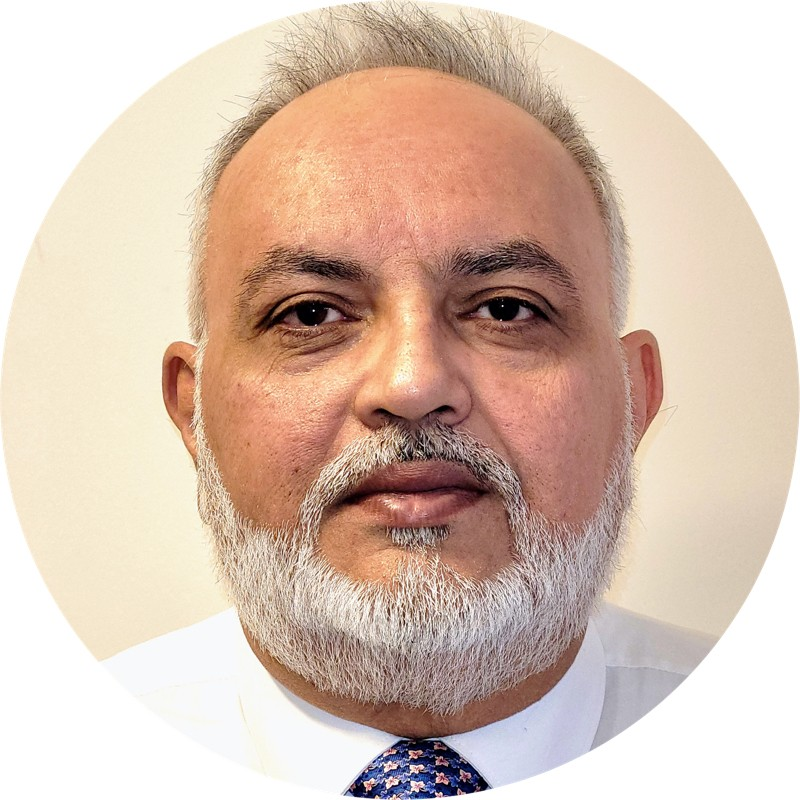
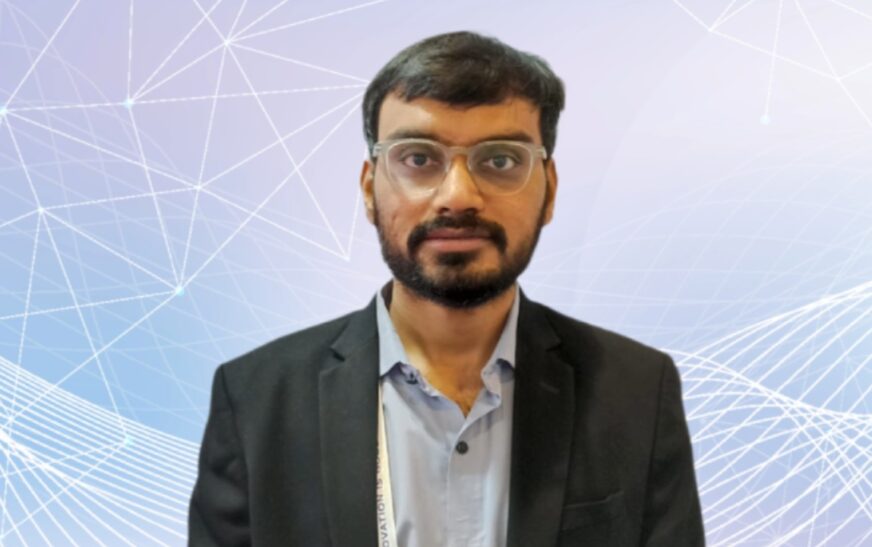
In an exclusive interaction with The Interview World at the 33rd Convergence India Expo, Kalpesh Hiran, Vice President – Technology at miniOrange, outlines the company’s cybersecurity portfolio and delineates the rigorous standards it upholds, particularly for highly vulnerable sectors. Furthermore, he explains how miniOrange leverages blockchain to secure data storage. Finally, he articulates a forward-looking vision, detailing the company’s innovation roadmap for the next five years. The following are the key insights from this in-depth conversation.
Q: What cybersecurity solutions does miniOrange offer, and which specific enterprise security challenges do these solutions address?
A: We deliver a comprehensive product suite that enables a true zero-trust security framework for organizations. In essence, zero trust ensures end-to-end protection by continuously validating every user, device, and access request. To achieve this, we offer a robust portfolio that includes Identity and Access Management, Privileged Access Management (PAM), and advanced endpoint security solutions. In addition, our capabilities extend to Data Loss Prevention (DLP), Mobile Device Management, and Cloud Access Security Brokers, thereby ensuring layered and adaptive security across environments.
When it comes to mobile device security, we provide seamless platform support across Windows, Android, and Apple ecosystems. Furthermore, our security suite incorporates advanced features such as kiosk mode, geo-location tracking, and remote device control, enabling organizations to maintain strict operational oversight and security compliance.
Importantly, our commitment to innovation and excellence has earned us the recognition of Security Product Company of the Year 2024 by the Data Security Council of India (DSCI).
Q: Which industries or sectors does your organization primarily focus on?
A: We operate as a sector-agnostic organization, serving clients across a wide spectrum of industries. For instance, we work with healthcare providers, educational institutions, government bodies, and banking organizations. This broad engagement reflects a fundamental reality: every industry requires robust cybersecurity. Therefore, we design our solutions to address universal security needs, irrespective of sector-specific boundaries.
Q: In a sector as high-risk as banking and finance, how do you define and deliver ‘security,’ and how do you address the inherent limitations of achieving absolute (100%) safety?
A: No system can guarantee absolute security, primarily because human behaviour remains an inherent variable. Individuals are susceptible to manipulation, including scams and phishing attacks. Therefore, while we rigorously secure the network perimeter and prevent unauthorized threats from entering, the risk does not disappear entirely.
If an attacker successfully compromises a user within the network through social engineering, the integrity of the system can still be affected. Consequently, true security demands not only robust technological controls but also continuous user awareness and vigilance.
Q: Are you integrating blockchain technologies into your solutions to enhance security for your clients?
A: We provide solutions that store data on blockchain, thereby ensuring immutability and tamper resistance. In parallel, we embed artificial intelligence across our product suite to enhance security intelligence and operational efficiency. For example, within our Data Loss Prevention (DLP) framework, AI-driven engines scan and classify sensitive data, including personally identifiable information, with high precision and speed.
Furthermore, we integrate AI into our Identity and Access Management (IAM) systems to strengthen authentication and behavioural analysis. As users attempt to log in, the system continuously evaluates whether the entity is legitimate, automated, or potentially malicious. At the same time, it detects anomalies and flags suspicious activity in real time. Consequently, this layered approach enables proactive threat detection and more resilient access control.
Q: What does your innovation roadmap look like over the next five years?
A: We are sharpening our focus on emerging priorities, particularly as data privacy regulations in India become increasingly stringent. For instance, the Digital Personal Data Protection (DPDP) framework is set to redefine compliance expectations. Accordingly, we are aligning our strategy to address these evolving requirements.
As a result, we are intensifying our efforts around data privacy by developing solutions that help organizations ensure compliance, protect sensitive information, and build resilient data governance frameworks.
Q: Are your solutions primarily focused on the Indian market, or do you also serve international clients?
A: We serve customers across the globe; however, we tailor our cybersecurity strategy to meet region-specific regulatory and operational requirements. For example, in India, we prioritize data privacy in line with emerging mandates. In Europe, we align our solutions with GDPR to ensure strict compliance.
Accordingly, we design and deliver region-specific cybersecurity offerings that address local regulations while maintaining a consistent global security standard.