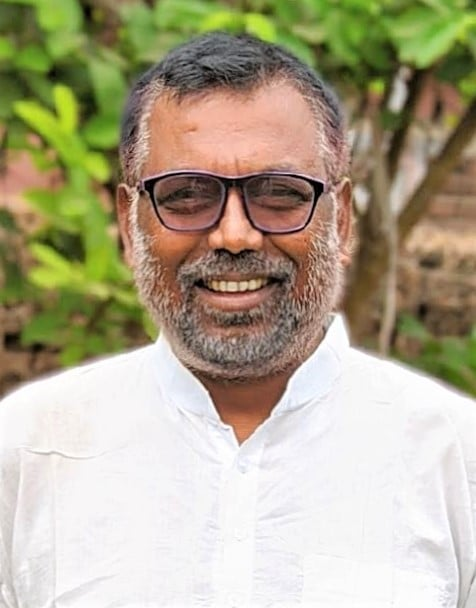

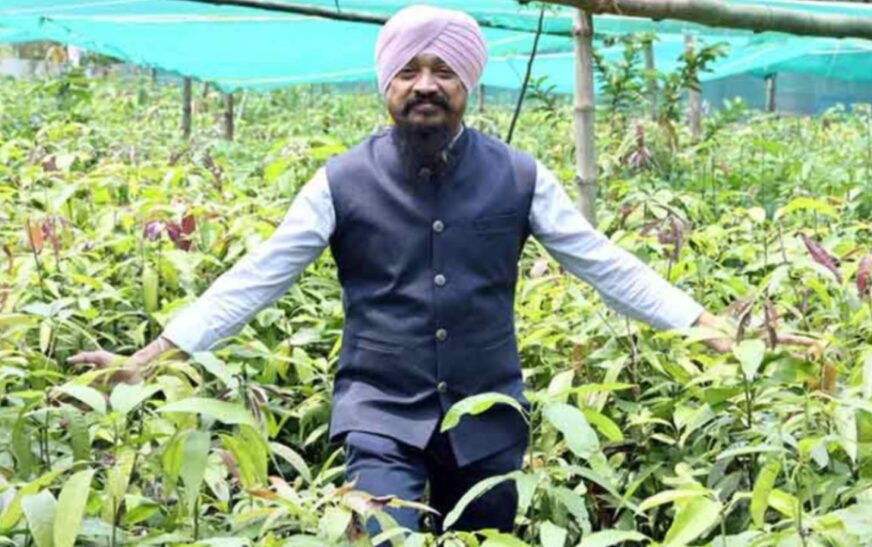
Jasmit Singh Arora, widely recognised as the “Gutli Man of India,” is a Kolkata-based social entrepreneur and former medical professional spearheading a grassroots environmental movement. He converts discarded mango seeds into fruit-bearing saplings and, in doing so, has repurposed millions of “gutlis” into a scalable and sustainable livelihood model for farmers. Since 2016, his initiative has distributed lakhs of saplings free of cost. Consequently, it has accelerated agroforestry adoption, strengthened carbon sequestration efforts, and enhanced rural resilience. Moreover, this model, built on transforming organic waste into large-scale agroforestry, has attracted global attention. It has secured collaborations and recognition from international institutions, including United Nations–linked sustainability platforms and the USA Mango Board, thereby reinforcing the credibility and impact of his approach.
In an exclusive interaction with The Interview World, Arora provides a comprehensive overview of the Gutli initiative. He outlines the strategic framework designed to ensure its long-term sustainability. He then explains the operational methodology underpinning the model and demonstrates how it delivers tangible economic benefits to farmers. Furthermore, he details his outreach mechanisms for engaging a wider farming community and scaling adoption. He also shares key metrics, including the number of saplings distributed to date. In addition, he articulates a forward-looking strategy to establish robust market linkages, enabling farmers to monetise future produce effectively. Finally, he identifies the geographic footprint of the initiative and explains how strategic collaborations with partner organisations are expanding its reach and impact. The following are the key takeaways from this insightful conversation.
Q: Could you explain what your Gutli initiative is and how it began?
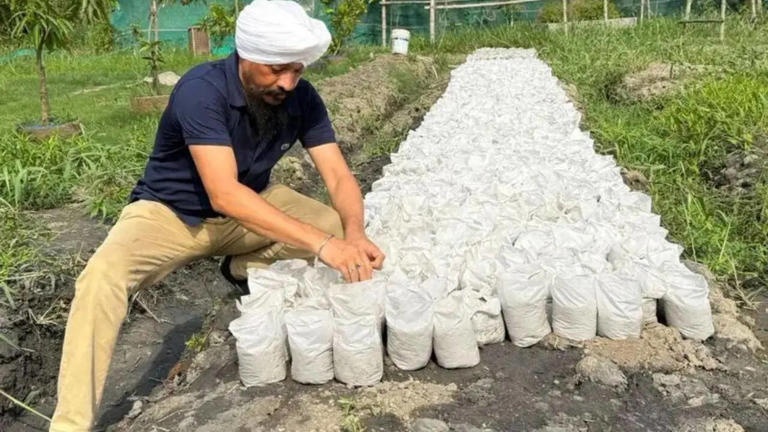
A: I launched the Gutli Mission with a simple but deliberate intervention. I urged people to consume mangoes and, instead of discarding the seeds as waste, hand those over to me. I then repurposed that “waste” into saplings and distributed them to small and marginal farmers. In effect, I converted an everyday by-product into a regenerative asset. That is how the mission operates at the ground level.
However, the impetus ran deeper. We routinely engage in high-level conversations about rising temperatures, climate stress, and the urgent need for afforestation. Yet, once conferences conclude and discussions fade, intent rarely translates into action. People agree in principle, but execution falters. First, the commitment is often superficial. Second, even motivated individuals lack clarity: what to plant, where to plant, and how to sustain it. Consequently, awareness does not convert into outcomes.
At the same time, a critical demographic remains under-engaged: school children. Adults may understand climate change and environmental degradation, but younger generations often lack both context and urgency. Yet they are the most consequential stakeholders. With the right awareness and motivation, they can drive long-term ecological recovery. Therefore, I intentionally brought them into the movement.
To do so, I needed a compelling entry point. Mango became that bridge. It is familiar, aspirational, and culturally resonant. More importantly, the mango tree is ecologically strategic. It supports biodiversity, attracts pollinators such as bees, butterflies, birds, and other insects, and contributes directly to ecosystem health. Its dense canopy provides year-round cover, functioning as a natural microclimate regulator, effectively a “green air conditioner.” In addition, it yields nutritious fruit and fragrant blossoms, creating both ecological and economic value.
Crucially, pollinators are indispensable to agricultural productivity. Any decline in their population directly undermines soil health and crop yields. By promoting mango plantations, the mission strengthens this ecological chain. For these reasons, the mango tree stands out, not merely as a fruit-bearing species, but as a high-impact environmental asset that integrates biodiversity, climate resilience, and livelihood support.
Q: When did you launch this mission, and what strategies do you use to ensure its long-term sustainability?
A: I initiated this effort in 2016–17. At the outset, however, most people dismissed it. They questioned the utility of collecting mango seeds and saw only “waste,” not potential. Consequently, they neither understood the vision nor connected with the mission.
Then the pandemic disrupted momentum. When COVID-19 struck, the initiative effectively reset. Nevertheless, I resumed with renewed focus in 2021–22. Around that time, my daughter captured a short video of the work. That reel went viral. As a result, public attention surged, and participation began to scale.
However, the operational constraint is biological. Mango seeds have a low germination rate. On average, only about 10% of viable seeds sprout. Therefore, if I collect 100 good seeds, only 10 become saplings. Given a target of 20 crore trees, I need approximately 200 crore high-quality seeds. Clearly, this cannot be achieved in a single season.
Accordingly, the mission must expand progressively. It depends on sustained awareness, consistent participation, and a steady inflow of seeds from the public. Step by step, as more people engage and contribute, the movement builds the volume required to meet its long-term objective.
Q: How will this movement benefit farmers, what methodology underpins it, how are you reaching a wider farming community, and how does it enhance their economic outcomes?
A: The Gutli Mission operates across three interdependent pillars. First, it educates school children and builds early environmental awareness. Second, it restores ecological balance by increasing tree cover. Third, it strengthens farmer livelihoods. In effect, the mission integrates education, environment, and agriculture into a single, functional system.
Consider the current agricultural baseline. Many farmers rely on paddy cultivation, which is water-intensive and chemically dependent. Excessive use of pesticides and fertilizers degrades soil health, harms human health, and erodes long-term productivity. Despite these inputs, returns remain negligible, often around ₹2,000 per acre per month. Such economics cannot sustain a household, nor can they motivate the next generation to remain in agriculture. Consequently, young people are exiting the sector, accelerating rural distress.
Now, even when farmers understand that planting a mango seed can yield a tree, two constraints persist. First, germination is uncertain; not every seed develops into a viable sapling. This unpredictability imposes a time and risk burden that farmers cannot afford. Second, the current supply chain has diluted varietal integrity. With nationwide distribution, consumers access mangoes from multiple regions. As a result, seeds are mixed. A farmer in Bengal, Kanyakumari, or Kashmir may plant a seed from a different agro-climatic zone, say, a Kesar variety, and the resulting tree may either fail to fruit or produce suboptimal yield and quality due to habitat mismatch.
To address this, I aggregate seeds from across the country, germinate them centrally, and then graft them with locally adapted varieties. This step is critical. Grafting aligns the plant with the local agro-climatic conditions and ensures predictable fruiting. Moreover, it compresses the gestation period dramatically, from 12–15 years for a conventional mango tree to approximately three years. This shift transforms mango cultivation from a long-term uncertainty into a near-term, revenue-generating asset.
The economic logic then becomes compelling. If I offer a farmer 100 neem saplings under the banner of pollution control, adoption remains low because the value is externalized. The farmer bears the cost, while the city captures the benefit. In contrast, when I provide 100 mango saplings, the farmer immediately sees a market-linked outcome: fruit production, sales, and income. Adoption follows naturally. Simultaneously, the environment benefits through increased tree cover, improved carbon balance, and reduced pollution. Thus, incentives align across stakeholders.
Beyond income, trees deliver systemic ecological benefits. They moderate microclimates, enhance water retention, and improve soil structure. When farmers reduce tillage and eliminate chemical inputs, soil biology recovers. Microorganisms return. Earthworms reappear. This is not incidental; earthworms are foundational to soil porosity and nutrient cycling. In chemically degraded soils, even at depths of two to three feet, earthworms are absent. Consequently, during rainfall, water fails to infiltrate. It runs off instead, because the soil has hardened, effectively behaving like a non-porous surface.
However, when tree-based systems are reintroduced, the soil gradually regains its structure. Leaf litter, root networks, and biological activity restore porosity. Water infiltrates. Moisture is retained. In parallel, trees attract pollinators, provide shade, and support biodiversity. Therefore, a single intervention, planting and sustaining the right trees, creates multiple reinforcing outcomes. It links farmer income, ecological restoration, and climate resilience into one coherent model.
Q: To date, how many saplings have you distributed, and do you plan to create market linkages for farmers to sell the produce generated in the future?
A: To date, I have facilitated the plantation of more than 8 lakh fruit trees across multiple regions. However, scale alone is not the objective; behavioural change is. Therefore, I work directly with farmers to shift their cropping strategy. I urge them to reduce excessive paddy cultivation and reallocate at least 50% of their land to fruit trees. This approach preserves subsistence security, farmers can retain paddy for household consumption, while simultaneously building a diversified, income-generating asset base.
This transition, however, requires time and structured intervention. Over the next two to three years, the focus remains on intensive education and capacity building. I engage farmers on the ground, train them in vermicomposting, and demonstrate the preparation of organic inputs such as Jeevamrit. At the same time, I challenge existing practices and explain the long-term consequences of chemical dependency. In parallel, I conduct outreach in schools, educating children on environmental stewardship and the practical value of seeds conservation. Accordingly, the mission operates across two primary cohorts: students and farmers.
Over the next two to four years, awareness, motivation, and technical training will continue to anchor the initiative. Beyond that horizon, the goal is systemic change. When I engage with students in classes 6, 7, and 8, I am not delivering a one-time message; I am shaping informed citizens. These individuals will not require external triggers, such as conferences or summits, to act on environmental issues. They will already understand the imperative to plant and sustain trees. Moreover, they will recognize the interdependence within their own households, particularly the critical yet often overlooked role of farmers as the backbone of food security.
This awareness is essential. If farming remains economically unviable, the next generation will continue to exit the sector. That trajectory inevitably leads to supply instability and, ultimately, a food crisis. The mission, therefore, addresses not just ecology but also economic resilience.
Importantly, the model also advances gender equity. In conditions of poverty, women bear the disproportionate burden, reduced access to nutrition, healthcare, and financial agency. When farm incomes stagnate, these disparities intensify. By improving farmer livelihoods through sustainable horticulture, the initiative directly strengthens the socio-economic position of women within these households. In effect, the mission creates a multiplier impact, enhancing environmental health, securing farmer income, and elevating the well-being of the most vulnerable members of rural communities.
Q: Is this mission focused on a specific region, and where exactly are you currently implementing it?
A: I began this initiative in Kolkata, given that it is my operational base. However, the model quickly expanded beyond the city. Today, it operates at a pan-India level. Individuals from across the country, and increasingly from overseas, contribute by sending seeds. As a result, I travel extensively to coordinate, mobilize, and scale the effort.
Institutional support has also strengthened the mission. Units of the Indian Armed Forces, including the Sikh Regiment and the Rajputana Rifles, actively participate in the initiative. Their involvement adds both operational reach and organizational discipline.
In parallel, the work has received formal recognition in the cultural and environmental domains. The Satyajit Ray Film and Television Institute, under the Ministry of Information and Broadcasting, produced a documentary on the mission. This film has been screened at international festivals and has secured multiple awards, including honours for Best Environmental Film. It captures a core proposition: a single, scalable intervention can convert organic waste into measurable environmental impact.
At the global level, the initiative has been acknowledged by the United Nations and aligns with the UNESCO sustainability frameworks. This validation underscores the mission’s relevance to broader environmental and developmental goals.
Operationally, the network now spans diverse geographies: from the fragile ecosystems of the Sundarbans to regions such as Jammu & Kashmir, Gujarat, Assam, Madhya Pradesh, Hyderabad, Kanyakumari, and Chennai. The expansion has been deliberate and incremental. Over time, it has created a distributed, nationwide movement anchored in local participation and unified by a common ecological objective.
Q: Are you establishing your own nurseries nationwide in collaboration with various organizations?
A: I am now moving toward a decentralized model. The objective is clear: establish a functional base in every state. Each base will propagate habitat-specific mango varieties and distribute them to farmers within the same agro-climatic zone. This ensures ecological compatibility, higher survival rates, and predictable yields.
However, the mission remains founder-driven and self-funded. I initiated it independently, and I continue to finance it from personal resources. Therefore, expansion is necessarily incremental. I scale it step by step. I travel extensively, respond to invitations, and engage across sectors. Schools invite me for interactive sessions. Corporates seek structured engagements. The armed forces participate actively. Farmers request on-ground training. Through these interactions, I systematically connect stakeholders and build a coherent network.
At the operational level, I run a distribution program called “Tree ka Langar.” Under this initiative, I provide saplings, primarily mango, along with other region-appropriate species, free of cost to farmers. The selection is strictly habitat-driven. For instance, in the Sundarbans, I prioritize mangroves, betel nut (supari), and coconut, given the coastal ecosystem. In contrast, in the plains, I focus on mango and moringa, which align with local soil and climate conditions. The only prerequisite is intent: the farmer must be willing to transition away from excessive paddy cultivation toward sustainable, tree-based agriculture.
Encouragingly, the mission has begun to attract wider recognition. Preity Zinta, associated with Punjab Kings, has acknowledged and supported the initiative. Such endorsements amplify visibility and help accelerate outreach, while the core work on the ground continues to scale with discipline and purpose.