

Indian Railways is set to reshape India’s economic and logistics architecture. It is driving this transformation through unprecedented capital deployment, targeted structural reforms, and the rapid rollout of dedicated freight corridors. As a result, the system is relieving chronic capacity constraints while unlocking scalable growth avenues. The primary growth levers are clear: accelerated freight expansion, seamless daily metro connectivity, and the strategic deployment of public–private partnerships. Together, these forces are repositioning Indian Railways as a more efficient, integrated, and future-ready engine of national growth.
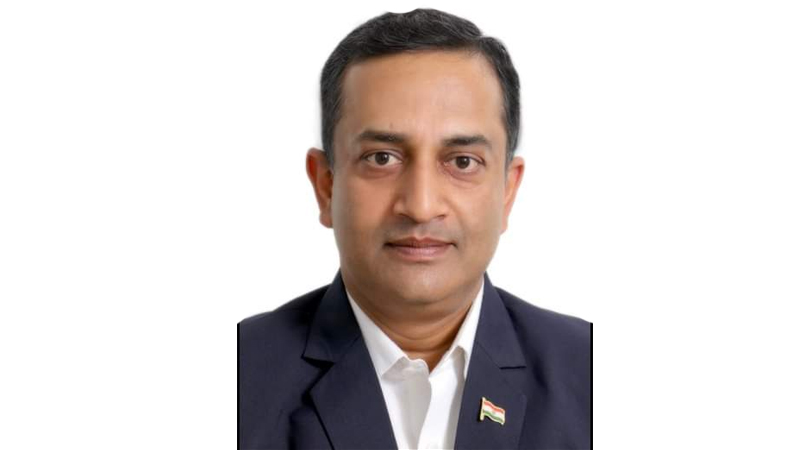
Against this backdrop, The Interview World engaged Sanjay Bajpai, Industry Veteran, Advisor to the Railways Council at ASSOCHAM, and former Executive Director at Container Corporation of India, during ASSOCHAM’s National Conference on “Future Ready Railways for Viksit Bharat.” In this discussion, Bajpai identified the core growth drivers that will propel Indian Railways toward India’s 2047 development goals. He then outlined the evolution of freight transportation and assessed the factors that will sustain its expansion. Further, he presented a roadmap to strengthen inter-metro connectivity and clarified how PPP models can accelerate growth, particularly in freight and cargo services. The following are the key takeaways from this incisive conversation.
Q: What are the primary growth drivers in Indian Railways that will contribute to India’s development by 2047?
A: Railways form the backbone of the Indian economy, and the sector is now entering a phase of rapid expansion. Previously, structural and capacity constraints limited growth; however, a substantial influx of investment is decisively addressing these bottlenecks. At the same time, the government is sanctioning and operationalizing new trade corridors, which will further accelerate economic activity.
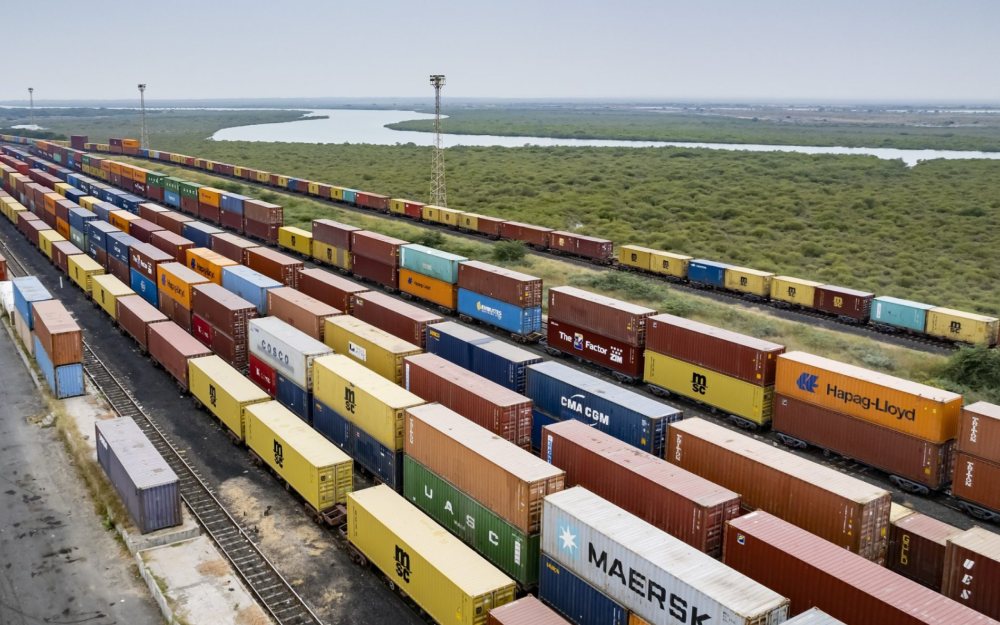
This expansion will deliver a significant economic boost. In the near term, increased capital deployment will stimulate investment across regions. Subsequently, as these corridors become operational, illustrated by the Western Dedicated Freight Corridor, they will drive a structural shift in logistics. Specifically, a greater share of cargo will move to rail, reducing transportation costs and improving overall efficiency.
Moreover, the benefits will extend beyond the rail network. As freight shifts from road to rail, road congestion will ease, and safety conditions will improve markedly. In effect, this coordinated infrastructure push will enhance multimodal efficiency, lower logistics costs, and strengthen the economy’s growth trajectory.
Q: How is freight transportation expected to evolve within Indian Railways, and what factors will drive its growth in the coming years?
A: Indian Railways has set a clear and ambitious trajectory for freight transportation. It currently carries about 1,600 million tonnes and aims to scale this to 3,000 million tonnes by 2030. To achieve this, it is systematically expanding both its commodity mix and its geographic reach.
Specifically, it is onboarding new categories of freight while penetrating under-served regions. As a result, this dual focus, on commodities and corridors, will drive sustained volume growth and enable the network to meet its 2030 target with greater operational depth and market relevance.
Q: What plan is needed to ensure daily connectivity between all metros?
A: I maintain that the network must ensure daily connectivity; specifically, it must move at least one rake every day between major metros. There is already sufficient traffic to support this frequency.
When I engage with industry stakeholders, their position is unequivocal. Most industries generate freight volumes at least every third day. Therefore, by aggregating demand across multiple players, we can consolidate these flows and reliably achieve daily rake movement.
Q: What role can Public-Private Partnership (PPP) models play in accelerating the growth of Indian Railways, particularly in freight and cargo services?
A: The sector operates across two distinct segments. First, the core railway network: here, Indian Railways is now largely self-funding capacity expansion. It does so through a special purpose vehicle, the Dedicated Freight Corridor Corporation of India, which, although structured as an SPV, remains wholly owned by Indian Railways.
Second, the ancillary ecosystem: this includes value-added services and terminal infrastructure. These components will necessarily incorporate a public–private partnership (PPP) model. This approach is both pragmatic and scalable. Indian Railways cannot engage every customer directly or tailor solutions at an individual level. Instead, intermediaries must bridge this gap by aggregating demand, customizing services, and enhancing last-mile connectivity. Consequently, private investment and stakeholder participation become critical levers in strengthening the overall logistics value chain.