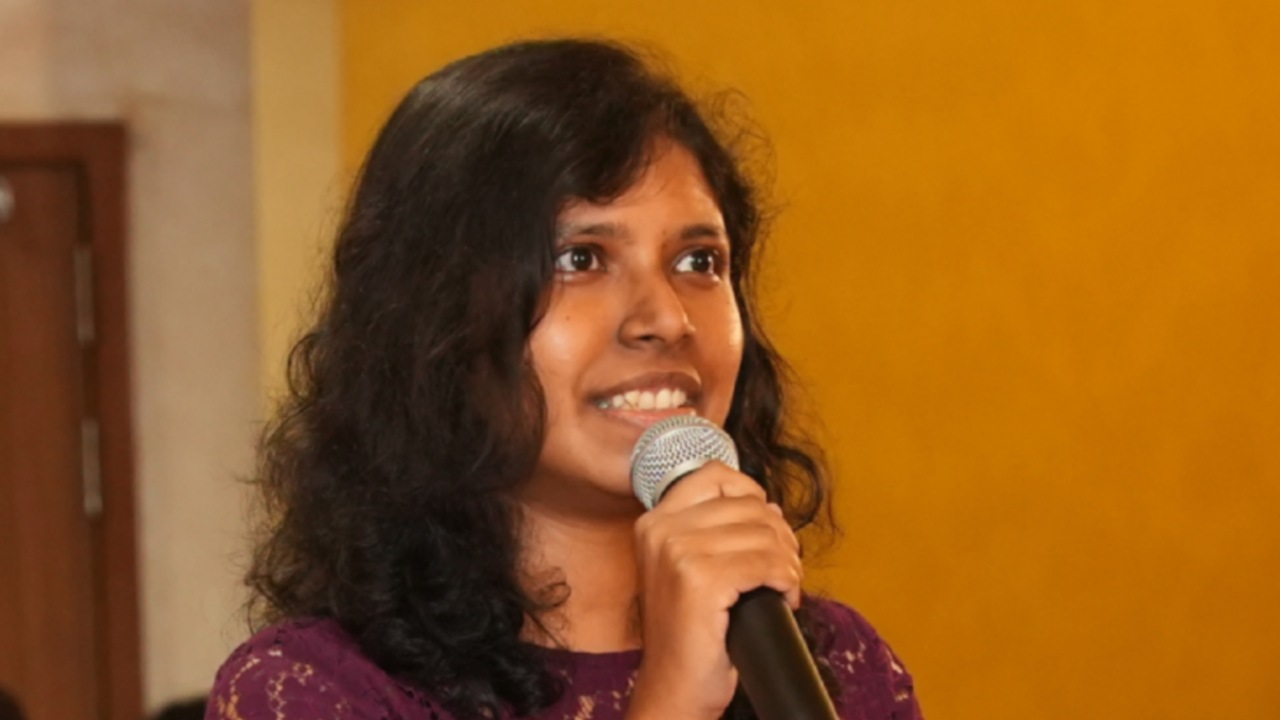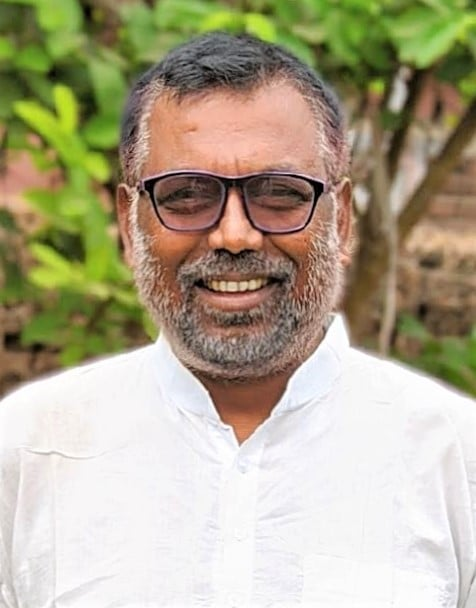


ProtoVillage is a living prototype of a resilient rural community in Anantapur, Andhra Pradesh. It transforms 12.5 acres of arid land into a working model of ecological sustainability, social cohesion, and economic viability. The initiative designs and demonstrates systemic pathways to village self-reliance. It integrates indigenous knowledge with appropriate technology to address the nine fundamental needs of a community. At the same time, it operates as a centre for learning, practice, and open knowledge exchange. Through replicable entrepreneurship models and a reimagined rural education system, ProtoVillage advances scalable frameworks for resilient rural transformation. Above all, it upholds interdependence and deep respect for natural systems as the foundation of enduring change.
In an exclusive interaction with The Interview World, Kalyan Akkipeddi, Founder and Director of ProtoVillage, reflects on the formative experiences that inspired its creation. He explains how the community drives decision-making and implementation. He details the transformative impact of integrated healthcare delivery. He outlines the village’s innovative water and energy strategies. Furthermore, he clarifies how ProtoVillage harmonizes native knowledge systems with contemporary technologies without conflict. Finally, he articulates his long-term vision for building a resilient and self-sustaining rural future. Here are the key insights from that conversation.
Q: What personal experiences or insights led you to conceive and eventually establish ProtoVillage as a prototype for resilient rural communities?
A: It began with a persistent question: if humanity possesses extraordinary intelligence, why do we continue to tolerate scarcity in a world capable of abundance?
Compelled to explore this contradiction, I left my corporate career at thirty and set out across India with a deliberate constraint: I would not pay for food or shelter. The intention was not symbolic sacrifice, but inquiry. I wanted to test whether trust, generosity, and reciprocity could still function as viable forms of social exchange.
Urban India quickly revealed the limits of a non-monetary life. Survival in cities, structured around transactions, proved difficult. To continue the experiment, I moved into villages. What was meant to be a one-month journey evolved into a two-and-a-half-year immersion between 2008 and 2010. I lived with families officially categorized as “below the poverty line” in villages across every state. Those years fundamentally reshaped my understanding of wealth and deprivation.
Cities displayed visible infrastructure—universities, hospitals, airports, malls, and religious institutions—yet hunger persisted amid material growth. In rural communities, infrastructure was sparse, but social cohesion was strong. Despite limited incomes, people upheld trust, dignity, and mutual obligation—an informal ethic that ensured no one slept hungry. Urban regions were labeled prosperous and aspirational; rural regions backward and poor. The lived experience suggested a more complex reality.
This contrast led me to question how poverty is defined. If poverty is measured by a daily income threshold, raising that threshold does not eliminate the condition—it merely recalibrates it. A hierarchical system will always produce a base. When value is primarily quantified in monetary terms, non-monetary forms of wealth—community, trust, reciprocity—are marginalized. If our goal is human flourishing, should these not be integral to our definition of prosperity?
I observed a systemic misalignment: we seek meaningful lives yet measure progress largely through consumption. Consumption requires income; income drives competition; competition within finite systems creates structural stress. In such a framework, poverty alleviation becomes incremental rather than transformative.
I shifted my focus from eradicating poverty to designing systems where poverty struggles to emerge. The unifying principle was resilience.
Through extended travel among tribal communities from Kutch to the Sundarbans, I saw practical models of ecological self-reliance. I defined resilience as harmonious interdependence anchored in nine essentials: food and water security, shelter, clothing, healthcare, energy, connectivity, disaster preparedness, local economy, and education.
To test this framework, I apprenticed for three and a half years with a marginal farmer in Anantapur, Andhra Pradesh. By regenerating soil, strengthening ecological practices, and creating local value, his income increased from INR 7,000 per year to INR 14,000 per month. The principles proved replicable.
This validation led to ProtoVillage—a 12.5-acre living laboratory within the same village cluster. Twelve of us committed to co-creating a settlement rooted in ecological self-reliance and shared prosperity. The objective is not charity, but systemic redesign.
Q: ProtoVillage is described as a village “built for the villagers, by the villagers.” How do you ensure authentic community participation in decision-making and implementation?
A: ProtoVillage is not structured around centralized authority; it is built on shared stewardship. Both children and adults participate in daily dialogue circles where every voice is heard. Two foundational principles guide governance. First, leadership is situational. No individual holds permanent authority; leadership emerges according to context, competence, and relevance. Second, decisions are reached through consensus rather than majority voting. While consensus requires deliberation and patience, it fosters genuine alignment. Progress is not determined by numerical advantage but by shared conviction.
This governance philosophy informs the economic architecture of ProtoVillage through Graameena Aarthika Mandali (Graamam). Developed over nine years and refined through multiple iterations, Graamam addresses a structural question: how can an economy be designed so that ecological integrity and social cohesion generate financial prosperity? The aim is to ensure that economic value arises as a natural outcome of healthy ecosystems and strong communities.
A central insight shaped the model: culture is ecological. It emerges from sustained interaction within a specific bio-region. Variations in food, clothing, architecture, and livelihoods are not incidental; they encode region-specific knowledge that sustains both social harmony and environmental balance. Accordingly, Graamam rewards the preservation and practice of indigenous wisdom. While the framework is universally adaptable, its implementation remains locally grounded.
Operationally, women organize into groups of five, each focused on producing specific eco-friendly products. These groups function as nodes within interconnected value chains, embedding interdependence into the system. Women-led enterprises create stable markets for local farmers, reinforcing regional supply cycles and strengthening women’s economic agency.
Within each cluster, Graamam supports 500–750 distinct product lines. This diversity minimizes internal competition and encourages crop diversification. Farmers distribute risk, ecosystems gain resilience, and economic incentives align with biodiversity.
A partnership with Bengaluru’s Trans-Disciplinary University further enhances the model by optimizing nutritional value in indigenous recipes and designing region-specific biodiversity templates. Farms evolve into integrated ecosystems rather than monocultures.
All processing is manual, preserving artisanal skill and rural employment. Graamam operates not merely as a marketplace but as a systemic transformation platform. Its products reach consumers through digital channels and premium hospitality partnerships, demonstrating that rural resilience can achieve global relevance.
Q: You’ve integrated healthcare delivery (including telemedicine and mobile clinics) into the village model. What impact have these services had on surrounding communities?
A: We initially considered integrating telemedicine and mobile clinics into the village model. However, after careful evaluation, we shifted our strategy. Instead of creating parallel systems, we focused on two structural priorities. First, we advanced preventive healthcare by ensuring access to nutritious food, safe drinking water, and a healthy social environment. These factors reduce disease at its source. Second, we strengthened the local Primary Health Centre rather than duplicating its mandate. By reinforcing existing public health infrastructure, we promoted sustainability. Over time, prevention will re-embed itself in rural life, transforming healthcare from episodic treatment to everyday resilience.
Q: In a region with severe water scarcity, what innovative water and energy strategies has ProtoVillage adopted, and how replicable are they for other drought-prone areas?
A: There is nothing inherently novel in what we have done. We drew on the wisdom of village elders, applied disciplined common sense to set priorities, and used creativity to ensure cost-effective, engaging execution. The solutions are time-tested and sustained communities for generations. Therefore, replication is not the real challenge. The critical question is this: how do we make proven practices compelling enough for others to adopt? Success depends not on novelty, but on relevance, credibility, and shared ownership.
Q: ProtoVillage blends native knowledge systems with contemporary technologies. How do you navigate tensions or alignments between these two approaches?
A: I see no inherent conflict between tradition and modernity. Not everything that shines is relevant, and not everything amplified is significant. Therefore, we assess options against contextual objectives. First, we establish goal congruence: what are we collectively committed to achieving? Once that alignment is clear, both traditional and contemporary systems become viable instruments. They are choices, not ideologies. We then evaluate each option rigorously against our core principles. Only those that withstand this scrutiny guide our final decision.
Q: What metrics or indicators does ProtoVillage use to assess success, and how do you plan to scale or replicate this model across other districts?
A: I will address the second part of the question first. When I examined fringe ideas that eventually became mainstream, I found a consistent pattern: each emerged at the intersection of information and incentive. People knew how to practice the idea, and they had a compelling reason to adopt it. When knowledge and incentive converged, change followed.
This same framework explains today’s ethical decline. We all know that cutting a tree is wrong, even the person holding the axe knows it. Yet the economic incentive rewards extraction, not regeneration. Consequently, what we know is right and what we are incentivized to do diverge sharply. Moreover, society increasingly prizes short-term, monetary gain over long-term social or ecological value.
Information belongs to education; incentive belongs to the economy. Education must cultivate moral clarity, practical competence, and the courage to act rightly despite adversity. Simultaneously, the economy must reward responsible action. When these systems align, ethical behaviour becomes rational—and therefore mainstream.
We define “right” pragmatically: actions that strengthen community and regenerate natural ecosystems. Over nine years, through iterative fieldwork and community consultation, we redesigned rural education and economic systems to achieve this alignment. We are now scaling pilots, refining blueprints, and preparing to deploy replicable models across 120 districts through a 1,200-fellow network.
Our metrics assess ecosystem health and community well-being, including women’s participation, enterprise localization, biodiversity, circularity, social cohesion, and net carbon footprint.
Q: Looking ahead, what is your vision for ProtoVillage over the next decade, and what systemic changes do you hope it catalyzes in rural India?
A: Over the next decade, we will expand these models nationwide by open-sourcing our frameworks and advancing the fellowship platform. Instead of scaling centrally, we will scale through partnerships. This approach enables district-level adoption without institutional overextension. Our vision remains constant: to build a resilient rural India that reclaims its role as a custodian of civilizational wisdom.
Some may dismiss this ambition as utopian or unattainable. I hold no illusion that I will witness its full realization. Nevertheless, conviction sustains the effort. As Václav Havel observed, hope is not the belief that outcomes will favor us; it is the certainty that the work itself is meaningful.