

HealthCube, founded in 2015, is a healthcare technology company that designs and builds smart, portable point-of-care diagnostic systems to democratize access to high-quality, affordable testing worldwide. Its flagship platforms, HealthCube XL and HealthCube SE, deliver instant results across more than 55 health parameters, spanning vital signs, biochemistry, infectious disease markers, and ECGs. These systems require minimal training and rely on simple finger-prick samples, enabling rapid deployment at the last mile. Certified to CE and ISO medical standards, HealthCube’s solutions integrate cloud-based analytics and EHRs, making them highly effective in remote and resource-constrained settings. Supported by global investors, the company has reached over one million beneficiaries and conducted millions of diagnostic tests, reinforcing primary care delivery and strengthening public health systems at scale.
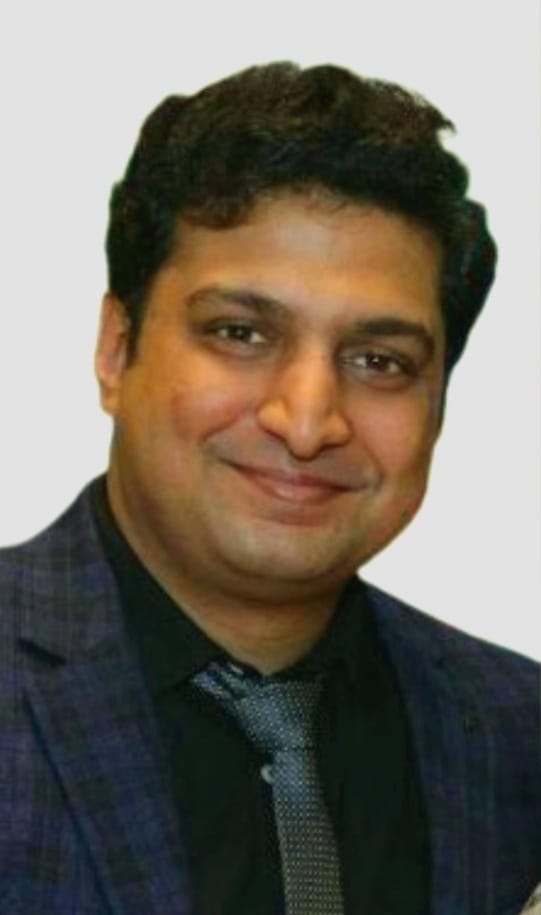
In an exclusive interaction with The Interview World at Medical Fair India 2026, Solomon Zakkam, Senior Business Development Manager at HealthCube, offers a deep dive into the company’s diagnostic platforms and the innovations that set them apart. He details how these systems are indigenously designed and manufactured in India, outlines their growing export footprint across developing African markets, and explains HealthCube’s competitive pricing strategy. He also identifies leading hospitals adopting these solutions and sheds light on the company’s AI-driven product roadmap for the years ahead.
The following are the key takeaways from this insightful and forward-looking conversation.
Q: Could you elaborate on HealthCube’s medical device portfolio, highlighting the innovations introduced and how these distinguish the products from current industry offerings?
A: At HealthCube, we have developed and patented a breakthrough medical platform that redefines point-of-care diagnostics. It is the world’s first medical device to integrate multiple diagnostic modules into a single, unified system. Within one device, it combines blood pressure monitoring, an ECG module, and a comprehensive blood testing suite that measures parameters such as blood glucose, hemoglobin, total cholesterol, and uric acid. In addition, it incorporates a rapid diagnostic test card reader and a urine-based test strip reader.
Crucially, all these components operate through a centralized processing unit that orchestrates data capture and analysis. Beyond its native integrations, the platform also enables seamless communication with third-party diagnostic modules, allowing them to connect directly to the HealthCube application. As a result, the system functions not merely as an integrated device, but as an extensible diagnostic ecosystem.
Q: Are HealthCube’s products fully developed and manufactured in India, or do they incorporate imported platforms or modules?
A: This device is entirely made in India. From conceptual design to engineering and manufacturing, every stage of development takes place within the country. Moreover, the product is protected by an Indian patent. As a result, HealthCube’s solutions are not merely assembled locally; they are conceived, designed, and built indigenously from the ground up.
Q: Are these products currently being exported, and how have international markets responded to them?
A: Yes, we have begun exporting our products to developing markets. However, our primary mission remains clear: to deliver high-quality healthcare to rural and underserved populations across India. In parallel, we have strategically focused our international expansion on the African region. We have already deployed several devices across key African markets, where the response has been particularly strong. In fact, compared with other developing regions, Africa has shown greater traction and faster adoption of our solutions.
Q: What pricing strategy have you adopted, and how does it position your products competitively?
A: On the commercial front, we offer multiple pricing packages tailored to distinct use cases and customer needs. This approach is essential because we do not deliver a single standalone device; rather, we provide an integrated ecosystem that covers a wide range of diagnostic parameters. In addition to HealthCube, we also support and integrate complementary third-party devices, further expanding the value proposition.
As a result, our pricing remains highly competitive in the market. With nearly nine years of active market presence and more than 2,000 units deployed to date, we have established both credibility and scale. Going forward, we aim to accelerate growth, deepen market penetration, and reach a broader base of target customers with even greater impact.
Q: Which leading hospitals or healthcare institutions in India have adopted your products?
A: I cannot disclose specific names at this stage, as we are bound by non-disclosure agreements. However, I can confirm that government hospitals, primary healthcare centres, and sub-centres are actively using our devices, particularly across Uttarakhand and several other states. Moreover, adoption continues to gain momentum, with multiple additional deployments currently in progress.
In the hospital segment, select institutions have already integrated our solutions. They primarily deploy these devices for large-scale screening programs and, in some cases, as part of their outreach and promotional initiatives.
Q: What future product lines are you prioritizing in your innovation pipeline for the next five to ten years?
A: We are advancing both our next-generation product lines and our artificial intelligence capabilities in parallel. Today, AI plays an increasingly critical role in medical diagnostics, and we are embedding it deeply into our device architecture. By combining hardware innovation with intelligent analytics, we aim to deliver more predictive, efficient, and scalable solutions. Accordingly, we expect these AI-enabled devices to enter the market within the next one to two years.