

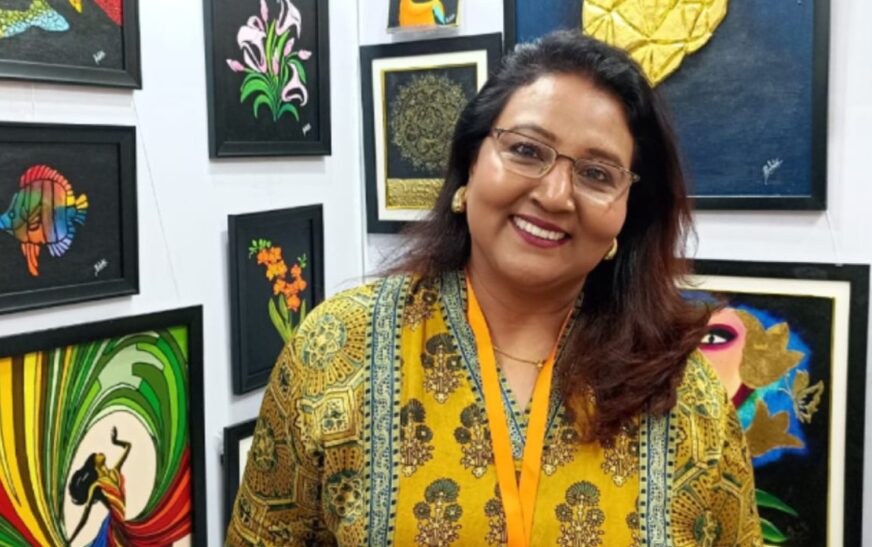
Babita Hembrom is a Delhi-based contemporary artist who actively forges a rigorous dialogue between modern aesthetics and indigenous traditions. Trained in engineering and engaged in education, she applies analytical discipline while advancing a nuanced, concept-driven visual language. She works primarily in acrylics and reinterprets the Jadopatia folk art tradition through a contemporary framework. As a result, she constructs layered narratives anchored in mythology, collective memory, pulsating colour, and cultural continuity.
In parallel, she operates as an entrepreneur and founded Ark of Art to mentor emerging artists and extend the global reach of Indian art practices. Through this platform, she cultivates critical engagement, fosters artistic development, and amplifies underrepresented voices. Consequently, her practice demonstrates a sustained commitment to innovation, heritage preservation, and intellectually grounded artistic exchange across mediums.
In an exclusive interaction with The Interview World at The Haat of Art, Hembrom articulates the conceptual foundations of her work. She examines audience reception with precision and evaluates how viewers and collectors engage with her pieces. Furthermore, she justifies her deliberate use of vibrant colour as both a formal and symbolic device, while clearly communicating the thematic intentions that inform her practice. Finally, she reflects on the qualitative feedback she receives from buyers and art enthusiasts. The following are the key insights distilled from this substantive conversation.
Q: Could you elaborate on the theme explored in your displayed artwork?
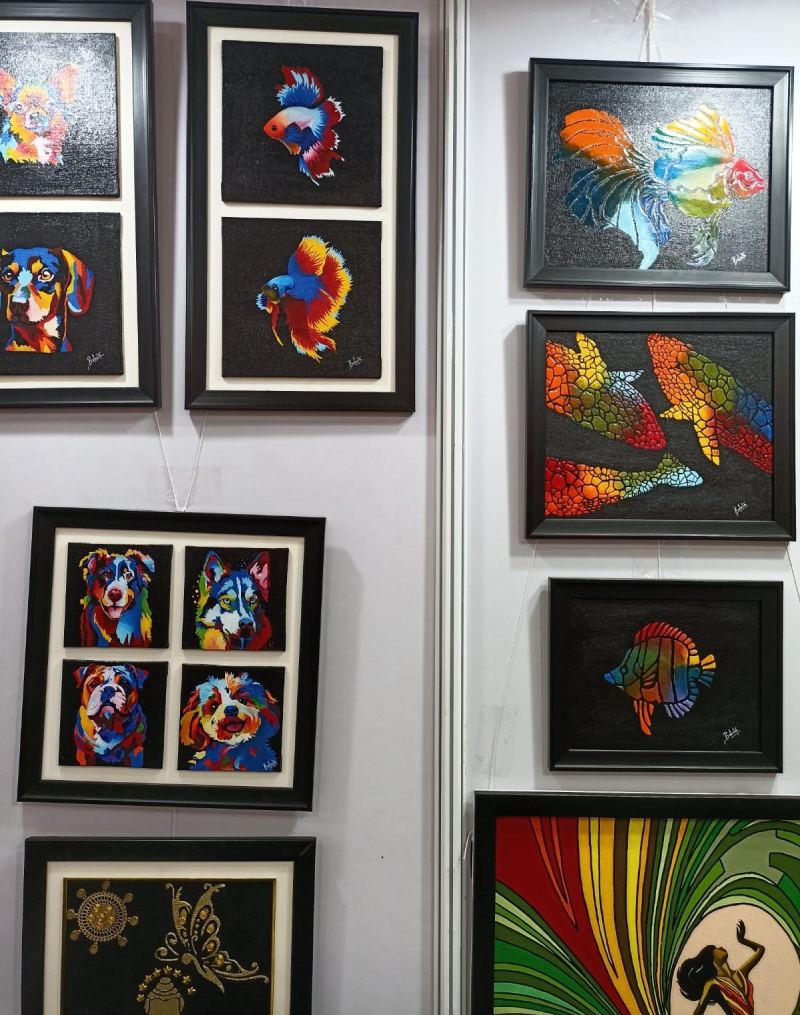
A: I begin with a clear premise: I engage deeply with colour. I deliberately use a wide spectrum of bright hues because colour animates the composition and infuses it with vitality. As a result, the works on my right foreground this chromatic intensity to establish an immediate visual energy.
At the same time, I draw from an ancient folk tradition, Jadopatia folk art, yet I do not replicate it conventionally. Instead, I reinterpret it through a contemporary lens. I retain its narrative essence; however, I refine its visual language to align with modern sensibilities.
For instance, in one composition, I depict fish moving rhythmically through water. They do not merely exist; they interact, play, and embody a sense of lived experience. Through this imagery, I intend to convey vitality within natural ecosystems.
Moreover, I incorporate elements of music and dance because they remain integral to human expression. I translate this cultural affinity into visual form, allowing movement and rhythm to animate the artwork.
Finally, I anchor these narratives in the ecological identity of Jharkhand. The name itself evokes forests and abundance. Therefore, I foreground lush greenery and organic forms to reflect that environment. In doing so, I situate Jadopatia within both its cultural and natural context while extending its relevance to contemporary audiences.
Q: What kind of response have you been receiving from audiences, buyers, and art enthusiasts?
A: My work recorded strong sales in the previous edition, and it continues to receive a robust response this time. Most viewers initially lack familiarity with Jadopatia folk art; however, they show a clear curiosity to understand it. Therefore, I consistently introduce new elements to make the form more accessible and intelligible without diluting its essence.
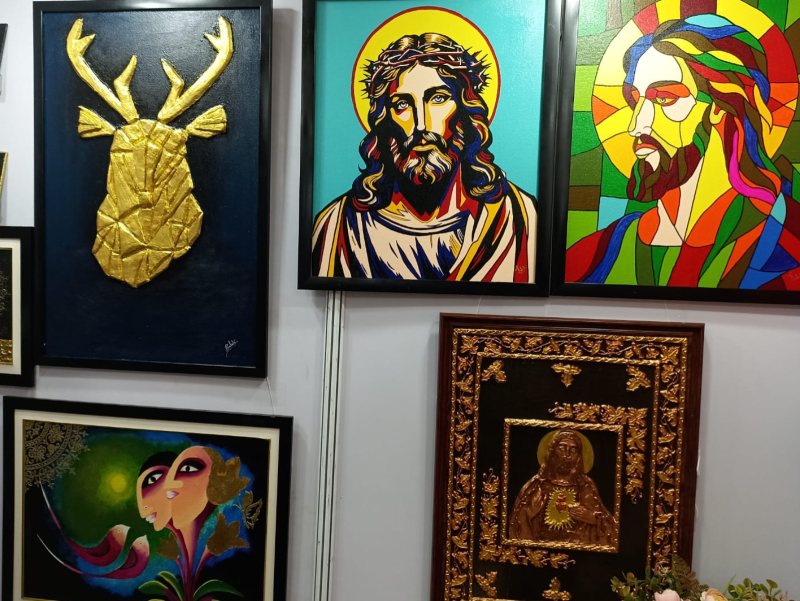
At the same time, I treat experimentation as a core discipline. For instance, I have introduced highly saturated, colour-driven compositions in this series, an intentional departure that expands my visual vocabulary. Likewise, I have incorporated dimensional techniques; a work featuring Jesus Christ employs a 3D treatment to create spatial depth and immediate visual engagement.
Consequently, each body of work prioritizes both innovation and audience connection. I design every piece to attract attention while sustaining conceptual clarity. As a result, viewers now recognize my artistic signature and engage with it more decisively. Notably, several collectors have already expressed firm intent to return and acquire specific works. This sustained interest signals not only appreciation but also growing confidence in the practice.
Q: How does your use of vibrant colour function conceptually within your work, and what ideas or messages are you seeking to communicate to the audience?
A: I advance a simple but deliberate idea: the world is inherently vibrant and alive. Therefore, I urge people to engage with life consciously and to shape it with intention and grace. Just as colour spreads across a surface and transforms it, we should extend that same energy outward, enriching the lives of others with presence, empathy, and creativity. Consequently, the profusion of vibrant hues in my work is not merely aesthetic; it functions as a visual metaphor for shared vitality and collective human experience.
Q: What kind of feedback do you typically receive from art lovers or buyers when they interact with you or purchase your work?
A: Viewers respond first to the immediacy of colour. The palette attracts them instantly; then the precision of its application sustains their attention. Because I continually experiment, they also recognize a process-driven approach, one that prioritizes variation, material exploration, and compositional risk.
At the same time, the presence of Jadopatia folk art generates a distinct layer of curiosity. As a lesser-known and nearly extinct tradition, it compels viewers to inquire into its origins, narrative structure, and visual grammar. They have already encountered forms such as Madhubani painting, Gond art, and Pithora painting; however, Jadopatia remains unfamiliar. Consequently, they engage more actively, they ask questions, examine details, and seek contextual understanding.
In response, I integrate explanatory elements within the display so that viewers can read, interpret, and situate the work more effectively. Simultaneously, I use the paintings themselves as narrative vehicles to communicate the ecological and cultural richness of Jharkhand. Through this dual approach, visual articulation and contextual framing, I deepen both aesthetic appreciation and cultural awareness.




1 Comment
I like how you presented both sides of the argument fairly.
Comments are closed.