
Teradyne is a global technology company focused on semiconductor test and advanced robotics. It develops innovative test solutions that help manufacturers verify the reliability, performance, and quality of critical electronic systems across semiconductor, automotive, healthcare, aerospace, wireless, storage, and consumer applications. In parallel, Teradyne has built an AI-powered robotics portfolio that spans collaborative robots (cobots), autonomous mobile robots (AMRs), and hybrid mobile cobots designed to address diverse industrial automation requirements.
Through its test and automation businesses, Teradyne enables manufacturers to tackle increasingly complex production challenges, enhance operational efficiency, and accelerate time to market. Its technologies play a critical role in supporting the rapidly evolving semiconductor, electronics, and intelligent automation industries.
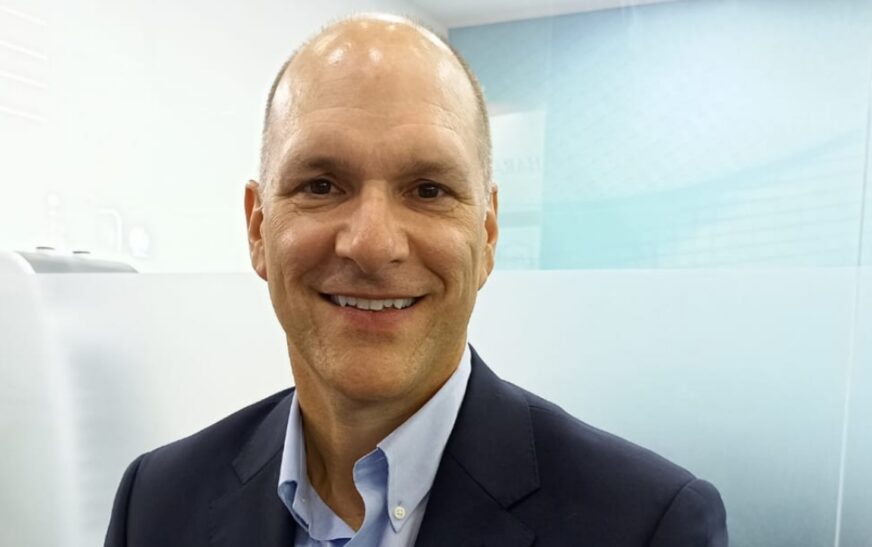
In an exclusive conversation with The Interview World at SEMICON India 2026, Dominic Viens, Vice President, Power Test Division, Teradyne, discusses the company’s latest automation and robotics offerings and examines the growing opportunities for robotics in India. He also outlines the key product lines within Teradyne’s Power Test Division and their applications across industries, explains the company’s strategy for integrating AI across its product portfolio, and shares his perspective on the innovation roadmap for the Power Test Division over the next three to five years.
Here are the key takeaways from this wide-ranging conversation.
Q: What automation and robotics products has Teradyne developed, and how are these solutions transforming industries through seamless, intelligent automation today?
A: Teradyne develops three major categories of products, each serving a distinct stage of the technology manufacturing and testing ecosystem.
The first is our Product Test division, which tests finished products to ensure they perform exactly as designed. We test a wide range of products, including mobile phones, and validate critical communication protocols such as Wi-Fi and cellular connectivity. This helps manufacturers confirm the functionality, reliability, and performance of their products before they reach the market.
The second is Teradyne Robotics, which we are showcasing here at SEMICON India 2026. Our robotics portfolio includes collaborative robots, or cobots, that work alongside people and support applications such as material handling. These solutions help manufacturers automate repetitive processes while improving operational efficiency and flexibility.
The third, and largest, business is Teradyne Semiconductor Test. This division focuses on testing the semiconductor devices that power modern electronic products. We verify that computer chips perform as designed, meet their specified requirements, and deliver the reliability expected in their end applications.
Together, these three businesses enable Teradyne to address the technology value chain, from testing individual semiconductor devices and finished electronic products to automating the manufacturing processes that connect them.
Q: How does Teradyne view India’s rapidly growing robotics market, and what opportunities does increasing industrial automation create for its robotics portfolio?
A: The robotics products are gaining strong traction across a wide range of industries, including semiconductors, biochemicals, and automotive manufacturing. Their applications extend wherever companies need to automate repetitive, labour-intensive tasks, particularly at the final stage of production and operations. In these environments, robotics can augment human workers, improve efficiency, and enhance productivity. As a result, organizations increasingly view robotics and automation as critical tools for transforming repetitive manual processes.
Q: Could you elaborate on the key product lines within Teradyne’s Power Test Division and the industries and applications they serve?
A: At the Power Test Division, we develop product lines designed to test power semiconductors, including silicon carbide, gallium nitride, silicon MOSFETs, IGBTs, and other advanced power devices. We are seeing strong interest in India, particularly as the country expands its domestic semiconductor manufacturing capabilities. This includes opportunities to manufacture wafers locally, package and test devices in India, and build a more integrated domestic semiconductor ecosystem.
These power semiconductors support a wide range of critical applications. For example, they are used in solar inverters, HVAC systems, and the electronic drivers within anti-lock braking systems in automobiles. As India scales local semiconductor manufacturing and electronics production, the demand for reliable, high-performance power semiconductor testing is expected to grow across these and other applications.
Q: How does Teradyne plan to integrate AI across its product lines, and what new capabilities or efficiencies will this enable for customers?
A: We are integrating AI across the entire enterprise to transform how we operate, innovate, and serve our customers. We are already using AI in our service centers and across the design process to improve efficiency and productivity. At the same time, we are embedding AI capabilities directly into our software portfolio. As we roll out these AI-enabled features, our customers will be able to leverage intelligent tools within our software to streamline workflows, accelerate tasks, and significantly enhance productivity.
Q: What is your innovation strategy for the Power Test Division over the next three to five years?
A: The Power Test Division is focused on addressing the rapidly evolving power-conversion requirements of the AI market. As AI CPUs and GPUs become increasingly powerful, they are driving significantly higher current levels and power-dissipation demands. Over the next three to five years, we will closely track this technology roadmap and ensure that our solutions continue to meet these evolving requirements.
At the same time, we are preparing for the emergence of 800-volt data centers, where higher-voltage architectures will enable the power infrastructure needed for next-generation AI systems. We will test and validate the full range of power-conversion products that support these advanced data-center architectures.