
Northern Institute of Professional Studies and Research (NIPSAR) is rapidly emerging as a forward-looking institution of higher education that equips students with the knowledge, skills, and mindset required to excel in a dynamic global economy. Situated in Delhi/NCR, the institute delivers industry-aligned education, research-driven learning, and innovation-focused academic programs that effectively bridge the divide between academia and employability. Moreover, NIPSAR fosters academic excellence, ethical leadership, digital transformation, and skill-based training to prepare students for the evolving demands of the professional world.
At the same time, the institute strengthens global engagement through international collaborations, Collaborative Online International Learning (COIL) programs, and technology-enabled pedagogical initiatives. Backed by accomplished academicians and seasoned industry leaders, NIPSAR cultivates practical expertise, entrepreneurial thinking, critical analysis, and career readiness through a learner-centric academic ecosystem. Consequently, the institute empowers students with future-ready competencies, global exposure, and strategic perspectives essential for success in an increasingly competitive and technology-driven environment.
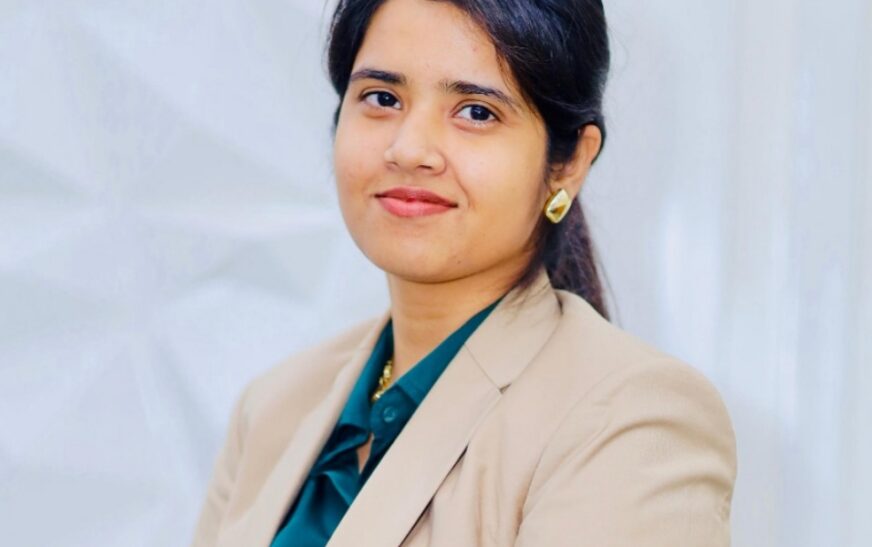
In an exclusive interaction with The Interview World, Charul Sharma, Managing Director and Founder of NIPSAR, explains how the institute is narrowing the gap between academic instruction and industry expectations. She further discusses how NIPSAR is embedding artificial intelligence and emerging technologies into its teaching and learning ecosystem while identifying the key trends that will redefine higher education in India over the next five years. In addition, she elaborates on the institute’s alignment with NEP 2020, highlights its role in promoting entrepreneurship, startups, and leadership development, and outlines her long-term strategic vision for NIPSAR. Presented below are the key insights from this engaging and thought-provoking conversation.
Q: How is NIPSAR attempting to bridge the disconnect between academic learning and industry expectations?
A: During my years in academia, I observed a deeply concerning pattern among graduates. Although many students excelled academically and possessed a strong theoretical foundation, they consistently struggled to perform in corporate interviews and professional environments. Their degrees demonstrated academic achievement; however, they often lacked the practical competencies that employers actively seek, including industry exposure, communication skills, professional etiquette, and workplace readiness. This disconnect between education and employability was both alarming and transformative in shaping my perspective on higher education.
That realization ultimately became the cornerstone of NIPSAR. We established the institute with a clear objective: to bridge the gap between academic learning and industry expectations through specialized training and professionally aligned certification programs. Unlike conventional institutions, NIPSAR engages experienced corporate professionals as trainers who bring real-world insights directly into the classroom. They do not merely conduct academic sessions; they also mentor students through rigorous mock interviews and practical simulations that replicate actual corporate hiring processes. As a result, students gain firsthand exposure to professional expectations long before they face real interviews.
Furthermore, we extend comprehensive placement assistance to ensure that learning translates into meaningful career opportunities and sustainable livelihoods. At NIPSAR, we firmly believe that education must go beyond awarding degrees. It must create pathways to opportunity, empower individuals with industry-relevant capabilities, and prepare them to succeed confidently in the professional world.
Q: How is NIPSAR integrating AI and emerging technologies into its teaching and learning ecosystem?
A: At NIPSAR, we approach curriculum design as a strategic collaboration rather than a purely academic exercise. We develop every training program through active consultation with distinguished academicians and senior corporate leaders who possess deep, real-time insight into evolving industry demands. Consequently, our curriculum remains closely aligned with the rapidly changing professional landscape and integrates the latest advancements in Artificial Intelligence, data science, and other emerging technologies that define today’s job market.
Moreover, we deliver all our programs through a dynamic online learning model, which enables us to continuously refine and update course content in response to technological and industry developments. This agile framework ensures that our students learn current, relevant, and future-focused competencies instead of relying on outdated academic frameworks. At NIPSAR, we do not prepare students for tomorrow with yesterday’s curriculum. Instead, we equip them with the knowledge, skills, and technological adaptability required to shape and succeed in the future they aspire to build.
Q: As an academic leader with global engagements, what major trends do you foresee shaping higher education in India over the next five years?
A: The future of higher education will transcend geographical boundaries and institutional barriers, creating a truly borderless and accessible learning ecosystem. At NIPSAR, we are actively advancing this transformation through our flagship COIL (Collaborative Online International Learning) initiative. Through this model, students engage in international collaborations, cross-cultural learning experiences, and live global projects without the constraints of travel, visas, or relocation. More importantly, they gain international exposure while learning flexibly from their own homes and at their own pace.
Furthermore, NIPSAR has positioned itself as a comprehensive platform for global academic engagement and international collaboration. Our expanding network of partnerships and MOUs with several globally recognized QS-ranked universities continues to create significant academic and professional value for students. As these collaborations deepen, we anticipate a substantial rise in strategic international partnerships with leading institutions across the world.
Looking ahead, I believe three transformative forces will redefine higher education in India over the next five years: the internationalisation of curriculum, AI-integrated pedagogy, and outcome-based education. These pillars will no longer remain optional enhancements; they will become fundamental to institutional relevance and student success. Recognising this shift early, NIPSAR has already embedded all three dimensions into its academic and learning ecosystem, thereby preparing students for the demands of an increasingly interconnected, technology-driven, and performance-oriented global environment.
Q: India’s National Education Policy (NEP) 2020 emphasizes multidisciplinary and skill-based learning. How aligned is NIPSAR’s academic framework with its objectives?
A: NIPSAR has achieved strong and substantive alignment with the vision, principles, and strategic objectives of NEP 2020. In particular, our COIL initiative reflects the core priorities outlined in the policy, including academic flexibility, global exposure, experiential learning, interdisciplinary engagement, and skill-oriented education that extends far beyond the limitations of conventional classroom instruction.
Moreover, NEP 2020 advocates an education system that is relevant, inclusive, accessible, and holistic. NIPSAR has embedded these principles into every aspect of its academic and operational framework. We deliver industry-integrated, project-based certification programs that combine practical application with global academic exposure. Simultaneously, our internationally connected learning ecosystem enables students to engage with contemporary knowledge, cross-cultural collaboration, and emerging technologies in meaningful ways.
In addition, our technology-driven online delivery model significantly expands access to quality education for students from Tier-II and Tier-III cities who may otherwise face geographical or institutional limitations. As a result, NIPSAR not only supports the transformative agenda of NEP 2020 but also actively contributes to redefining higher education in India through innovation, accessibility, and digitally enabled learning.
Q: What role does NIPSAR play in fostering entrepreneurship, startups, and leadership development?
A: At NIPSAR, entrepreneurship and leadership are not peripheral components of education; they constitute the foundation of our institutional philosophy. We strongly believe that higher education must extend beyond producing job-seekers and instead empower students to become innovators, entrepreneurs, and employment generators. Consequently, we have embedded entrepreneurial thinking, leadership development, and innovation-driven learning into every dimension of our academic ecosystem.
Through structured mentorship from senior corporate leaders, experiential exposure to real-world projects under our COIL (Collaborative Online International Learning) initiative, and a learning environment that actively promotes creativity, critical thinking, and problem-solving, we are cultivating a new generation of confident leaders and transformative changemakers.
Moreover, we consistently encourage students to move beyond conventional career trajectories and adopt a solution-oriented mindset. We inspire them to identify emerging challenges, design impactful solutions, and lead with clarity, resilience, and purpose. To reinforce this approach, we integrate leadership development modules, collaborative team-based learning, and global engagement exercises into our programs. As a result, our students graduate not merely prepared to participate in the economy, but equipped to influence, transform, and lead it.
Q: What is your long-term vision for NIPSAR, and how do you see the institution contributing to India’s ambition of becoming a global knowledge and innovation hub?
A: My long-term vision for NIPSAR is to democratize access to high-quality, industry-relevant education for every student across India, irrespective of geography, socio-economic background, or financial limitations. I firmly believe that education must never remain a privilege reserved for a select few; it must serve as a fundamental right and a powerful instrument of social and economic transformation. Therefore, by delivering our programs entirely through a technology-enabled online model at highly affordable costs, we are systematically dismantling the traditional barriers that have historically denied deserving students access to meaningful opportunities.
At the same time, India’s aspiration to emerge as a global hub of knowledge, innovation, and intellectual capital extends far beyond a policy objective. It represents a national and generational responsibility. NIPSAR remains deeply committed to contributing meaningfully to this transformative mission. Through skill-oriented training, industry-integrated learning, international academic collaborations, and AI-driven educational frameworks, we are equipping students with the competencies required to compete and succeed in a globally interconnected economy.
Furthermore, by strengthening employability, fostering global academic partnerships, and nurturing future-ready professionals, we are actively building the human capital necessary to support India’s long-term growth and innovation agenda. At NIPSAR, we do far more than impart education. We empower individuals, create global connections, unlock opportunities, and drive transformation that extends beyond classrooms into careers, industries, and society at large.