
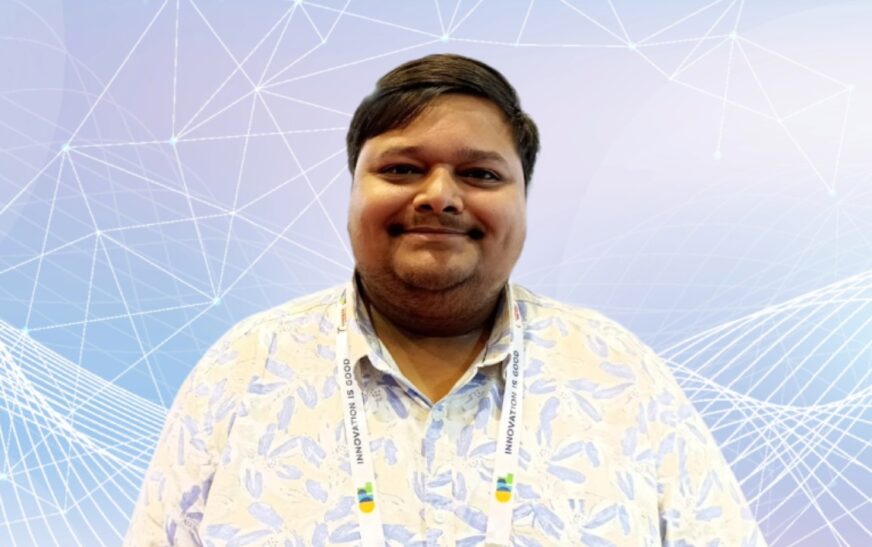
Neurabit Solution, founded in 2025 and headquartered in Sambalpur, India, is rapidly emerging as a high-impact AI and robotics consulting firm. It specializes in edge AI, computer vision, and autonomous systems; consequently, it delivers scalable, real-time solutions across a wide range of industries. The firm develops advanced AI models, integrates IoT ecosystems, automates robotic processes, and enables seamless cloud-to-edge deployment. More importantly, it engineers production-grade systems designed to perform reliably in real-world conditions, from agriculture to public safety. By prioritizing innovation, minimizing latency, and ensuring practical deployability, Neurabit positions itself as a strategic technology partner that converts ambitious ideas into tangible, intelligent outcomes.
In an exclusive interaction with The Interview World, Subham Agrawal, Founder and CEO of Neurabit Solution, articulates the company’s AI and computer vision offerings while outlining its commercialization strategy and evolving client landscape. Furthermore, he presents a forward-looking innovation roadmap for the next five years and emphasizes the precision and competitive performance of Neurabit’s AI models. The following are the key insights from this substantive discussion.
Q: Could you elaborate on the AI and computer vision solutions offered by Neurabit, along with the key industry use cases they address?
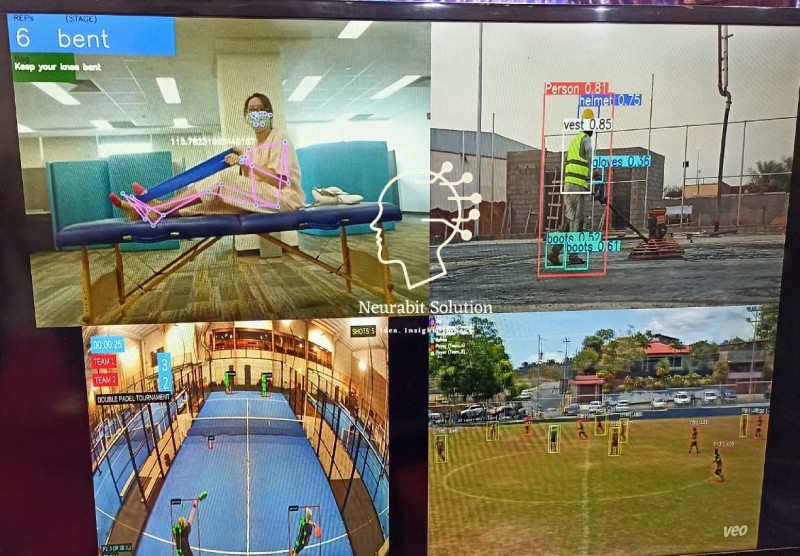
A: We deliver advanced AI and computer vision solutions across multiple high-impact use cases. To begin with, in sports analytics, we track player and team performance with precision. We analyse player statistics, evaluate on-field effectiveness, and identify underperformance in real time; as a result, teams gain actionable insights that directly inform strategy and decision-making.
Next, we address workplace safety through Personal Protective Equipment (PPE) monitoring. Supervisors often need to oversee thousands of workers across distributed sites; therefore, our system continuously analyses live feeds from thousands of cameras. It detects whether workers are wearing helmets, boots, and other protective gear. If non-compliance occurs, the system immediately triggers real-time alerts, enabling supervisors to intervene promptly and enforce safety protocols.
In addition, we offer exercise posture analysis for coaches and physiotherapists. Similar in architecture to PPE monitoring, this solution evaluates movement and form across large client bases simultaneously. It processes live or recorded video streams, identifies individuals with incorrect posture, and highlights those performing exercises correctly. Consequently, practitioners can scale oversight without compromising precision or care quality.
We also deliver robust solutions for industrial inspection. First, in quality inspection, our system detects defects such as corrosion, rust, dents, bends, abrasion, and general wear, across both metallic and non-metallic components. This ensures consistent product quality while reducing reliance on manual inspection.
Furthermore, we solve the challenge of component verification in complex assemblies. For instance, a vehicle differential may include numerous bolts, pins, plates, and washers. Manual inspection requires disassembly and reassembly, which is both time-intensive and error-prone. Instead, our solution uses synchronized multi-camera inputs, from top, bottom, and multiple angular views, to inspect assemblies in real time. It verifies the presence or absence of each component and immediately flags discrepancies. As a result, organizations eliminate inefficiencies, reduce human error, and maintain high assembly integrity.
Collectively, these solutions demonstrate the practical power of computer vision in delivering accuracy, scalability, and real-time operational intelligence.
Q: Have you commercially deployed these solutions in India? If so, how many clients are currently using them?
A: Yes, we have successfully deployed our solutions across multiple domains and geographies. To begin with, in sports analytics, we offer a specialized solution for padel, which is currently operational across more than 300 courts worldwide. These deployments span key regions, including the Middle East, France, Germany, and India, with a strong presence in Mumbai. As a result, we have established a scalable and globally validated sports intelligence platform.
In parallel, we have implemented advanced industrial inspection solutions for defence applications. For example, our systems enable drone-based detection and tracking, where one drone can identify and monitor another in real time. This capability demonstrates the robustness and precision of our computer vision models in mission-critical environments.
Furthermore, we have partnered with Instabus to enhance customer feedback management through intelligent automation. This collaboration underscores our ability to extend AI capabilities beyond vision systems into broader data-driven applications.
Currently, we serve a portfolio of approximately 18 to 20 active clients. Moreover, we continue to expand our client base steadily, driven by increasing demand for scalable, real-time AI solutions.
Q: What new technologies, capabilities, and offerings are you planning to develop over the next five years?
A: Over the next five years, we will focus on building and scaling proprietary products. To begin with, we are developing a platform called EDIO, designed specifically for video editors who need to manage, organize, and process large volumes of video data. Currently, most available software solutions are prohibitively expensive, often costing thousands to tens of thousands; however, EDIO consolidates multiple use cases into a single, unified platform. As a result, it significantly reduces cost while expanding functionality, enabling users to manage their entire video ecosystem efficiently and at scale.
In parallel, we are advancing a suite of computer vision solutions, including PPE compliance monitoring, footfall analytics, and automated attendance systems. These solutions are engineered for large-scale deployment; therefore, a single system can seamlessly operate across thousands of cameras. Consequently, organizations can achieve centralized control, real-time insights, and operational efficiency through one integrated platform deployed at scale.
Q: How does Neurabit position itself in terms of competitiveness and pricing in the market?
A: Our primary differentiator lies in cost efficiency. To begin with, many competitors rely on high-end server infrastructure, typically 24 GB or 32 GB configurations, which can cost several lakhs per month in recurring expenses. In contrast, our solutions run entirely on edge devices. These devices require only a one-time investment of approximately ₹30,000 to ₹50,000; consequently, they eliminate ongoing monthly costs and significantly reduce total cost of ownership.
Moreover, we design our solutions for high adaptability. We can customize them to suit a wide range of use cases, including sports analytics, quality inspection, health technology, and beyond. In other words, we do not offer rigid, one-size-fits-all systems; instead, we deliver flexible, domain-agnostic solutions tailored to specific operational needs. This combination of cost efficiency and customization establishes a clear competitive advantage.
Q: What is the accuracy level of your AI and computer vision solutions in healthcare diagnostics?
A: Accuracy remains the defining requirement in healthcare AI. To frame this precisely, clinicians rely heavily on the recall metric, which measures a system’s ability to identify all true positive cases. For instance, if there are 10 cancer cases, an effective system must detect all 10; anything less introduces unacceptable clinical risk.
At present, detection rates in India remain suboptimal, with existing systems identifying approximately 7 out of 10 cases. However, we are actively working to close this gap. We are investing in focused research, refining our models, and strengthening validation protocols. In parallel, we are collaborating with leading institutions, including AIIMS and other medical research centers. Consequently, we aim to significantly improve detection accuracy and advance toward clinically reliable, high-recall diagnostic systems.