
ThunDroid AI, developed by Aetherrax Technologies, is an AI-powered mental wellness platform that delivers integrated emotional support through a unified, user-centric application. It combines an intelligent AI companion with guided journaling and evidence-based breathing techniques to proactively address stress, anxiety, and overall mental wellbeing.
Moreover, the platform applies established therapeutic frameworks, such as Cognitive Behavioural Therapy (CBT), Dialectical Behavior Therapy (DBT), and Acceptance and Commitment Therapy (ACT), to deliver personalized, adaptive interactions that continuously evolve with user behaviour. In addition, features like mood tracking and emotional analytics generate actionable insights, while a privacy-first architecture, anchored in local data storage and robust encryption, ensures data security and user trust. Consequently, ThunDroid AI positions itself as a comprehensive and accessible alternative to fragmented wellness solutions.
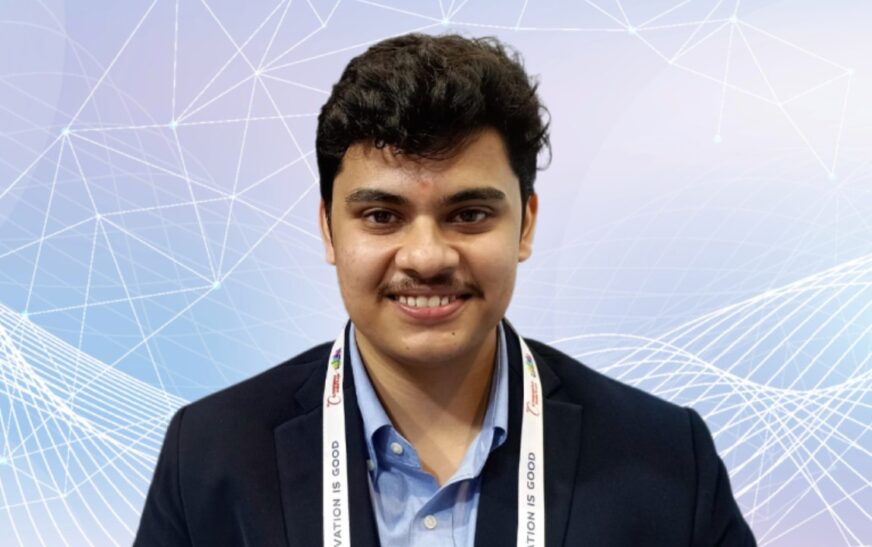
In an exclusive conversation with The Interview World at the 33rd Convergence India Expo, Ujjwal Thakur, Founder & CEO, Aetherrax Technologies AI explains how the platform identifies, predicts, and addresses mental health challenges while strengthening awareness and enabling timely intervention. Furthermore, he outlines the company’s commercialization strategy and business model, and articulates a clear roadmap to extend ThunDroid AI beyond mental wellness into broader healthcare sub-sectors. The following are the key takeaways from this in-depth discussion.
Q: How does your app ThunDroid AI identify, predict, and address mental health challenges among younger generation, and what solutions empower early awareness, intervention, and support?
A: Let me begin with the origin of ThunDroid AI. In 2025, I came across a report highlighting that a significant proportion of global suicide cases stem from mental health challenges. That insight became the inflection point. It compelled me to act decisively, so I built this platform and founded the company.
Although the company is less than a year old, we approached the problem with rigor from the outset. Specifically, we trained our AI model on over 150,000 therapeutic response datasets, grounding it in established, research-backed methodologies. As a result, the system operationalizes core psychotherapeutic frameworks, Cognitive Behavioural Therapy (CBT), Dialectical Behaviour Therapy (DBT), and Acceptance and Commitment Therapy (ACT). These evidence-based, goal-oriented approaches form the backbone of our AI’s standard operating architecture and drive its adaptive, intervention-oriented capabilities.
At the same time, we recognized that mental wellness does not operate in isolation. Therefore, we expanded the platform to include a nutrition intelligence layer. For instance, the app features an advanced calorie tracker: users can simply capture an image of a food item, and the system analyses calories, protein, carbohydrates, and a full spectrum of macronutrients. Notably, the model delivers approximately 98% accuracy, well above the typical industry benchmark of around 90%. This integration reflects a key insight: nutritional patterns often correlate with anxiety and overall mental health.
Furthermore, we embedded scientifically validated breathing interventions to address rising stress levels, particularly among younger users. One standout technique is cyclic sighing, a method validated by research from Stanford University, which demonstrates faster anxiety reduction compared to traditional meditation. Building on this, the app offers 13 evidence-based breathing exercises and enables users to design fully customized routines tailored to their needs.
In addition, we designed a structured journaling module to deepen self-reflection and emotional tracking. Users can choose from 15 categorized templates, reminiscent of guided journaling practices introduced during school years, to ensure both familiarity and consistency. Finally, we integrated a real-time voice interaction mode, allowing users to engage conversationally with the AI, thereby making support more immediate, intuitive, and human-like.
Q: Have you commercialized this product, and if so, who are your key clients?
A: We launched our iOS application on the Apple App Store in last July, followed by the official rollout of ThunDroid AI on March 2. This sequencing was deliberate. While the Google Play Store continues to scale, the iOS ecosystem offers stronger global discoverability and early credibility, therefore, it served as our primary launch platform.
As a result, our user base has already achieved international traction. We see the highest engagement from the United States, the United Kingdom, and India, three markets that collectively validate both relevance and scalability.
However, mental wellness remains a sensitive domain. Many individuals still hesitate to seek support due to stigma and social barriers. Recognizing this, we have taken a dual approach. On one hand, we are systematically commercializing the platform to ensure sustainable growth. On the other, we are actively driving awareness, clearly articulating what ThunDroid AI stands for and, more importantly, the critical problem it solves.
Q: What is your current business model, B2C, B2B, or hybrid, and do you plan to expand into B2B partnerships with institutions to scale your offerings in this segment?
A: We are actively pursuing a dual-market strategy, targeting both B2C and B2B segments.
In the B2C model, we operate on a freemium, subscription-led approach. Users begin with a three-day free trial; thereafter, they can transition to a ₹1,299 monthly plan. This subscription unlocks unrestricted access to AI-driven conversations, ensuring continuous, on-demand mental wellness support.
Simultaneously, we are building our B2B pipeline. We are currently evaluating multiple partnership models and have already initiated discussions with several organizations at the India AI Impact Expo. These engagements are helping us validate enterprise use cases and refine our go-to-market approach.
Accordingly, we remain equally focused on scaling both channels, driving direct user adoption while also unlocking institutional partnerships for broader impact.
Q: Do you plan to expand ThunDroid AI solutions beyond mental wellness into other healthcare sub-sectors, and which functions or domains are you targeting for future growth?
A: Our AI currently centers on mental wellness; however, we are systematically expanding into adjacent domains across health and fitness. For example, we recently introduced a calorie-tracking feature to strengthen the platform’s integration of physical and mental health insights. This marks an initial step in a broader, structured exploration of the health continuum.
At the same time, we recognize the boundaries of AI in clinical contexts. Certain interventions require qualified medical expertise. Therefore, we do not position our platform as a replacement for healthcare professionals. Instead, we actively collaborate with doctors and clinical practitioners to complement their work. This partnership-led approach ensures that users receive safe, credible, and well-rounded care while maintaining the highest standards of responsibility and trust.