
Chhanv Foundation is a non-profit organization that drives the rehabilitation and empowerment of acid attack survivors across India. It emerged from the “Stop Acid Attacks” campaign in 2013 and has since built a comprehensive, survivor-centric model. The organization delivers integrated support: medical treatment, legal aid, education, and sustainable livelihood pathways. Moreover, it operates social enterprises such as Sheroes Hangout cafés, which create dignified employment and restore agency. By aligning advocacy with awareness and on-ground intervention, Chhanv confronts acid violence directly. At the same time, it accelerates survivors’ reintegration into society, strengthening resilience, enabling independence, and catalysing systemic change.
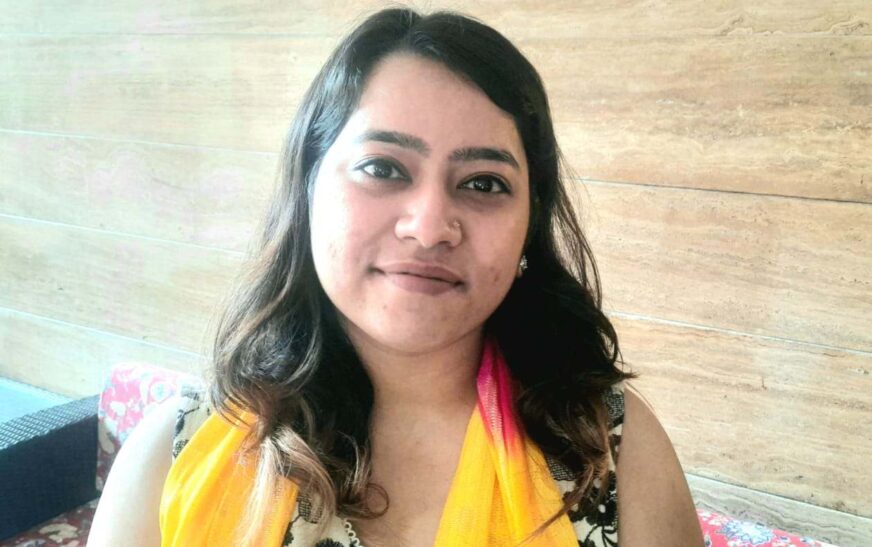
In an exclusive conversation with The Interview World at the ASSOCHAM conference on “Viksit Bharat 2047: Women Leading India’s Growth Story,” Akriti Das, Operations Lead and Board Liaison Officer at Chhanv Foundation, details the organization’s initiatives for survivor support. She further analyses post-legislation trends in acid attacks, examines societal responses to such violence, and identifies the most critical challenges in case management. The following are the key takeaways from the discussion.
Q: What specific programs and initiatives has Chhanv Foundation implemented to support acid attack survivors in India?
A: At Chhanv Foundation, we drive the holistic rehabilitation of acid attack survivors and, increasingly, burn survivors. The work began in 2012–2013 with the “Stop Acid Attacks” campaign, launched in response to the absence of a dedicated legal framework in India. Accordingly, we initiated sustained campaigns and organized protests, positioning ourselves as a focused pressure group.
However, once legal provisions began to take shape, the central question shifted: how do we rehabilitate survivors in a way that restores dignity and long-term agency? At the same time, we continued to advocate for a complete ban on acid. Yet, even under regulation, acid remains readily accessible, an enduring systemic gap.
To address rehabilitation directly, we launched Sheroes Hangout cafés, social enterprises run by survivors themselves, even before formally establishing the foundation. We opened our first café in Agra; we then expanded to Lucknow, Noida, Delhi, and Pune, with Kolkata slated for launch this year. Through these cafés, we create structured employment while building a strong peer-support ecosystem. Consequently, survivors achieve financial independence and regain social confidence.
Crucially, acid violence is not merely physical, it is deeply symbolic. Perpetrators aim to erase identity rather than end life. Moreover, they act with the implicit belief that society will absorb the act with limited resistance; they assume that throwing acid is both easy and consequentially manageable. In this context, our model not only rehabilitates survivors but also challenges the social conditions that enable such violence.
Q: After the enactment of the new legislation, have you observed a downward trend in acid attack cases in India?
A: If you examine the NCRB data at face value, it may suggest that acid attacks are increasing. However, a deeper analysis reveals a more nuanced reality. Earlier, many incidents went unreported because they occurred within families or close-knit communities, often involving perpetrators such as husbands or in-laws. Consequently, these cases rarely entered official records.
Now, reporting has improved, although it remains incomplete; even today, a significant proportion of cases, potentially up to 40 percent, still go unreported. Therefore, the apparent rise in numbers reflects two concurrent trends. On one hand, greater reporting has brought previously hidden cases into the system. On the other, the incidence of attacks has also increased. In effect, both factors, improved reporting and a genuine rise in cases, contribute to the current data trajectory.
Q: How has Indian society responded to the issue of acid attack?
A: I believe societal attitudes have begun to shift toward greater acceptance. Earlier, survivors faced intense stigma and persistent questioning; however, over the past decade, that response has gradually softened. Today, more people acknowledge and accept survivors with dignity.
Nevertheless, significant gaps remain. Many individuals still lack awareness of acid violence as a crime. Moreover, entrenched chauvinism and toxic notions of masculinity continue to fuel such acts. As a result, the risk of violence persists.
Therefore, we must intensify awareness efforts, particularly in schools and colleges, where attitudes take shape. In this context, although we operate as a rehabilitation-focused NGO, we place equal, if not greater, emphasis on advocacy and public awareness.
Q: As an organization working with acid attack survivors, what do you see as the biggest challenge in handling these cases?
A: The most critical challenge emerges in the immediate aftermath of an attack. In this initial phase, survivors endure extreme trauma, both physical and psychological. It often takes close to a year for them to fully process the permanence of their injuries and accept that their appearance has irreversibly changed. During this period, the loss is not only physical; it is also deeply tied to identity. For women in particular, especially in marginalized communities, social conditioning around beauty, marriage, and prescribed roles intensifies this struggle. Consequently, the emotional burden becomes even heavier.
At the same time, societal awareness has evolved, but unevenly. Earlier, many people did not even recognize acid attacks as a serious crime. They neither understood the legal consequences nor anticipated accountability. Therefore, a significant part of our work involved educating communities, clearly establishing that acid violence is a punishable offense with severe legal repercussions.
However, societal response remains fragmented and complex rather than uniform. At higher socio-economic levels, awareness may exist; yet, the issue often feels distant and does not translate into active engagement. In contrast, the most severe impact continues to concentrate within marginalized communities. Even within families, responses vary sharply. Some stand firmly with survivors and support their recovery; however, others resort to victim-blaming, attributing the attack to the survivor’s behaviour, independence, or personal choices.
As a result, the challenge extends beyond rehabilitation. It requires dismantling deep-rooted biases, reshaping social attitudes, and building consistent, empathetic community responses.