
On International Women’s Day 2026, The Interview World proudly embraces the theme “Rights. Justice. Action. For ALL Women and Girls.” Progress demands far more than symbolic recognition; it requires steadfast action to secure equal rights, expand fair opportunities, and uphold the dignity of every woman and girl. Across classrooms, boardrooms, courtrooms, and communities, justice must move beyond rhetoric and translate into measurable change. Therefore, today calls on us to move past conversation and champion decisive action: action that amplifies voices, dismantles systemic barriers, and advances inclusive growth. When women and girls thrive, societies advance and economies strengthen. Hence, we must collectively defend rights, promote equality, and accelerate meaningful reforms to build a just, resilient, and equitable future for all.
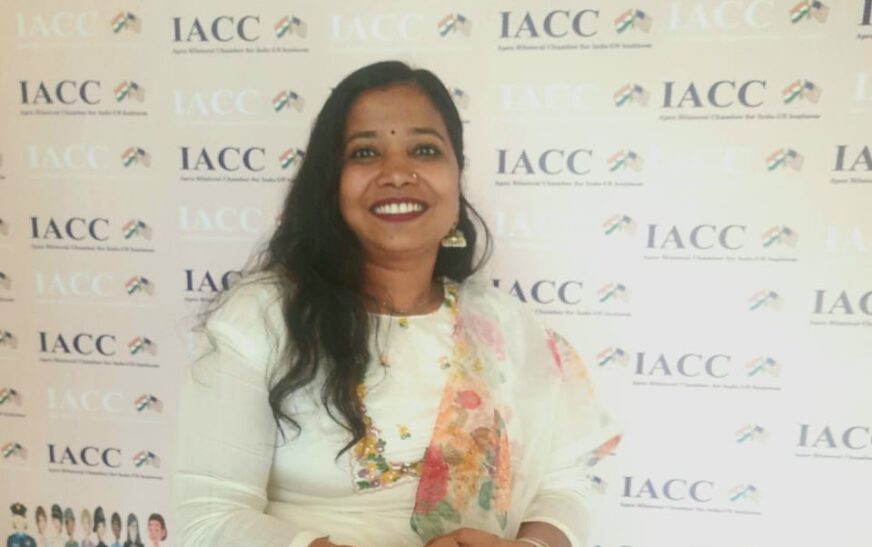
To mark this commitment, The Interview World presents a special series of conversations with influential women leaders across diverse fields. In an exclusive dialogue at the Conference on Celebrating Women Leadership, hosted by the Indo-American Chamber of Commerce (IACC), Suvarna Raj, an accomplished international para-athlete, shares her perspective on the true meaning of women’s power. She also examines the persistent challenges faced by women with disabilities, evaluates India’s standing in the global accessibility landscape, and underscores the urgent need for stronger facilities and support systems to elevate India’s performance in the Paralympics. In addition, she offers insights into the sports disciplines nurtured at her academy.
Here are the key takeaways from this compelling conversation.
Q: What does the power of women mean to you?
A: To explain the power of women, let me begin with a saying. In Marathi, there is a line my mother often wrote and repeated: the one who holds the rope of the swing has the strength to move the world. In many ways, this captures the essence of a woman’s power. A woman does not merely give birth to a child; she also shapes the life that follows. After all, a child begins like a ball of clay, and the form it eventually takes depends greatly on the hands that nurture it.
Therefore, the values a person carries into the world often originate with the mother. She instils character, resilience, and direction. We may all be born with potential; however, what we ultimately become depends on the guidance and strength that shape our early lives. In that sense, the power of women becomes foundational to the character of society itself.
Consequently, women must remain strong and visible. Strength grows when women step beyond limitations, engage with the wider world, and claim their rightful space in society. Only then can they fully exercise their influence, shape future generations, and drive meaningful change.
Q: You have been a para-athlete for over 12 years. As a woman, what key challenges have you experienced along the way?
A: The most significant challenge lies in society’s mindset. Even today, attitudes toward disability remain deeply flawed, and changing this perception will take time and sustained effort. Therefore, the real battle begins with transforming how people think and respond to persons with disabilities.
At the same time, the government must intensify its efforts. One of the most critical priorities is integrating disability awareness into the curriculum. Whether in education, sports, or other spheres, the system must embed inclusion at the foundational level. Only then can society build genuine sensitization.
Children, in particular, must learn from an early age how to interact with and respect persons with disabilities. When they grow up with that understanding, they naturally carry inclusive attitudes into adulthood, regardless of the context or profession.
However, responsibility does not rest with the government alone. Meaningful change also requires awareness and collective action within the disability community. Persons with disabilities must understand their rights, clearly articulate their needs, and actively demand the support they deserve. In other words, we must raise our voices, advocate with conviction, and assert our presence. Only then will institutions and society begin to recognize us fully and respond with the seriousness we deserve.
Q: How do you assess India’s position on the global accessibility index?
A: We may appear to be progressing; however, true accessibility still remains far from reality. In my view, substantial work lies ahead before we can claim meaningful progress. Even today, when we speak about accessibility, many people misunderstand the concept. If you ask someone what accessibility means, the typical response is simple: there is a ramp or a lift. Yet accessibility extends far beyond ramps and elevators.
In fact, accessibility is a comprehensive framework. We cannot view it solely through the lens of wheelchair users. Instead, we must also consider the needs of people with visual impairments, hearing impairments, and many other forms of disability. Each group faces distinct barriers, and genuine inclusion demands solutions that address all of them.
Therefore, accessibility must evolve into a holistic approach that accommodates diverse needs and abilities. When we provide true access, we do more than remove barriers, we unlock potential. Once access exists, ability naturally follows.
Q: What kinds of facilities and support systems are needed to strengthen India’s performance in the Paralympics?
A: Support at the grassroots level remains critically important. As I mentioned, I run an academy that focuses exclusively on nurturing players at the foundational stage. This is where talent begins, and this is where support is needed the most.
Today, athletes who win Olympic or Asian medals often receive substantial rewards, crores in prize money, government jobs, and national recognition. However, the journey to that medal rarely receives the same level of support. In reality, many aspiring athletes struggle even to access modest financial resources. Basic infrastructure remains inadequate, and early-stage training opportunities are limited.
Therefore, the system must shift its focus toward the beginning of the athletic pipeline. Governments and institutions should introduce structured scholarship programs at the grassroots level, particularly at the state level. Such initiatives would provide emerging athletes with the financial stability, training support, and infrastructure they need to progress. Only then can we build a sustainable pathway that enables talent to rise from the grassroots to the global stage.
Q: Which sports disciplines are currently offered at your academy?
A: Our academy currently focuses primarily on athletics. At this stage, we are building our foundation and developing talent within this discipline. However, our vision extends far beyond athletics alone. As more companies and partners come forward to support our efforts, we intend to expand into other sports such as shooting, archery, and additional competitive disciplines.
At present, the academy supports more than fifty athletes, and the number continues to grow as awareness spreads and more aspiring players approach us. This increasing interest clearly reflects the untapped talent that exists at the grassroots level.
However, a significant constraint remains. We do not yet have dedicated Corporate Social Responsibility (CSR) funding to formally enroll and support many of these young athletes. Therefore, we are actively engaging with organizations, industry leaders, and potential partners to build stronger institutional support. Through such collaborations, we aim to bring more companies on board and provide them with the opportunity to nurture emerging talent. In turn, these young athletes will gain the resources and guidance they need to progress from the grassroots level to the elite stage.