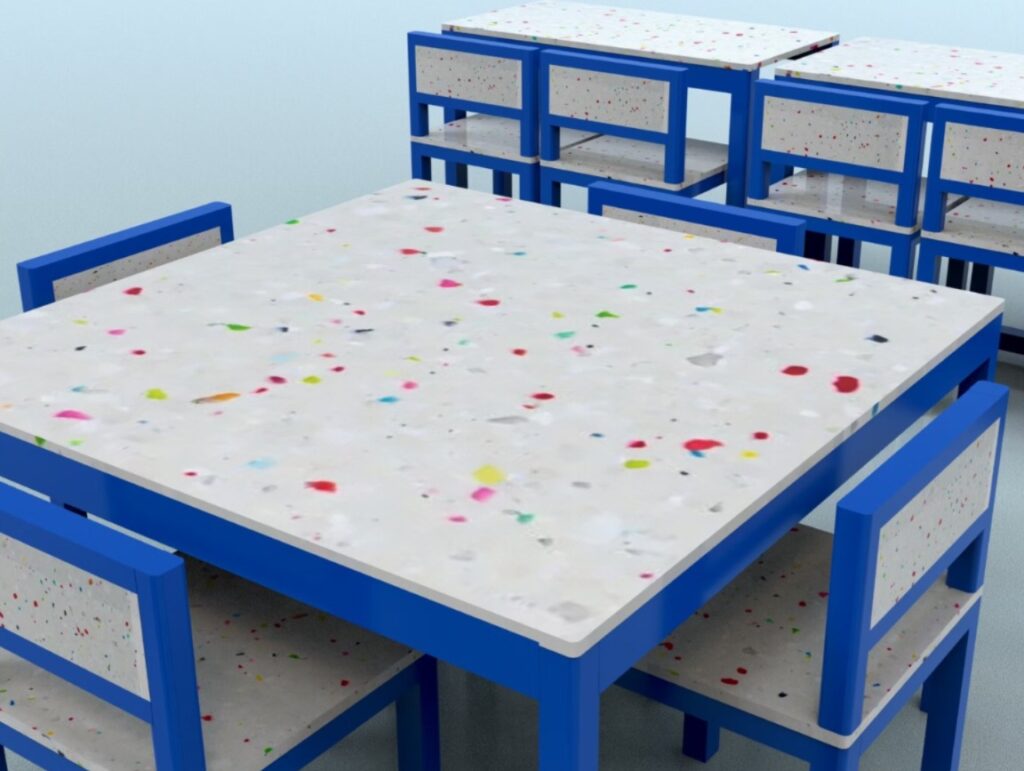
Econscious is a social impact enterprise that confronts plastic pollution with disciplined circular-economy execution. The company systematically collects post-consumer plastic waste and upcycles it into functional, durable products: planters, décor, office accessories, furniture, and public-utility assets. Through rigorous source segregation and structured door-to-door collection, it diverts waste from landfills and measurably reduces CO₂ emissions. Moreover, by institutionalizing waste segregation practices and delivering high-performance recycled alternatives, Econscious advances environmental stewardship and aligns its strategy with the United Nations Sustainable Development Goals. In parallel, it partners with corporations on customized CSR initiatives to scale measurable impact.
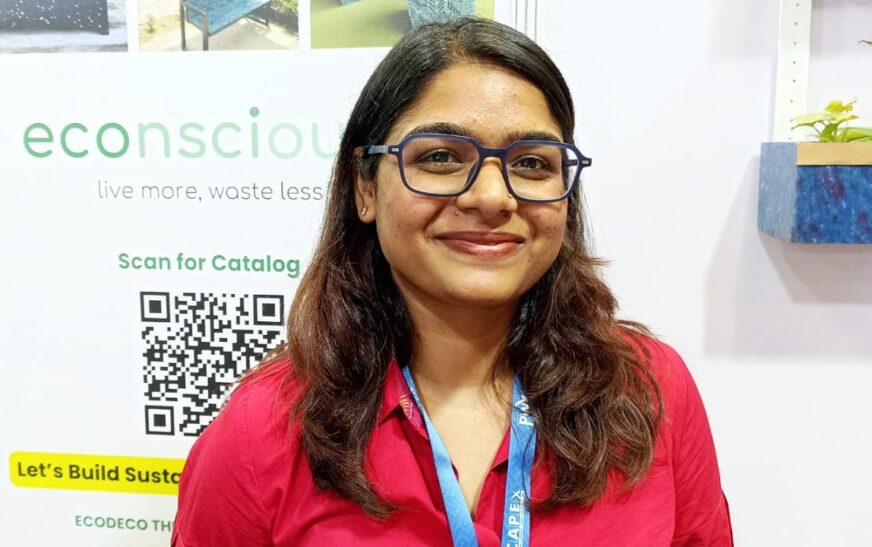
In an exclusive conversation with The Interview World at Municipalika 2026, Sonal Shukla, Co-founder of Econscious, articulates the technical and functional differentiation of recycled plastic products. She substantiates their cost efficiency relative to virgin-material counterparts, outlines operational architecture and market traction, previews the next five years of product innovation, and defines the company’s long-term strategic vision. The following are the principal insights from that discussion.
Q: Could you elaborate on the recycled products Econscious is currently designing for public infrastructure and individual applications? Additionally, what differentiates your products compared to similar products available in the market?
A: We operate in the plastic waste recycling sector. Specifically, we convert post-consumer plastic waste into high-impact public infrastructure, benches, dustbins, and large-format artworks, designed for installation in parks, campuses, streetscapes, and other shared environments. In doing so, we achieve two outcomes simultaneously. First, we create durable, functional assets for public use. Second, we embed environmental messaging directly into the public realm, thereby raising awareness about waste segregation and demonstrating the tangible value that recovered plastic can generate.
We differentiate ourselves through utility, longevity, and material performance. Rather than producing symbolic or short-life products, we engineer solutions built for sustained outdoor use. Because we manufacture these assets from recycled plastic, they are inherently waterproof, rust-proof, and termite-resistant. Consequently, they outperform many conventional materials in harsh weather conditions and high-footfall settings. Moreover, their durability reduces replacement cycles and lifecycle costs. Above all, by transforming waste into resilient public infrastructure, we advance sustainability in a practical, visible, and measurable manner.
Q: How do these recycled products achieve cost efficiency compared to equivalent products made from virgin materials?
A: We offer multiple product categories, and cost positioning varies by application and the baseline material under comparison. Therefore, any pricing analysis must remain context-specific.
For instance, when we benchmark our benches against conventional metal alternatives, our recycled-plastic models deliver a clear cost advantage. They reduce material and maintenance expenses while preserving structural integrity. By contrast, our dustbins, currently handcrafted to ensure quality control, may command a modest premium over mass-produced standard variants. However, this differential reflects superior build specifications. We use thicker, high-density recycled plastic, which enhances impact resistance, weather tolerance, and service life.
Accordingly, price comparisons cannot occur in isolation. One must evaluate the reference material, manufacturing method, durability profile, and lifecycle value before drawing conclusions. Only then does the economic case become fully transparent.
Q: Can you provide an overview of your operational scale and the traction you are seeing in the market?
A: We are headquartered in Delhi, and we operate our manufacturing facility here. However, we distribute and install our products across India. We have executed projects throughout Delhi NCR and expanded into southern markets, including Kerala and Bengaluru. In addition, we have delivered installations in environmentally sensitive and high-altitude regions such as Mahabaleshwar, Mussoorie, and Darjeeling.
As a result, our products now operate across diverse climatic and geographic conditions. Adoption is steadily increasing. Nevertheless, the market remains under-penetrated. Therefore, sustained awareness-building and stakeholder education continue to be critical for accelerating mainstream acceptance of recycled public infrastructure.
Q: What new recycled products, derived from alternative waste streams, are you planning to develop over the next five years?
A: Yes, we intend to diversify into additional waste streams. However, our immediate priority extends beyond product expansion to systemic process innovation. Specifically, we aim to collaborate with municipalities to design and implement closed-loop circular models.
Municipal bodies generate significant volumes of plastic waste. Instead of diverting that waste externally, we propose to process it locally and convert it into durable public-use products. Subsequently, municipalities can reinstall these assets within their own public spaces. In doing so, they transform waste into infrastructure and complete a localized circular loop.
Accordingly, our near-term roadmap focuses on institutional partnerships, decentralized processing frameworks, and replicable circular-economy models. Over the coming years, we will prioritize scaling this systems-level impact alongside measured product diversification.
Q: How do you envision scaling the business over the long term?
A: As stated earlier, we maintain a long-term strategy to expand beyond plastics. At present, we concentrate exclusively on plastic waste to consolidate technical depth and operational efficiency. However, as we scale, we will systematically diversify into additional high-volume waste streams. Specifically, we plan to explore construction and demolition waste as well as textile waste. Through this phased expansion, we intend to extend our circular-economy framework across multiple material ecosystems and thereby amplify environmental impact.